
Wu Jian’an: The Rite, exhibition view ©Wu Jian’an
Wu Jian’an: The Rite
Structured around the theme of “ritual,” the exhibition presents Wu Jian’an’s artistic practice in recent years. Spanning three floors of exhibition space, it features several series of works including the Masks, the Incarnation, the 500 Brushstrokes, and the glass sculptures Invisible Faces, created during the artist’s residency on the island of Murano in Venice in 2019 and presented here for the first time.

Wu Jian’an: The Rite, exhibition view ©Wu Jian’an
The first floor presents two of Wu Jian’an’s most representative collage-based series: the Incarnation and 500 Brushstrokes. In the early 2000s, while studying for his MFA at the Central Academy of Fine Arts in Beijing, Wu began an in-depth exploration of paper-cutting techniques and the expressive potential of paper as a medium. Over the following decade and beyond, he produced an extensive body of work using paper as both material and language. Among these works, the Incarnation series has attracted particular attention. In works such as Deer–Man (2013), New Interpretation of the‘Tale of the White Snake’ (2015), Ten Thousand Things (2015), Tiger of Noon and Midnight (2020), and Two Boxers (2021), Wu constructs monumental two-dimensional compositions from thousands of individually hand-cut elements layered together. These compositions are assembled from 186 small figures—each with its own name and identity—created by the artist as a kind of visual vocabulary. The resulting works reveal both Wu’s extraordinary visual imagination and the breadth of his thinking across cultural reflection, artistic methodology, and modes of expression.
Formally, these works combine line drawing with the pierced silhouettes characteristic of Chinese shadow puppetry, while also engaging with Western figurative traditions rooted in anatomical structure. The techniques of paper-cutting and collage draw upon the legacy of Chinese folk art, yet they also resonate with the practices of Western modern artists such as Henri Matisse. The Incarnation series carries a sense of grandeur and resonance that derives from the historical texts, ancestral wisdom, and mysterious energies embedded within Wu’s universe. Through his own artistic language, Wu Jian’an retells these histories, wisdom traditions, and mythic energies—stories that have endured for centuries yet appear newly vivid. His work suggests that forms of knowledge developed thousands of years ago still hold relevance in contemporary life. In this sense, he transforms “myth,” traditionally understood as a noun, into something closer to a verb in the present tense—an ongoing process that continues to unfold.
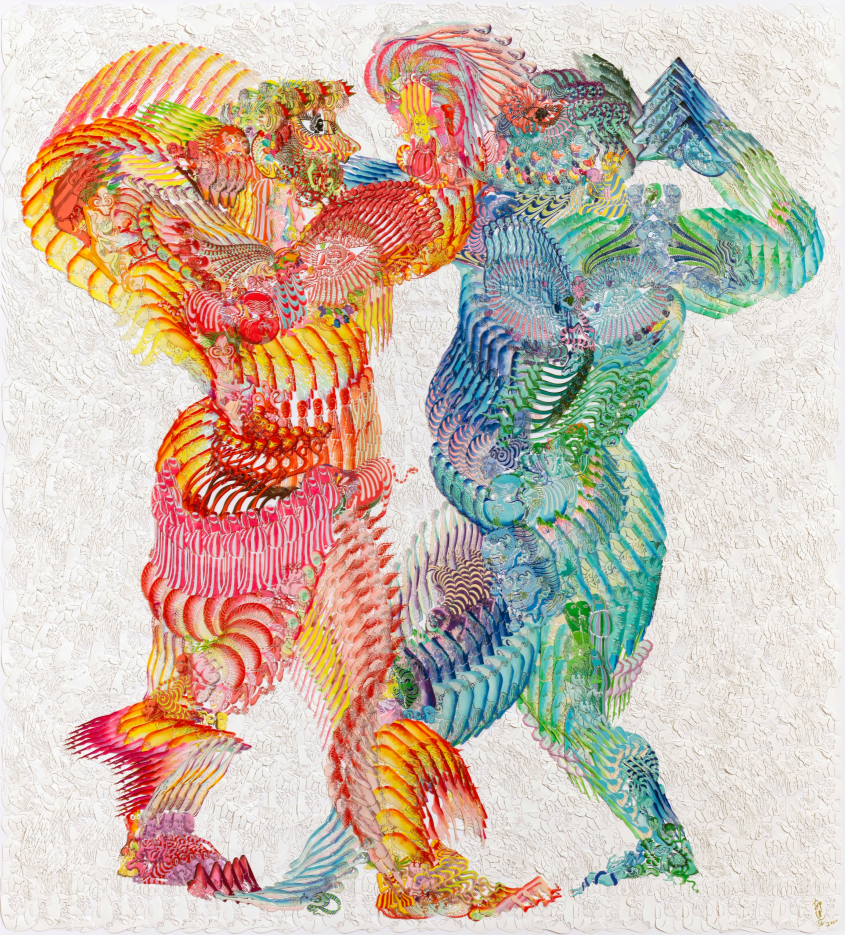
Two Boxers, Engraved on watercolor paper, watercolor, acrylic, soaked in beeswax, cotton thread stitched and mounted on silk, 184×167cm, 2020©Wu Jian’an
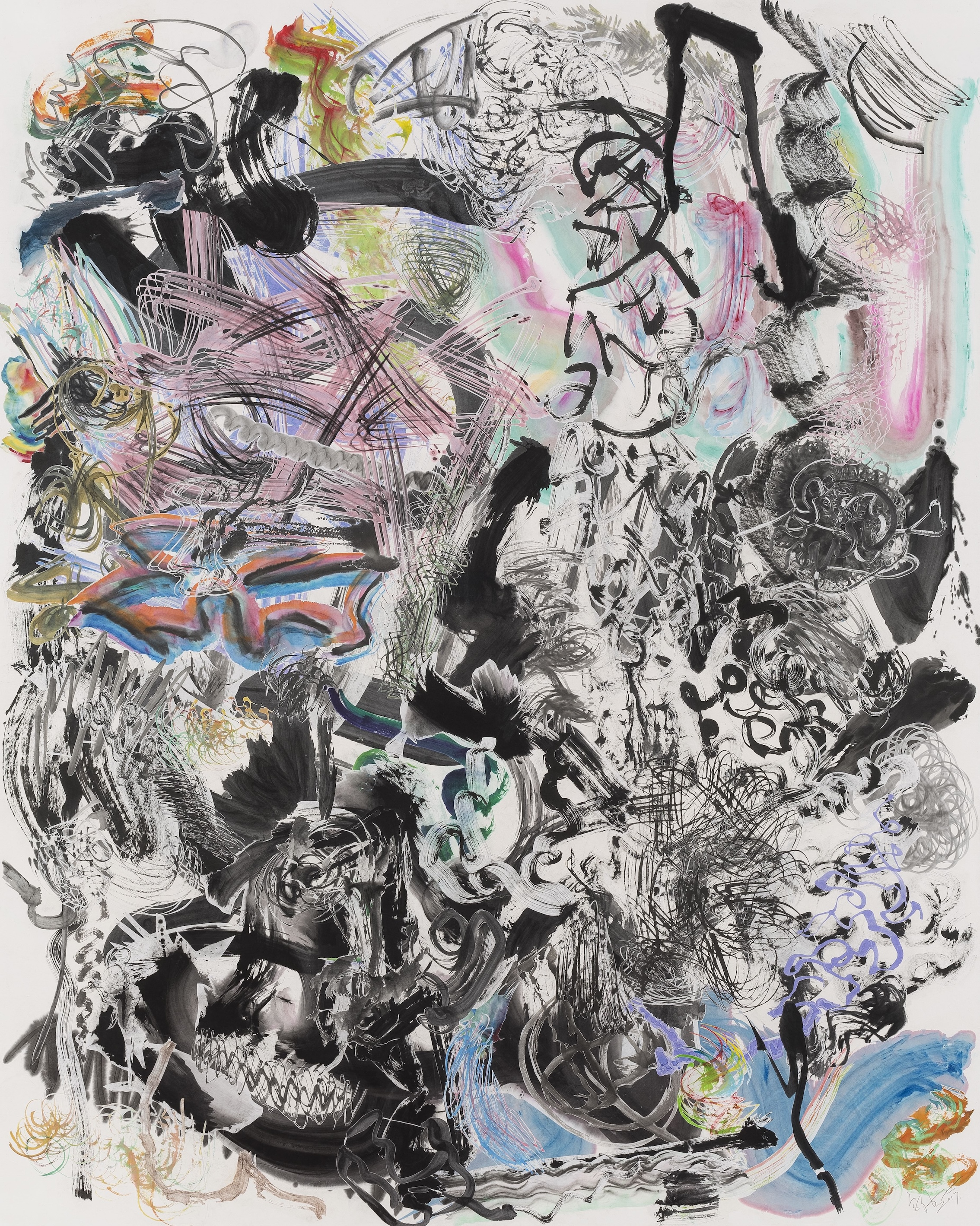
500 Brushstrokes #27, Ink, watercolor, paper cut and collage on Xuan paper, 250×200cm, 2017©Wu Jian’an

500 Brushstrokes #26, Ink, watercolor, paper cut and collage on Xuan paper, 250×200cm, 2017©Wu Jian’an
The 500 Brushstrokes series functions almost like a form of social practice. Wu Jian’an invites friends and strangers to participate in a simple “game of brushstrokes.” Participants are free to choose the size and type of brush, as well as the density, dryness, or intensity of ink and color. They are asked not to paint images or write words, but simply to leave a single spontaneous stroke on a sheet of xuan paper. Wu then collects these marks, carefully cutting each stroke out and reassembling them on a new blank sheet of paper to create each 500 Brushstrokes composition. Within the tradition of literati painting, brushwork is typically subject to strict conventions. Only strokes produced through rigorous training and cultivated refinement are considered worthy of forming a painting—almost like a hierarchical “society” of brushstrokes. By contrast, 500 Brushstrokes—the pronunciation of the title echoing “no failed brushstrokes”—seeks to grant equal opportunity to every mark. Even so-called “imperfect” strokes can combine to produce unexpectedly powerful images.
Seen through the relationship between handwriting and the individual, these spontaneous marks resemble fragments of subconscious projection—traces of inner states left upon paper. Each stroke carries something of the person who made it: their temperament, rhythm, and lived experience. No mark is dull or meaningless. Together they create a stage filled with tension and drama, because behind every stroke lies a distinct and living presence. The 500 Brushstrokes project represents another phase in Wu Jian’an’s exploration of the relationship between the individual and the collective, and has become one of the most significant directions in his practice in recent years.
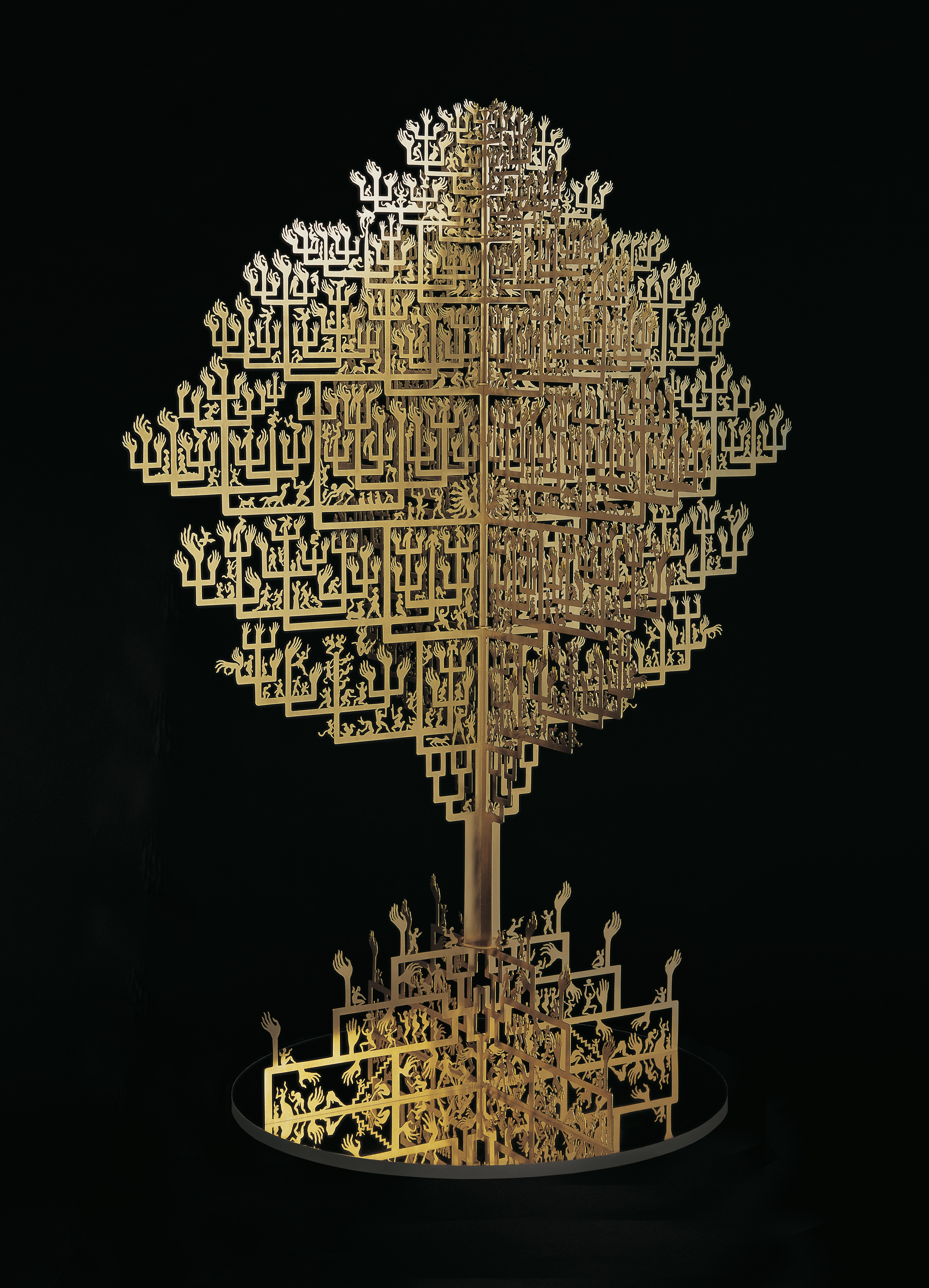
Golden Tree, Brass , 121×93×93cm, 2006©Wu Jian’an
Also presented on the first floor is the sculptural work Golden Tree, a large-scale brass structure reminiscent of the “money trees” of the Han dynasty. Installed alongside the large paper compositions, the work introduces a sense of ritualistic grandeur, opening the narrative of the artist’s mythological world. The imagery of Golden Tree originates from a group of paper-cut works Wu created between 2003 and 2004, which he collectively titled Daydreams. Transformed into sculptural form, these images describe an individual’s emotional response to an unexpected crisis in reality. At the same time, they can be understood as a kind of “spiritual anatomy,” shaped through reflection and repeated analysis. Cast in polished brass, the forms become solid presences in space—hard, luminous, and carrying a subtle sense of danger. As viewers move through the spatial field formed by the sculpture and surrounding works, they enter and participate in another kind of reality: one that feels elusive, unstable, and uncanny, yet vividly alive.
Wu Jian’an: The Rite, exhibition view ©Wu Jian’an
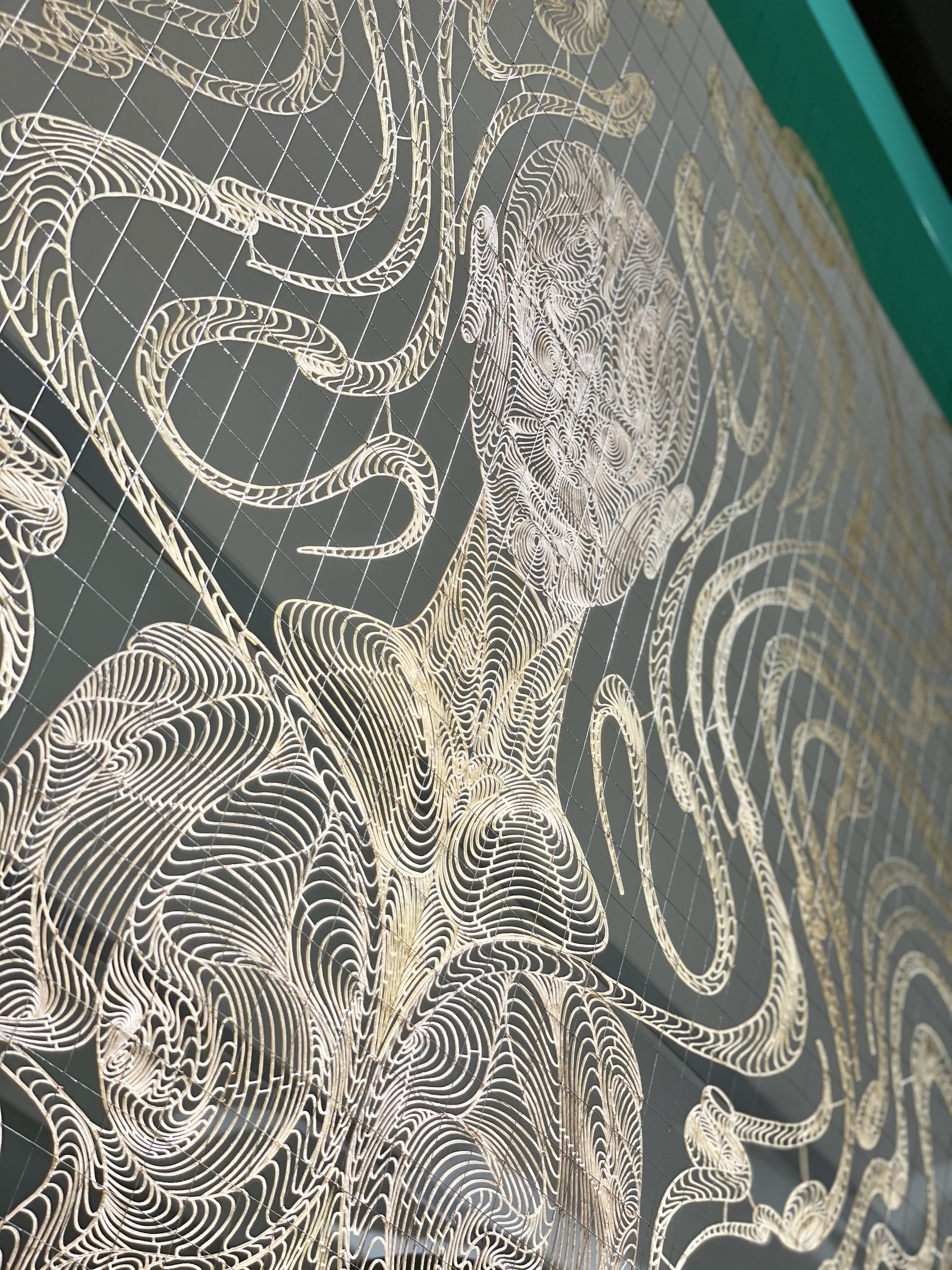
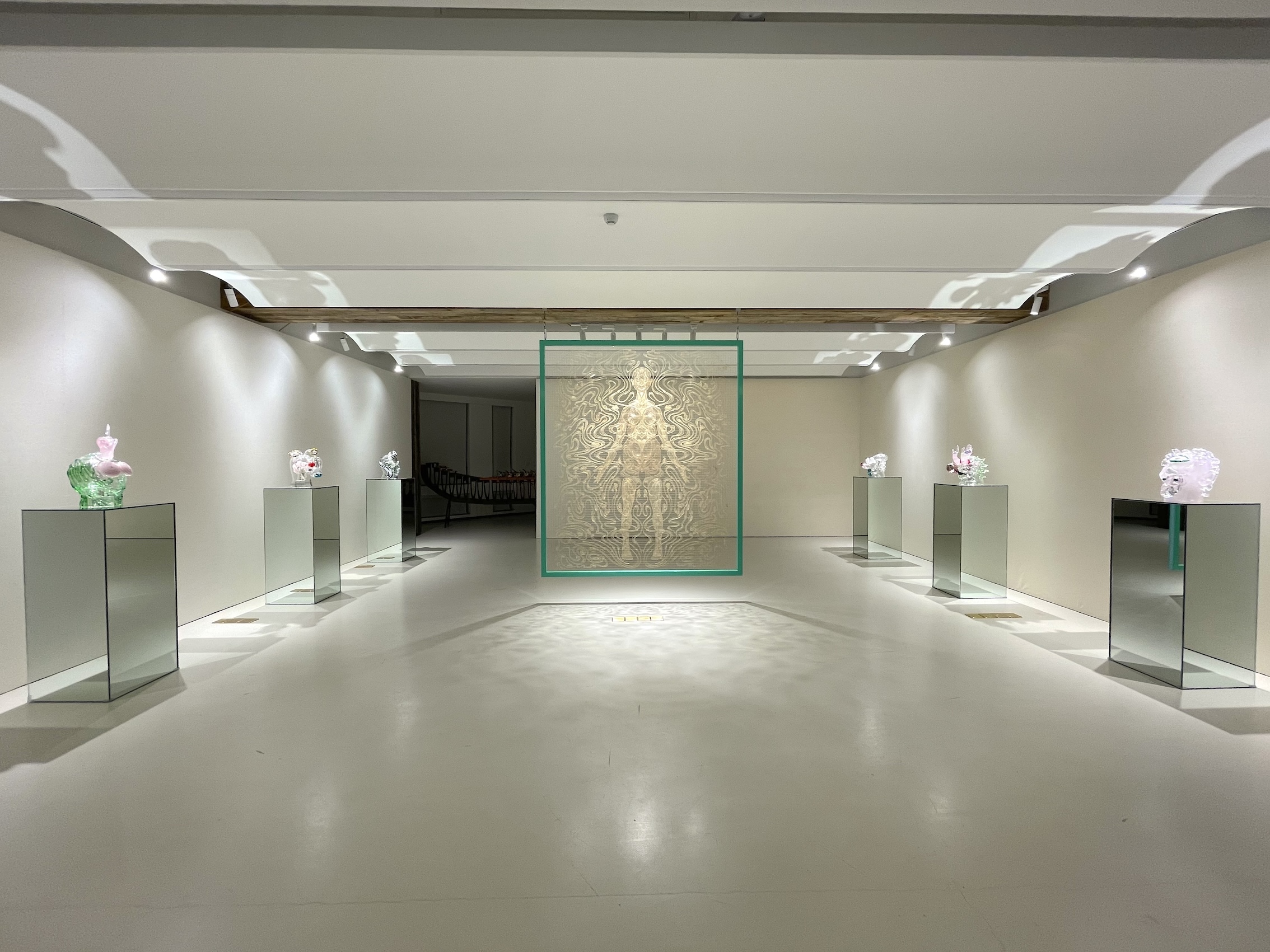
Vital Essence No.1, Handcrafted engraving on leather, Metal frame, 245×210×6cm, 2019-2020©Wu Jian’an
The third-floor presents a matrix of glass sculptures from the series Invisible Faces, together with Vital Essence – No.1, which hangs suspended at the center of the exhibition space. In Eastern philosophy, “qi” carries rich and complex meanings. It often functions as a medium linking human beings with the natural world, while also serving as a bridge between the material and the spiritual realms. The image of Vital Essence No.1 is composed of countless delicate, flowing lines representing currents of “qi”. They appear to drift out from a female body, swirling and lingering in the surrounding space before seeking pathways through which they might return again. The material that forms the world and the material that forms ourselves may not be so different after all. Human beings are products of their environment—aggregations of the world and the circumstances that surround them—and at the same time, they also shape the environment itself.
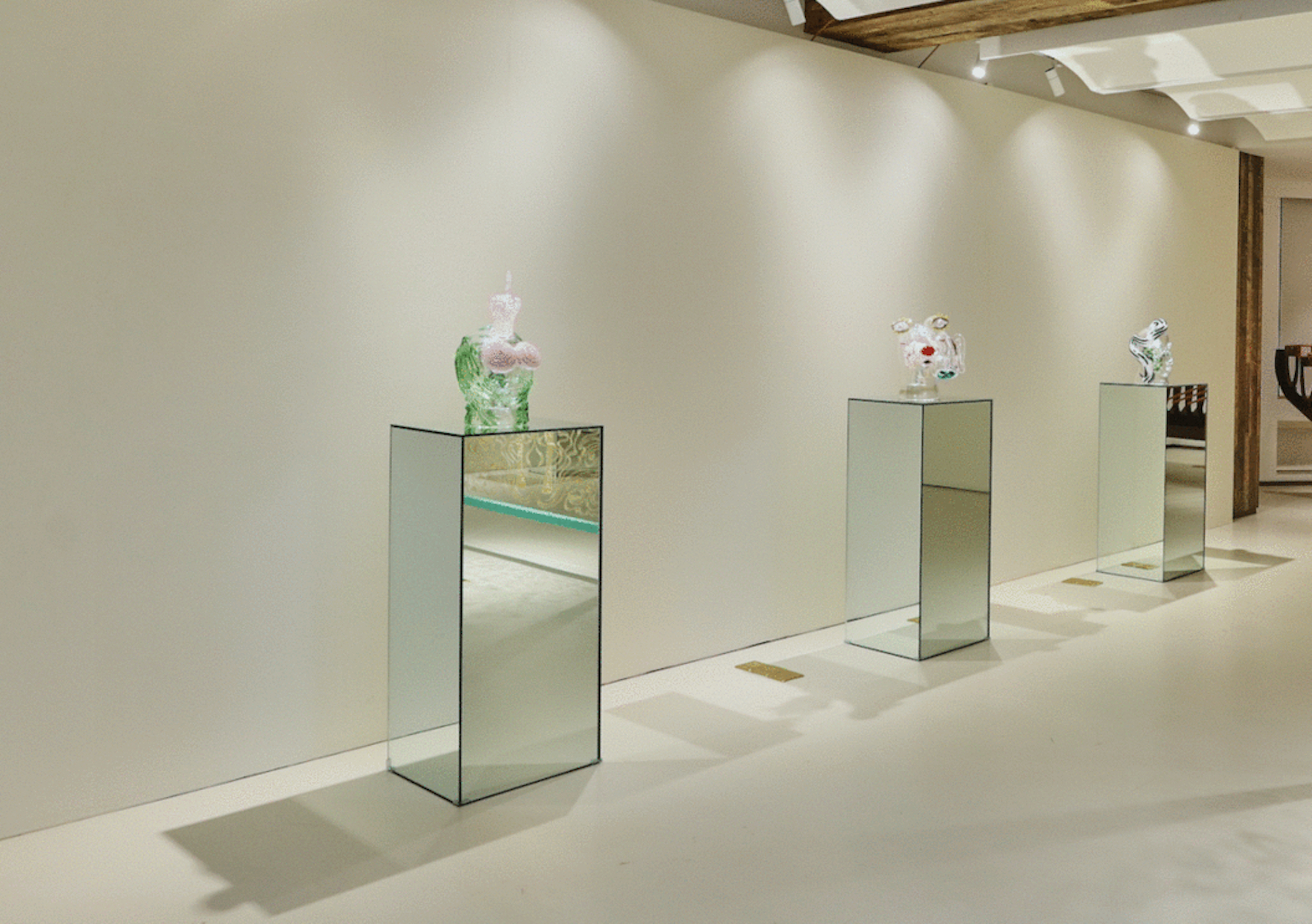

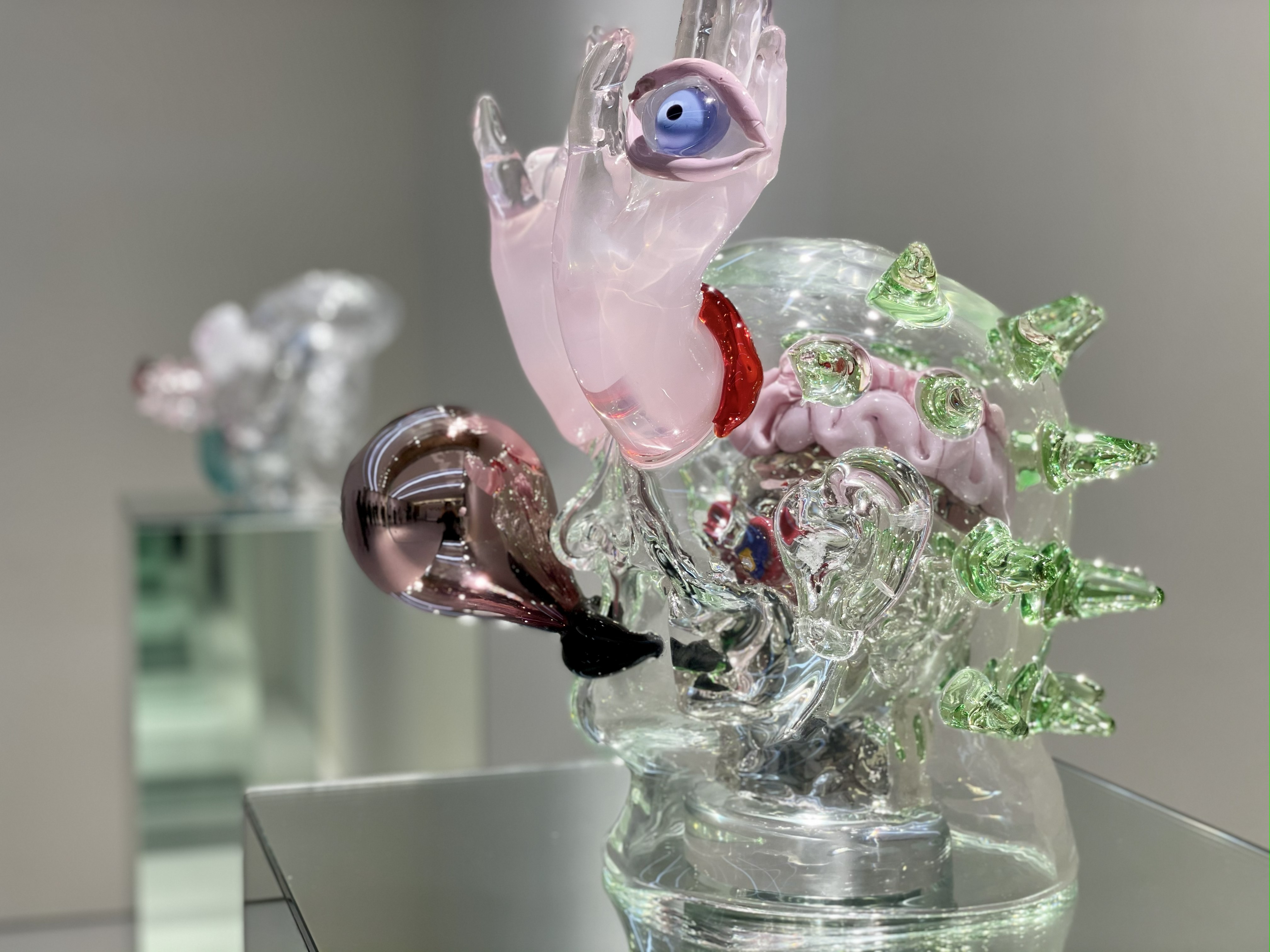
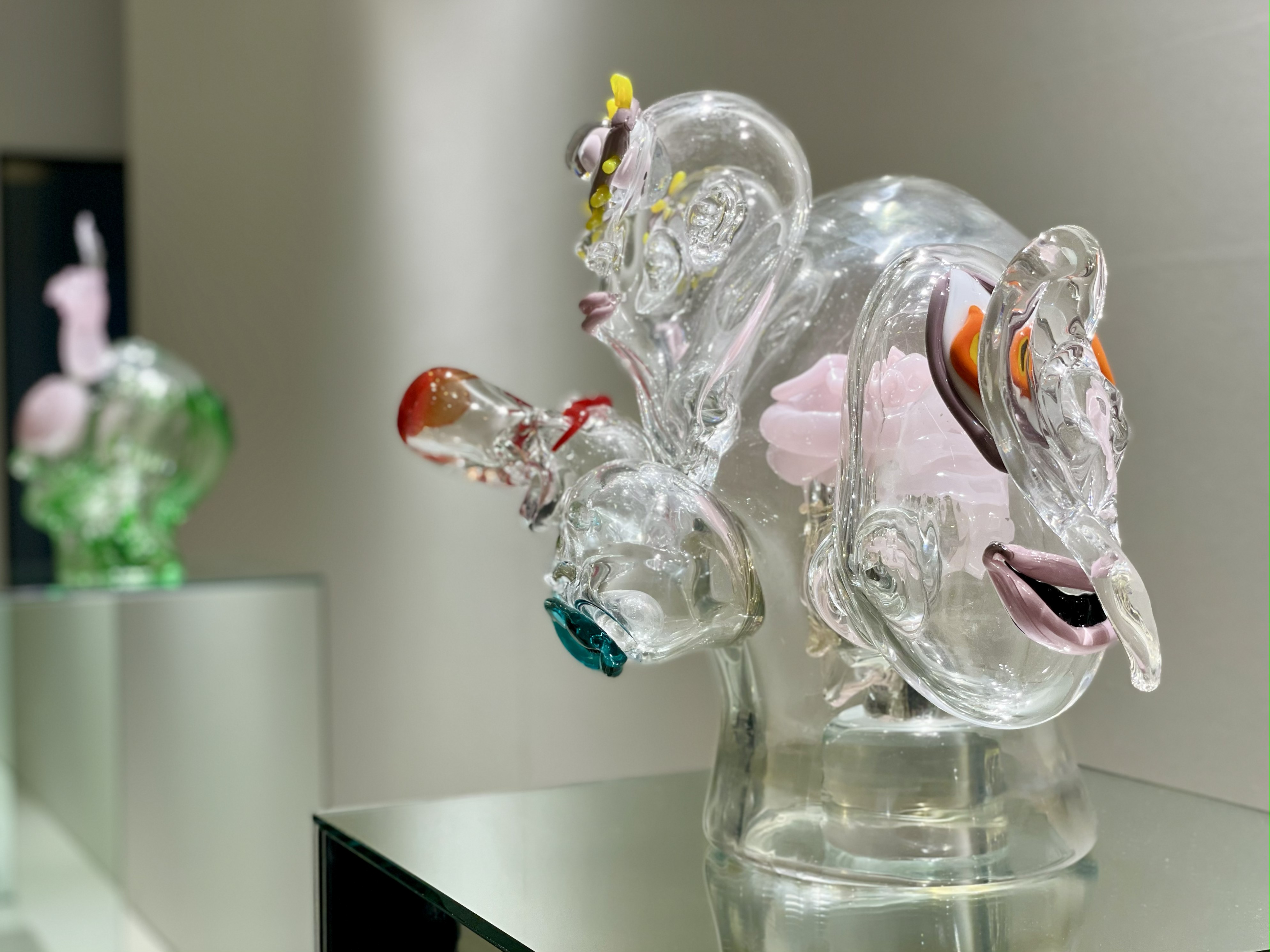
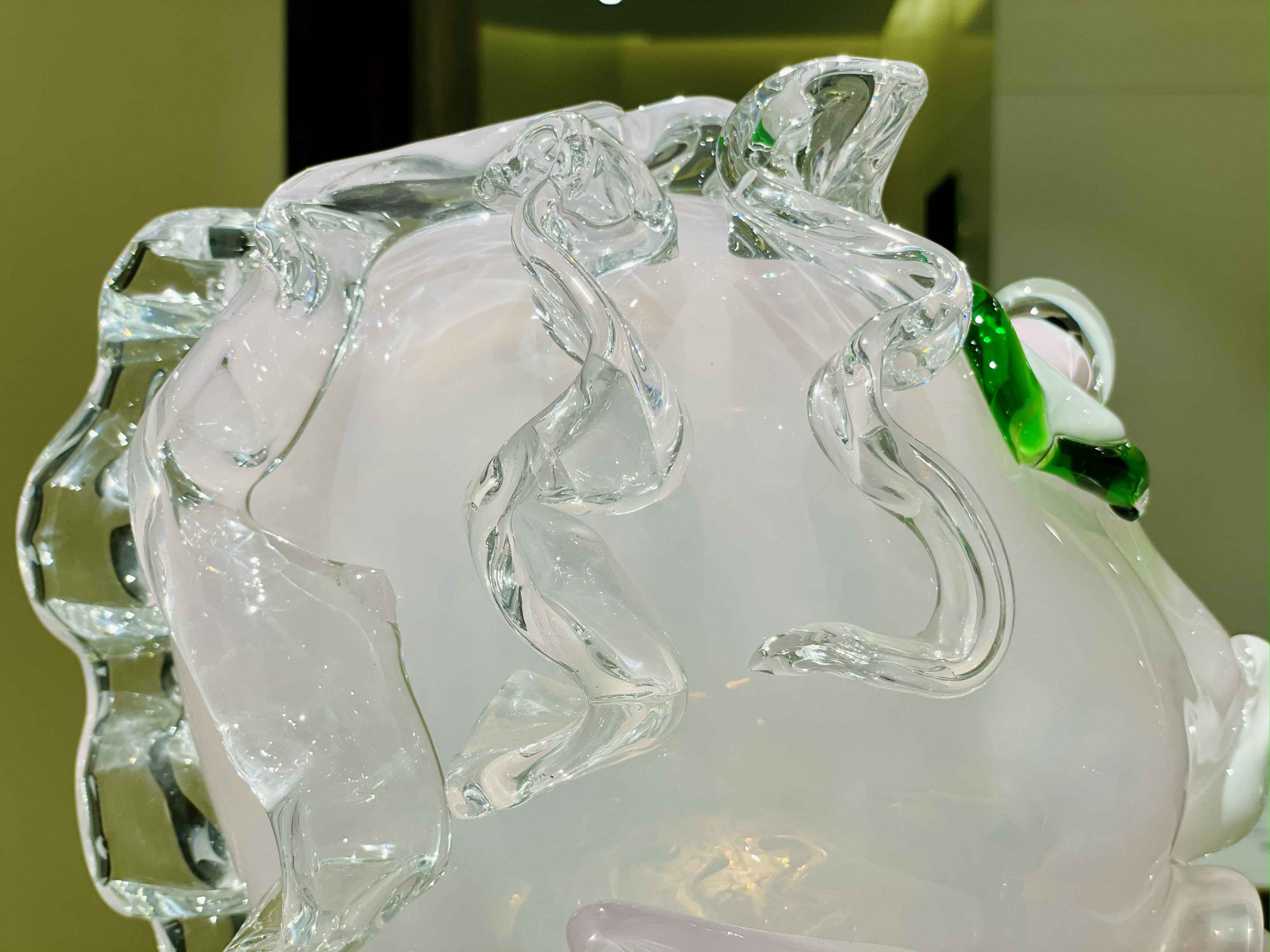
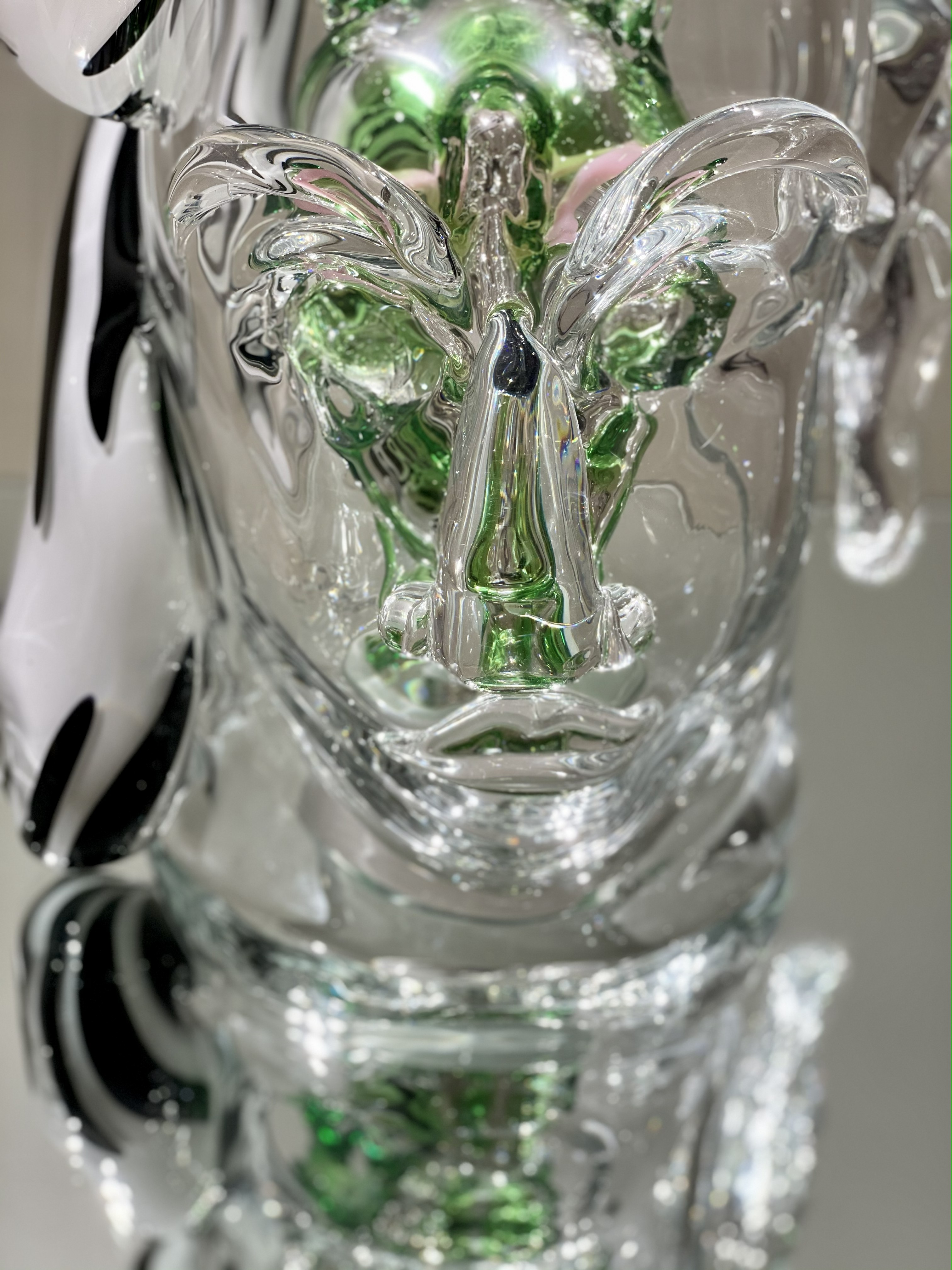

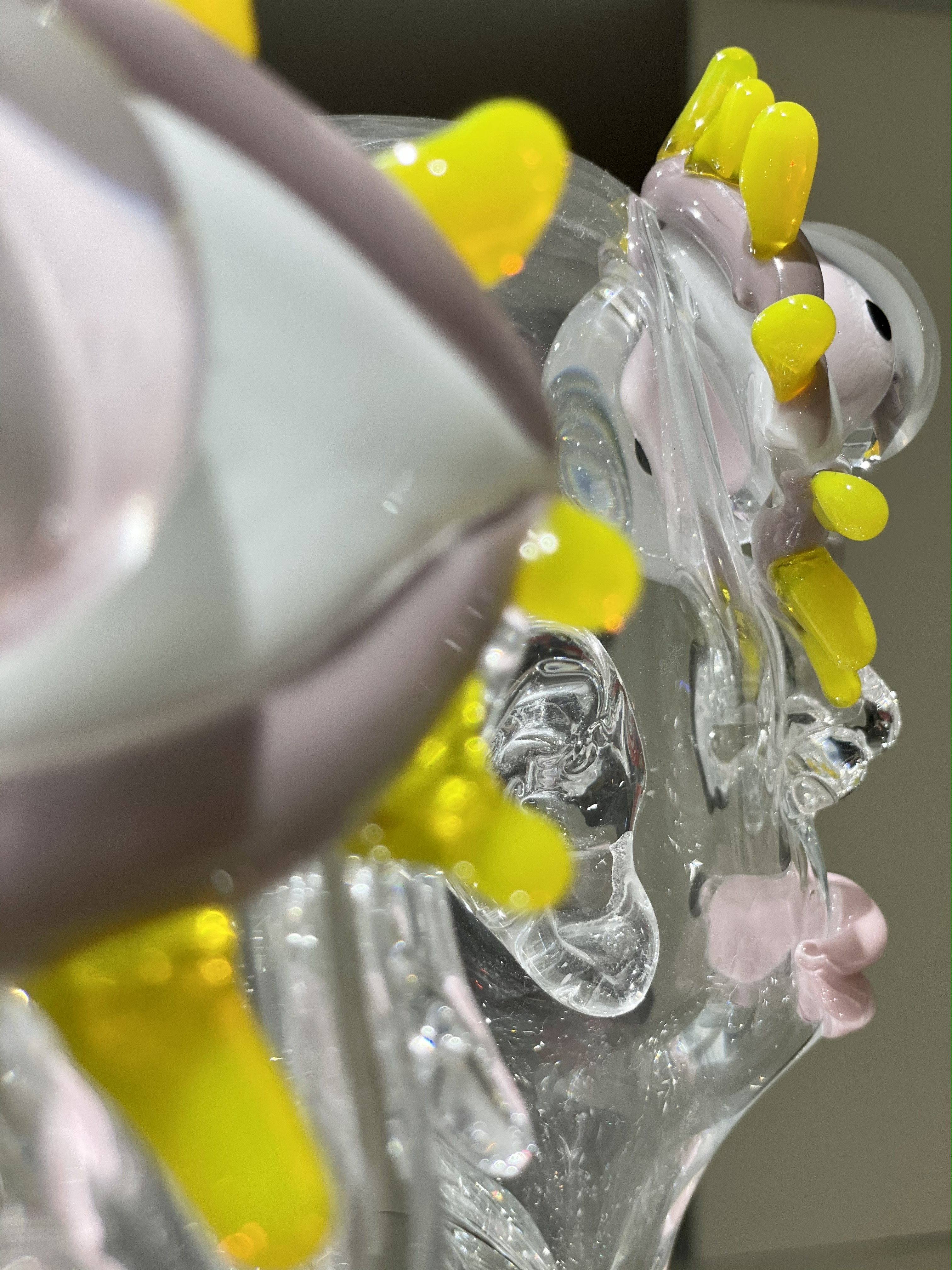
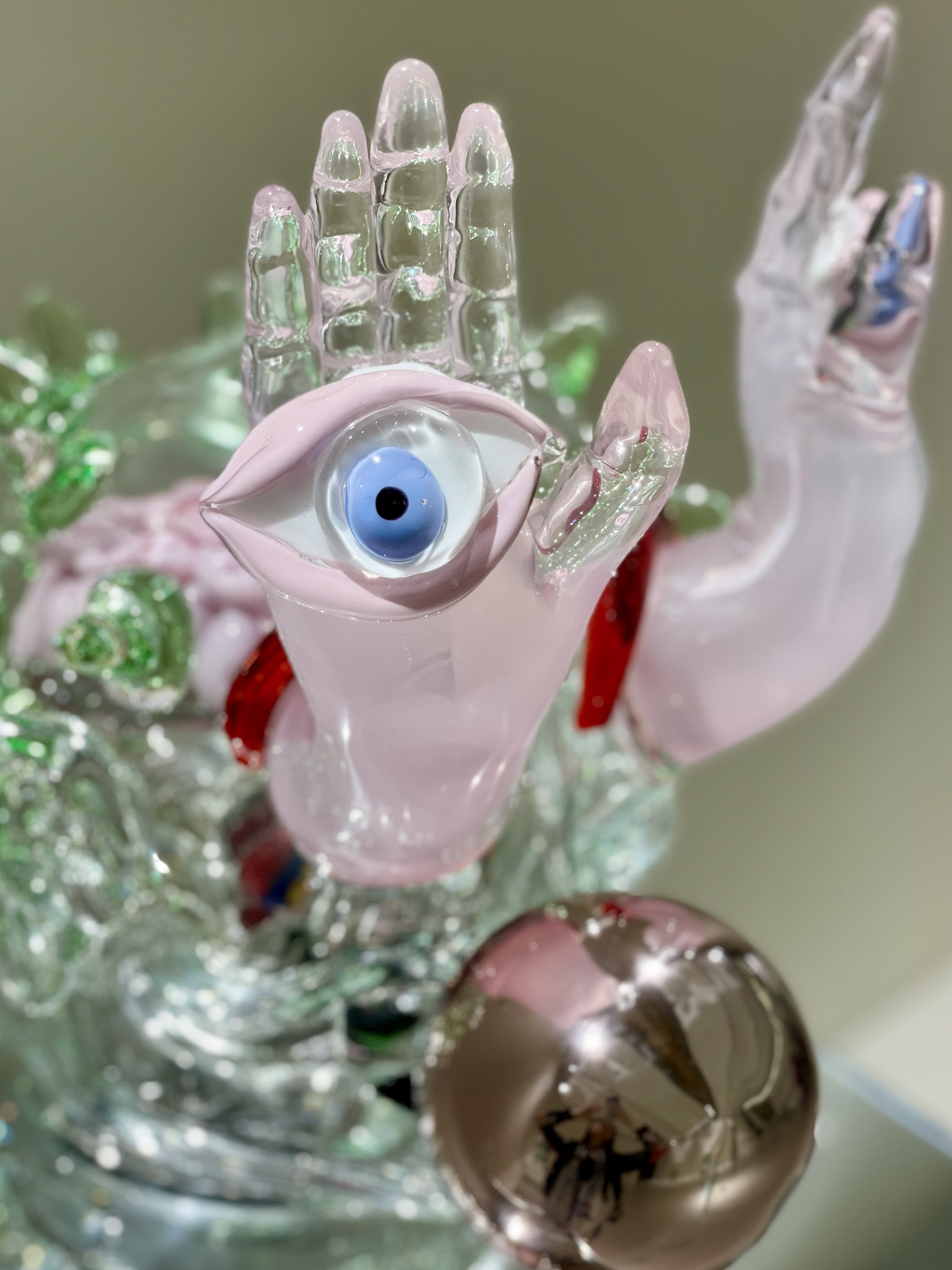
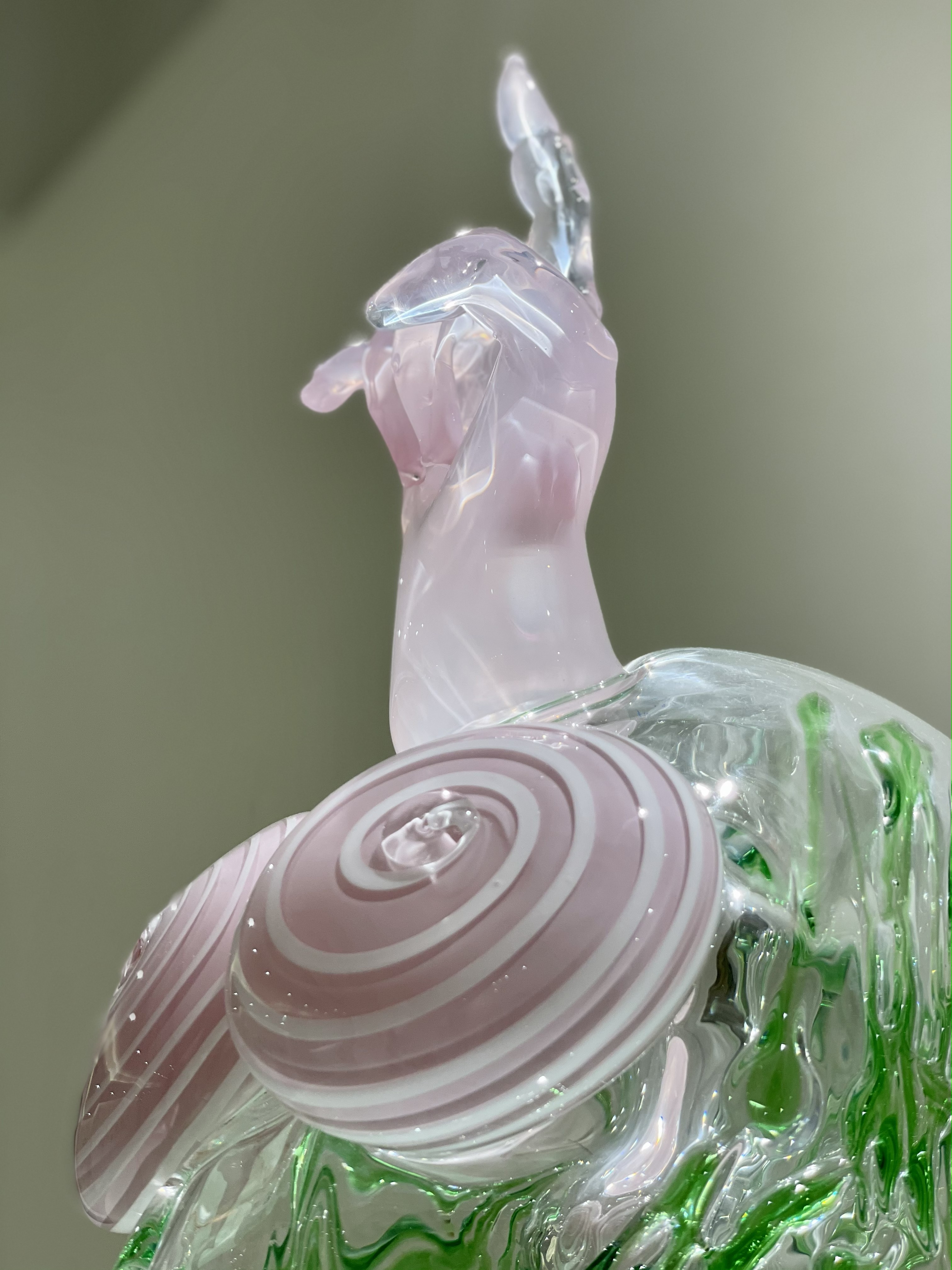
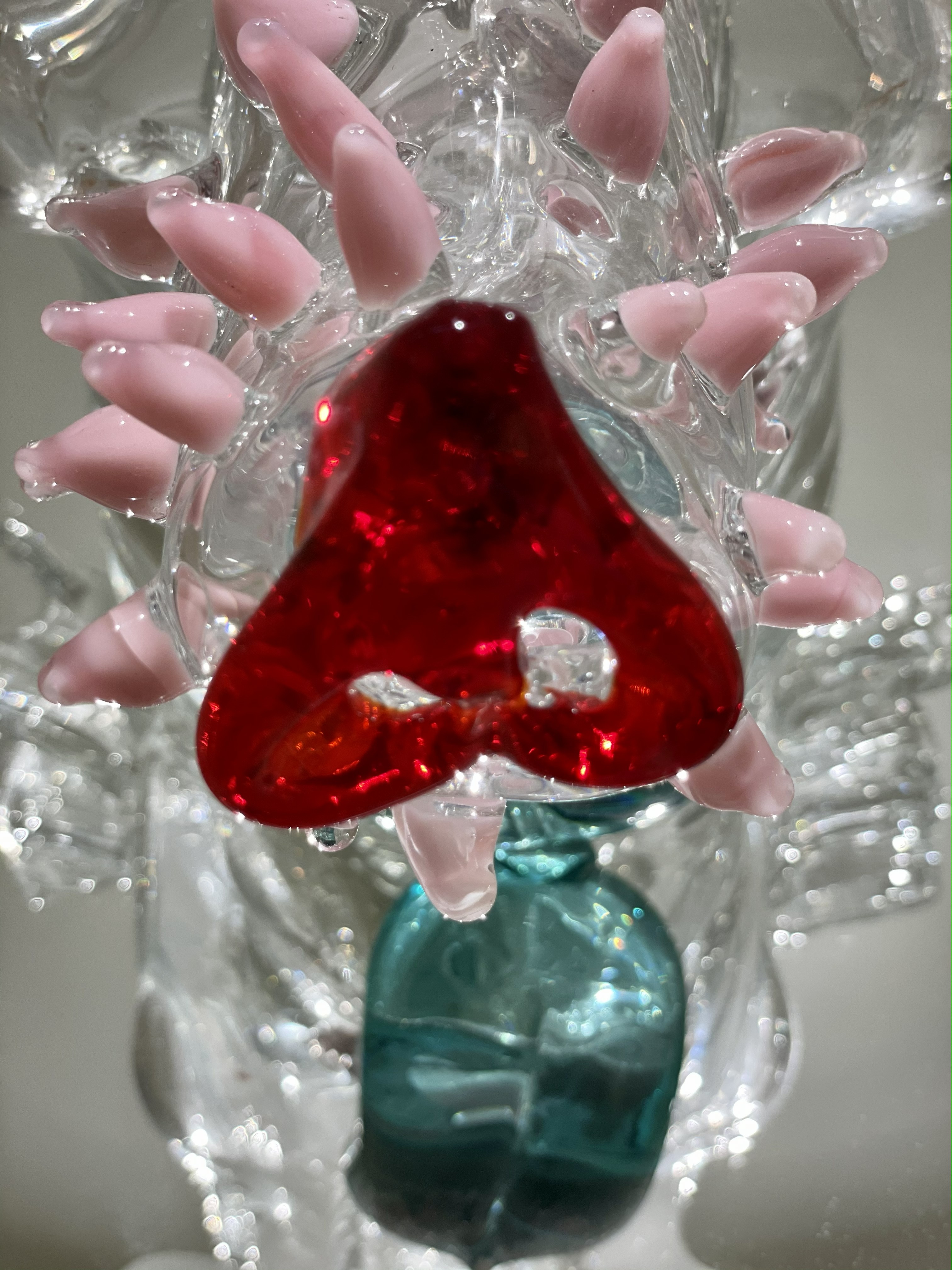
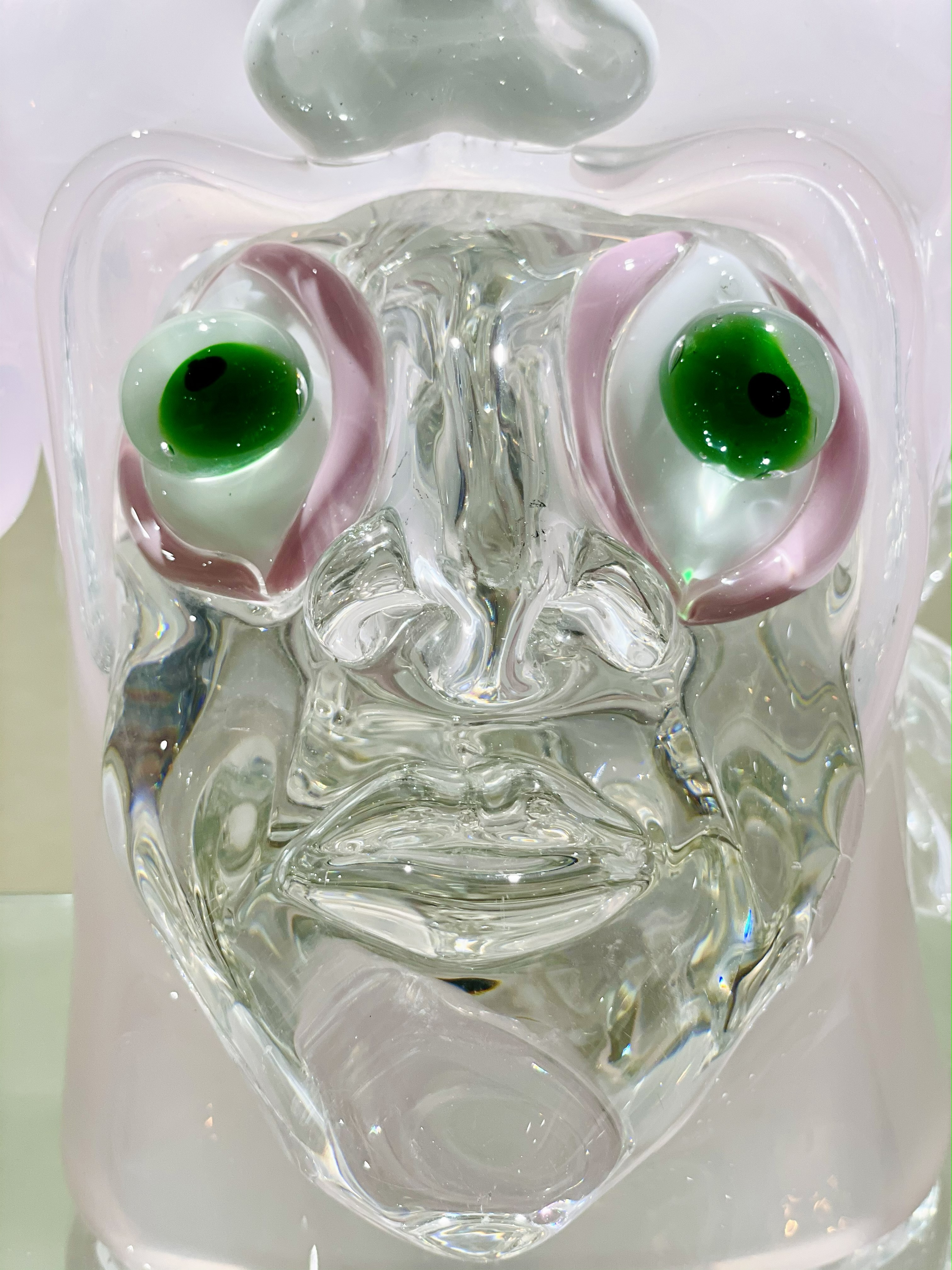
Wu Jian’an: The Rite, exhibition view ©Wu Jian’an
The Invisible Faces series was created during Wu Jian’an’s residency on the island of Murano, Italy, in 2019, a place internationally renowned for its masterful glassmaking traditions since the Renaissance. Each work in the series takes the form of a face composed of two layers: a larger outer face that encloses a smaller inner one. The outer layer is highly transparent, while the inner face often carries a silvered mirror-like surface. Between the two layers, complex reflections emerge and become visible through the transparent exterior. As light shifts and viewing angles change, the faces reveal unexpected and sometimes uncanny expressions—resembling visitors from another world, or perhaps extraordinary deities from ancient myth. Through these works, the artist seeks to touch upon fundamental questions: What exactly is a “face”? And how do we recognize and identify it?
Here, the face functions as a metaphor for what appears outwardly—what we rely on to identify people, objects, and events. Through visible surfaces we attempt to infer deeper essences, and through present appearances we speculate about the future. The relationship between exterior and interior is one of constant and profound interaction, yet the inner core rarely reveals itself easily. When it does occasionally surface, it may even be overlooked, because people are not accustomed to believing that the truth of mysterious things might lie plainly before their eyes—even when it is clearly visible.
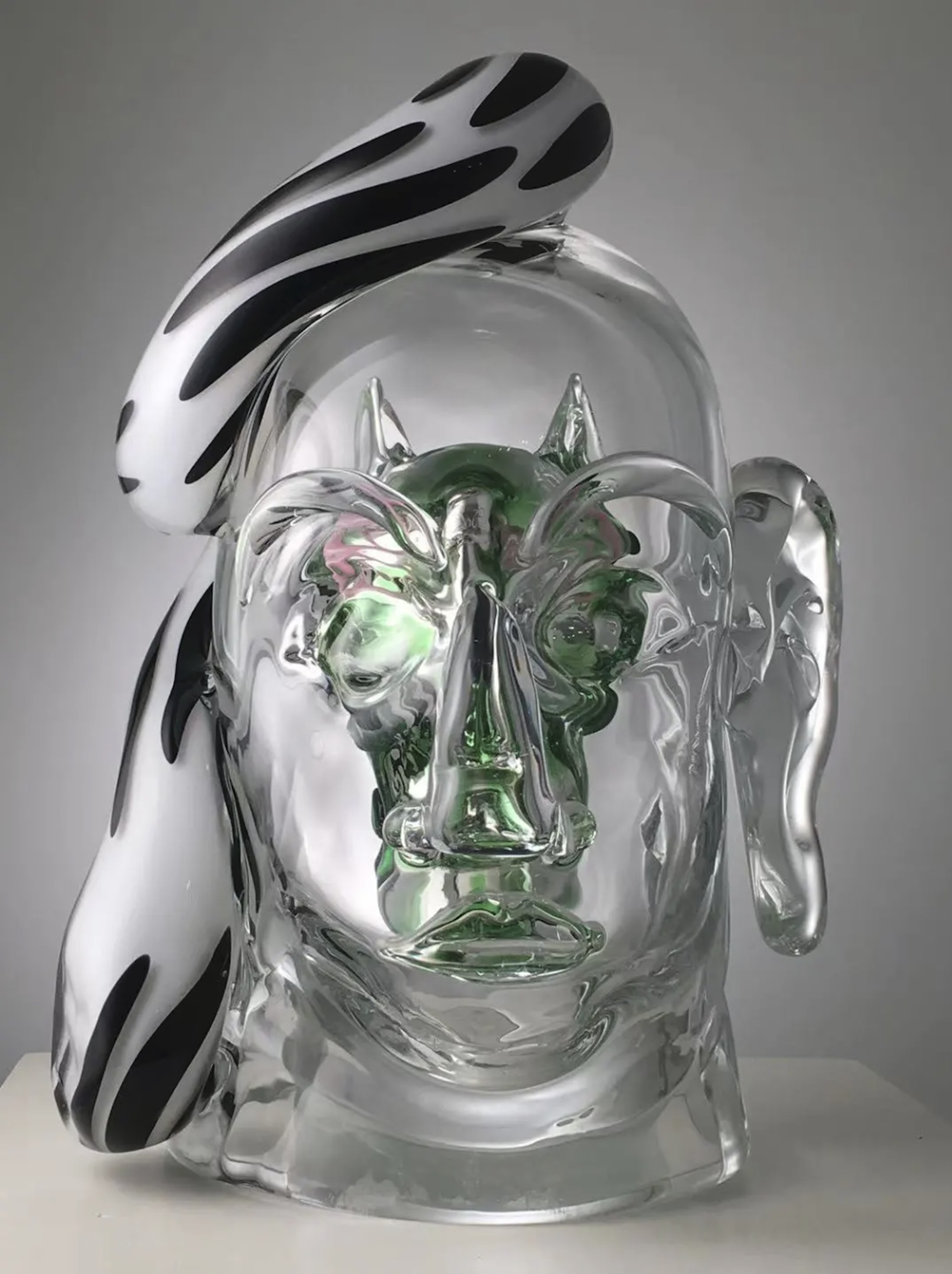
Snow Leopard, Hand-blown glass, Tinted glass, silver, A set of two-tiered pieces, 2019©Wu Jian’an
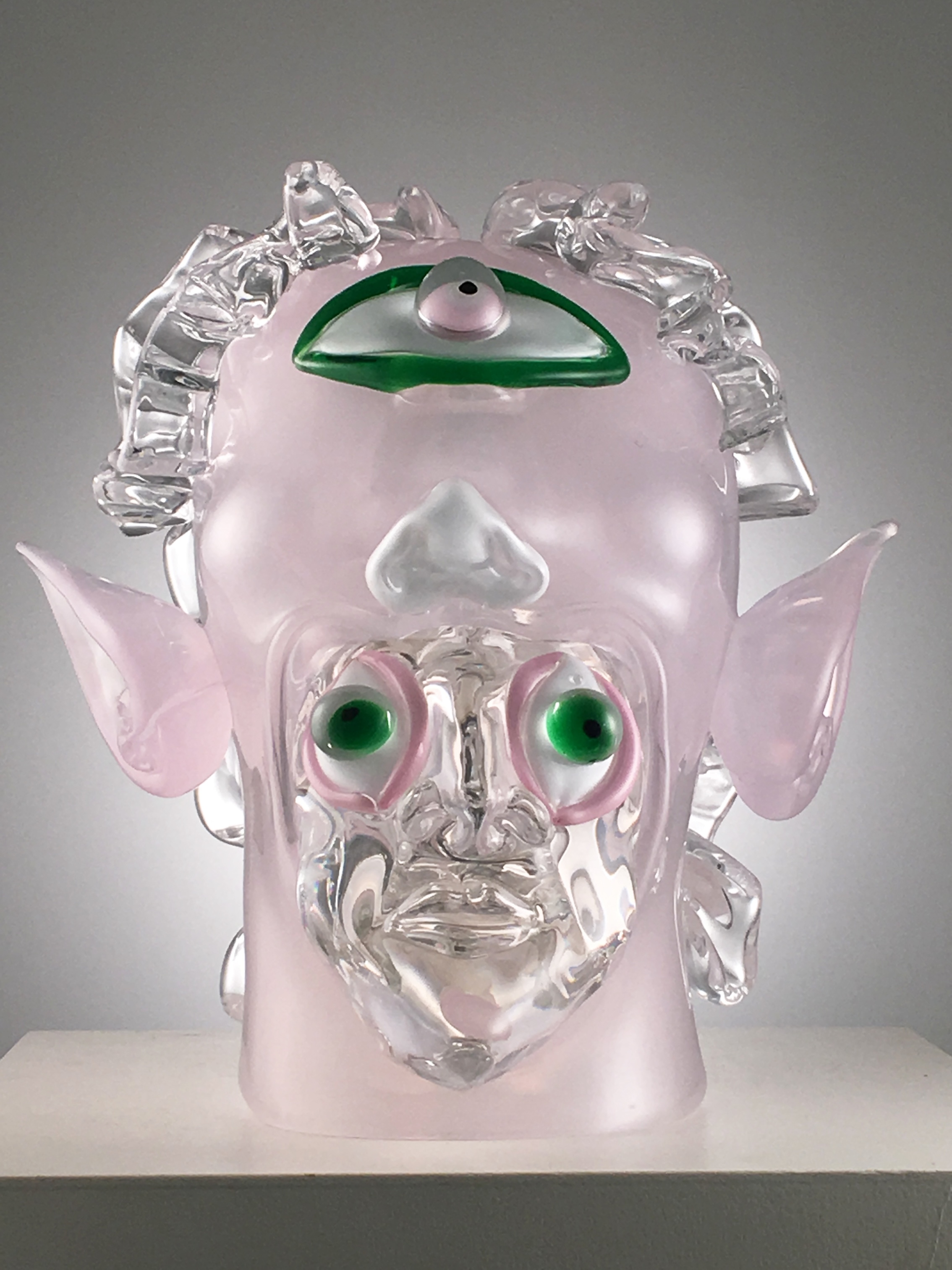
Three-eyed Hero, Hand-blown glass, Tinted glass, silver, A set of two-tiered pieces, 2019©Wu Jian’an
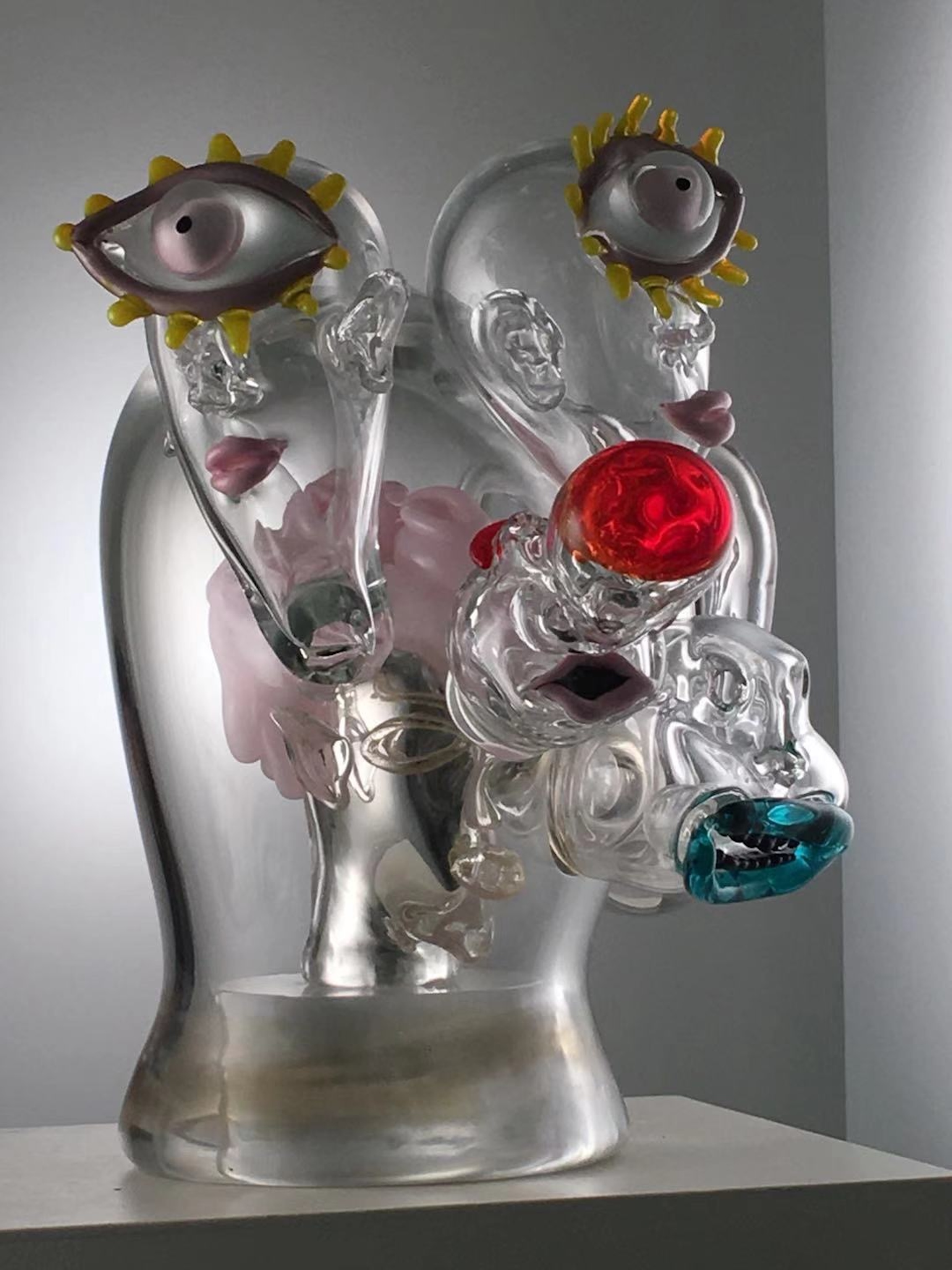
Nose, Eye, Mouth, Hand-blown glass, Tinted glass, silver, A set of two-tiered pieces, 2019©Wu Jian’an
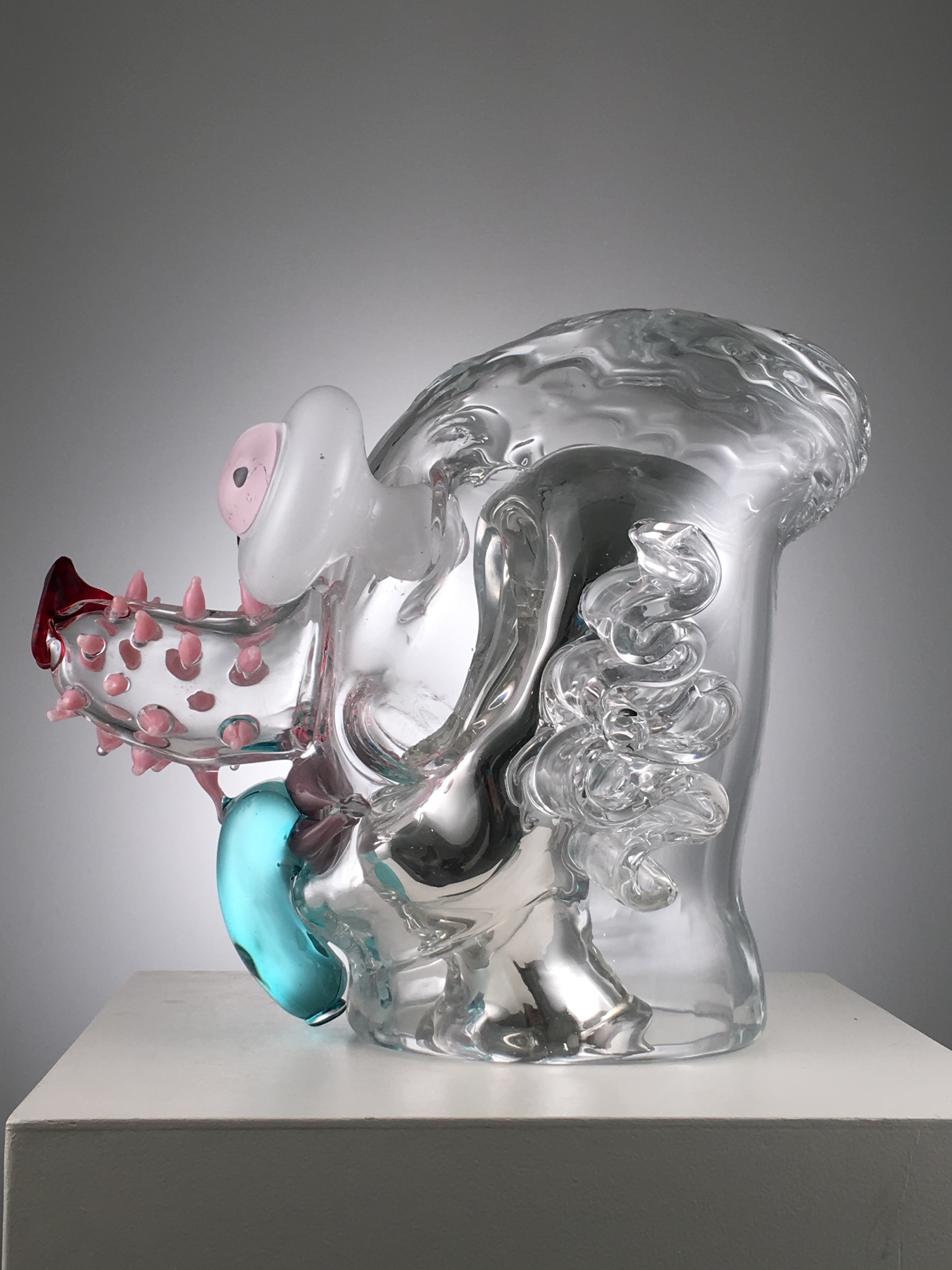
Mouse with a Blue Tongue, Hand-blown glass, Tinted glass, silver, A set of two-tiered pieces, 2019©Wu Jian’an
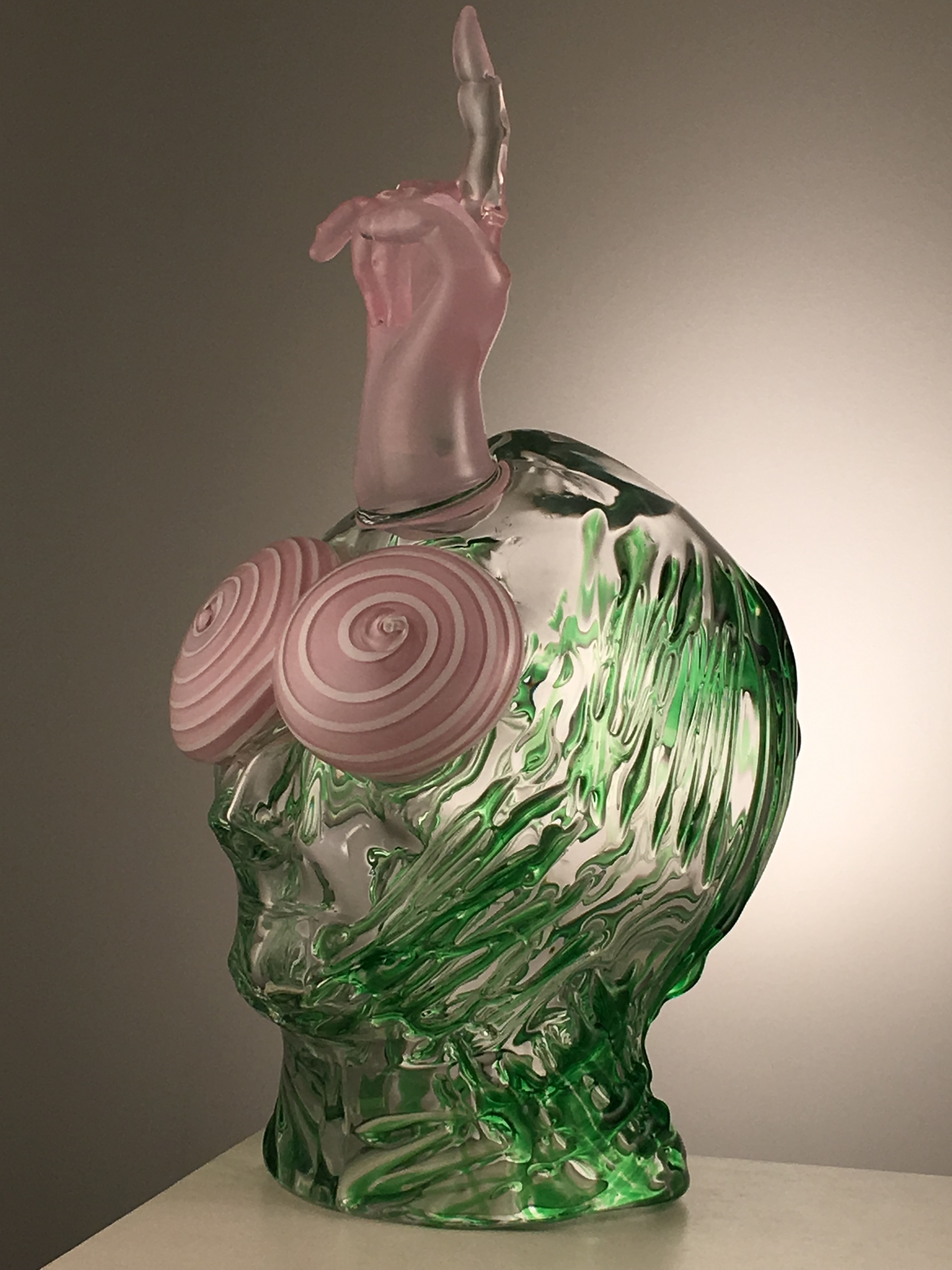
That’s where I came from, Hand-blown glass, Tinted glass, silver, A set of two-tiered pieces, 2019©Wu Jian’an
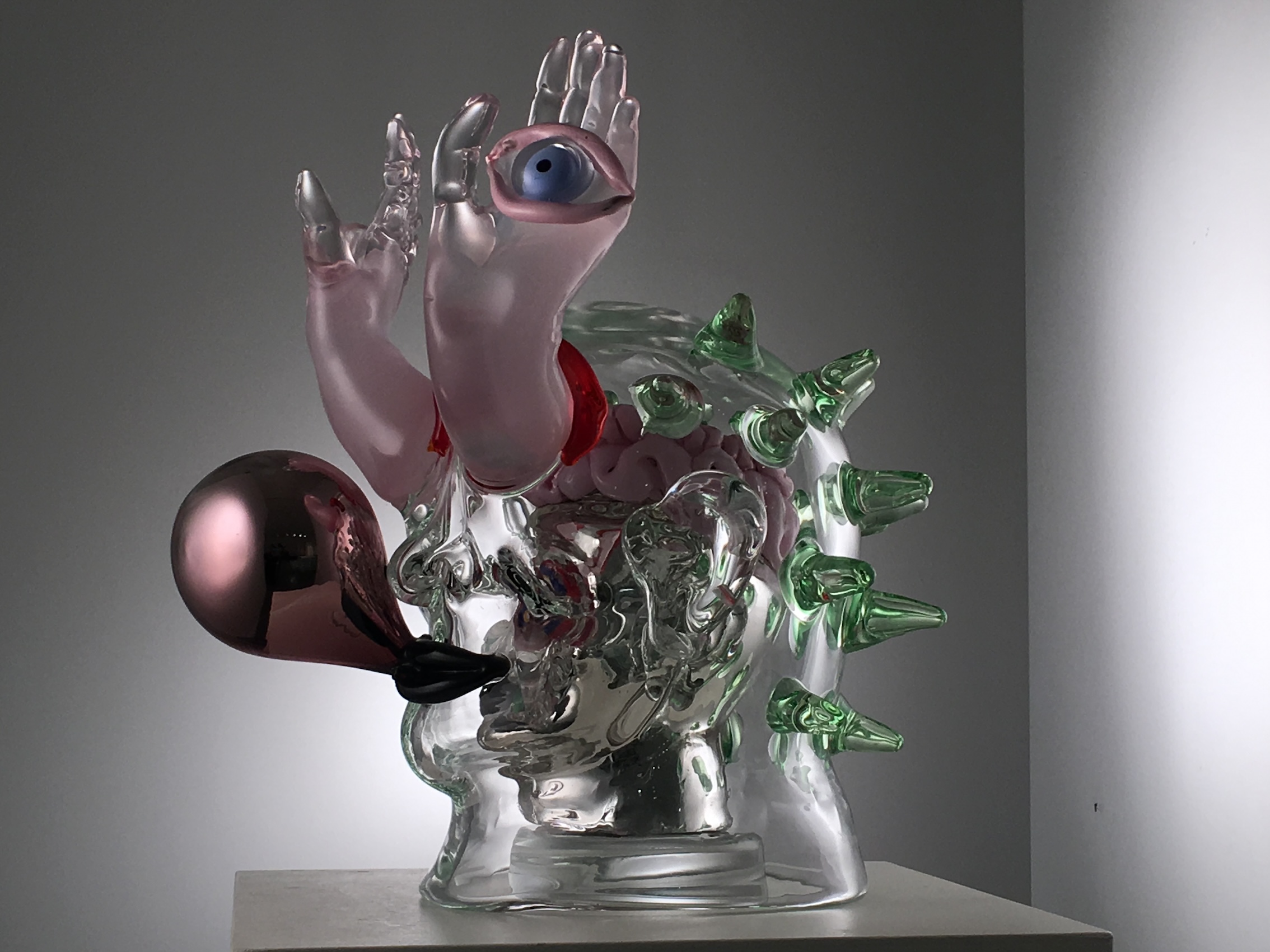
Yang Ren pops gum, Hand-blown glass, Tinted glass, silver, A set of two-tiered pieces, 2019©Wu Jian’an
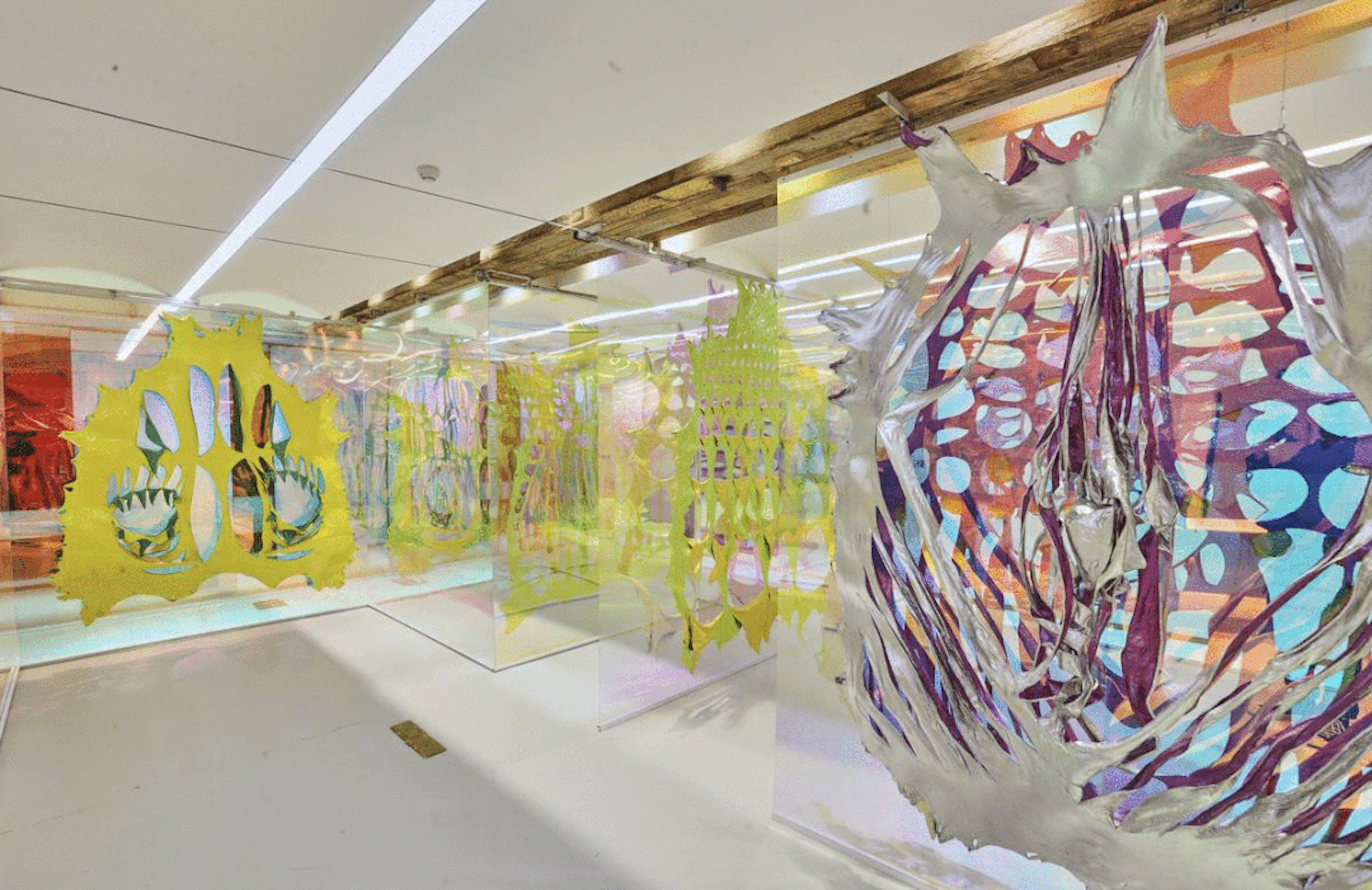
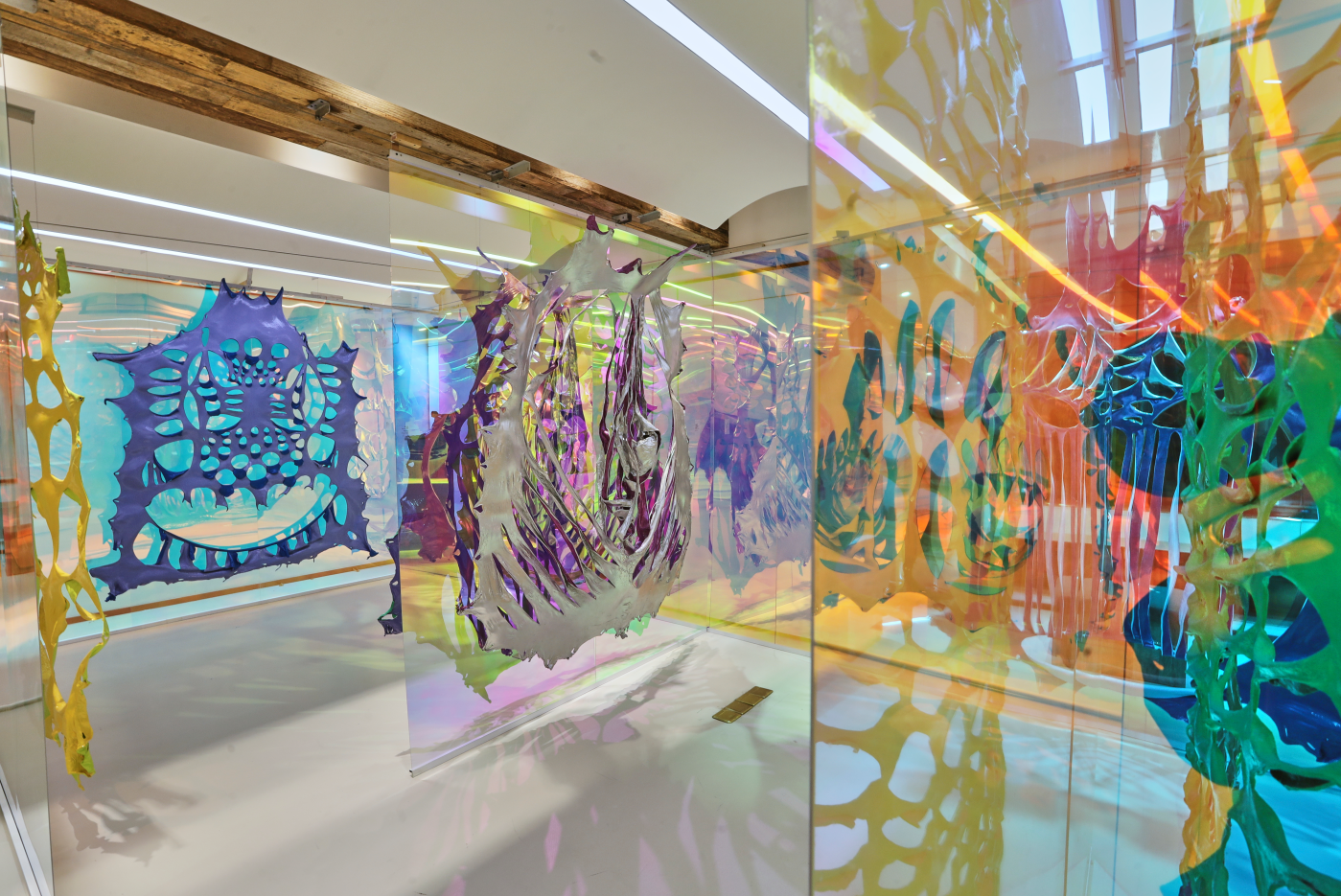
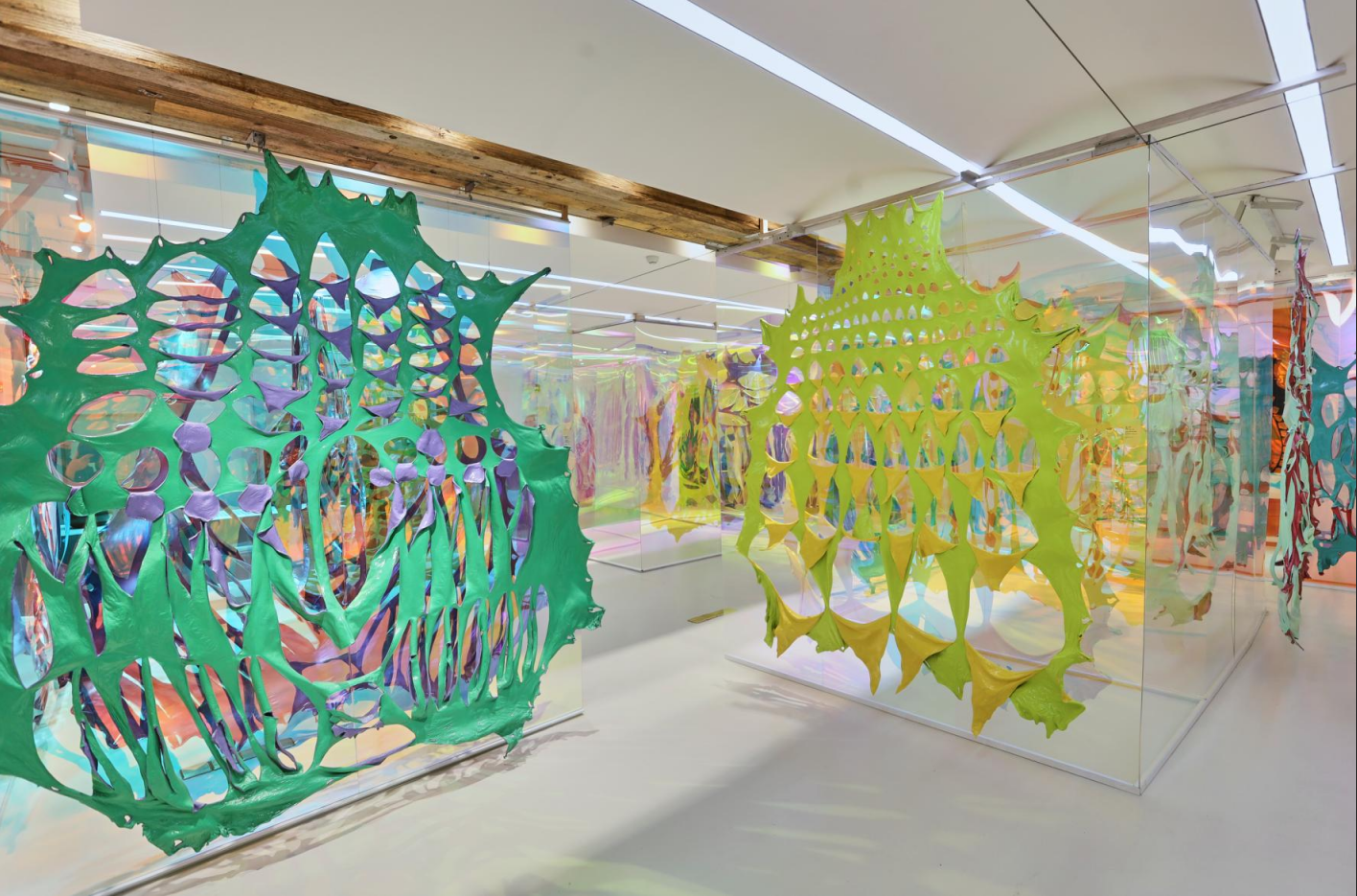
On the fourth floor, Wu Jian’an constructs a spatial environment for viewers that resembles a psychological and visual experience—a “Labyrinth of Masks.” Throughout his practice, the artist has sought to explore the inner world of the human psyche through direct and honest means, using powerful visual forms to analyze the structures of consciousness. In the Mask series, Wu attempts on the one hand to extend the language of art into the realms of psychoanalysis and sociology; on the other, he continues his experimental exploration of ox hide as a material. Compared with the extreme intricacy of works such as The Heaven of Nine Levels and Vital Essence, where image and craft reach extraordinary levels of complexity, the Mask series moves toward the opposite direction—toward a search for a more primal and elemental form.
Sheets of ox hide, presented almost in their raw state, form the foundation of these works. The process of creation is intentionally direct: the artist cuts and pierces the softened leather, leaving openings of varying size and shape. After the hide dries and hardens again, color is carefully applied to both sides. When designing these cuts, Wu attempts to anticipate the final form the material will take. Yet during the drying process, the openings stretch and transform. The organic nature of the leather alters the shapes of the cuts in unpredictable ways, turning the act of creation into a kind of negotiation with the material itself. In this sense, the making of each mask becomes a collaboration between human intention and the forces of nature.
Gradually, the hide takes on forms that resemble ancient masks from Maya or Mycenaean civilizations, or even the stylized facial totems of the Stone Age. The impulse toward destruction, sometimes visible and sometimes hidden, has always existed within human consciousness. It is also a driving force in human production and creativity, particularly in our relationship with the natural world. The Mask series records the violence and destructive impulses embedded in human awareness, while simultaneously revealing their limitations. The results of human creation often resemble a convergence of circumstances rather than something fully controlled by design, prediction, or force alone. Here, viewers enter a place of unpredictability—an “accidental territory” in which the mystery of ritual becomes palpable. Ancient ceremonial practices appear to re-emerge through contemporary visual form, linking distant histories with the experience of the present.


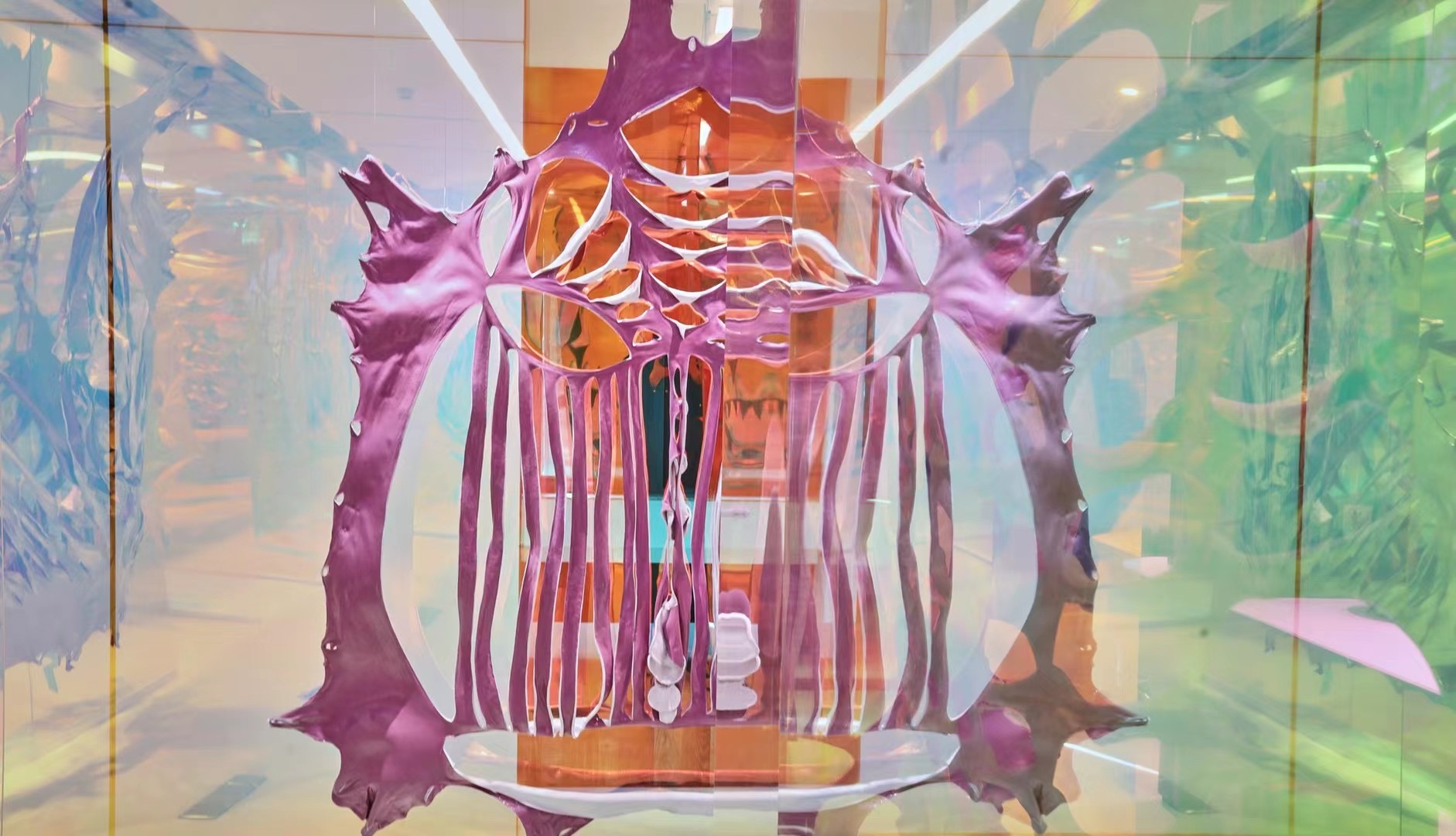
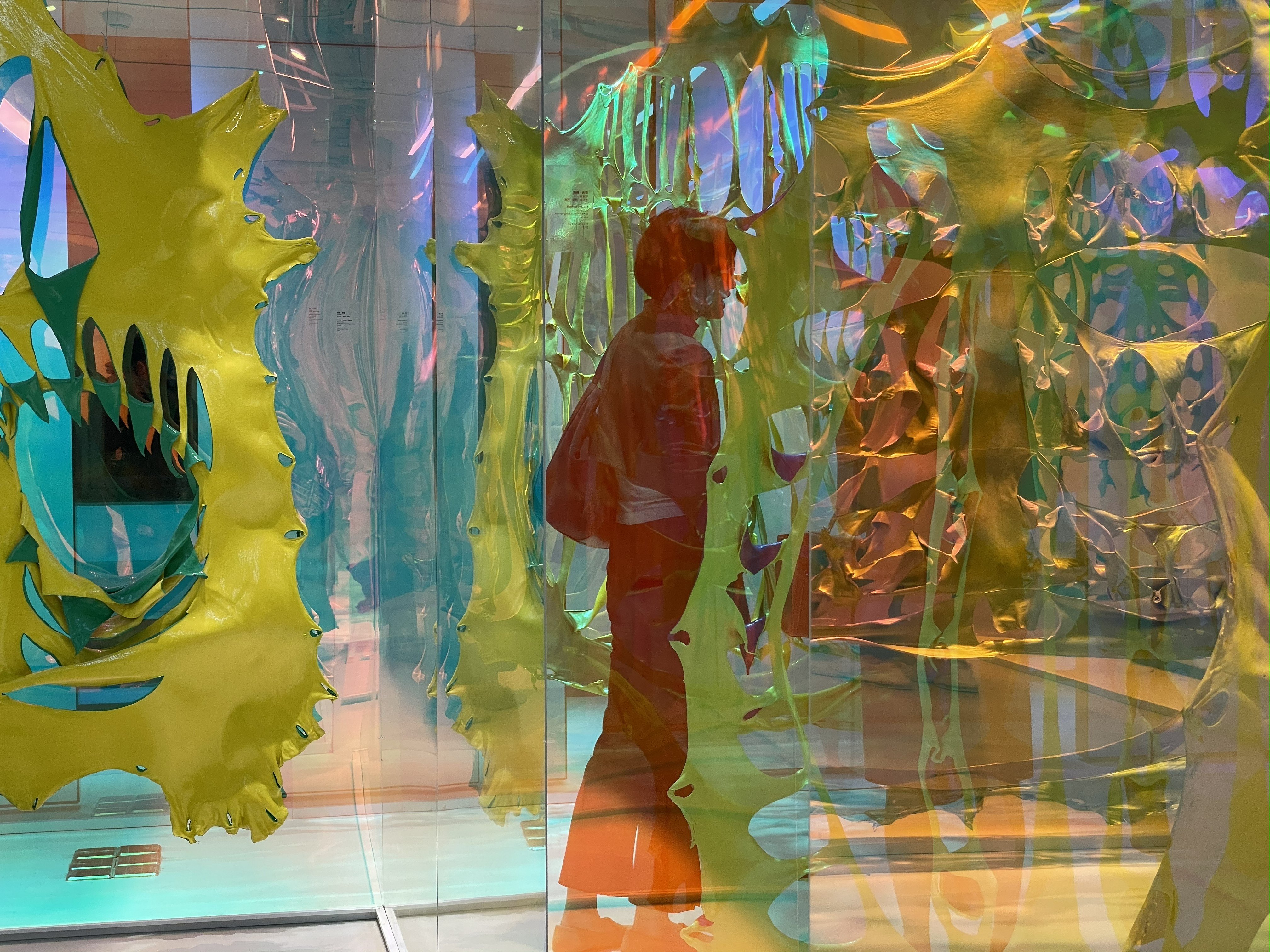
Wu Jian’an: The Rite, exhibition view ©Wu Jian’an
Wu Jian’an’s work ultimately articulates a distinctive artistic language. By re-establishing a visible connection between contemporary art and ancient ritual, he opens new dimensions for myth, totemic imagery, folk craftsmanship, and traditional systems of writing. Through these works, viewers are invited into a dialogue with the ancient spirit of humanity, rediscovering a sense of mystery and reverence. In doing so, they may also begin to glimpse a possible reconciliation—between the self and the world, between rational knowledge and lived experience.
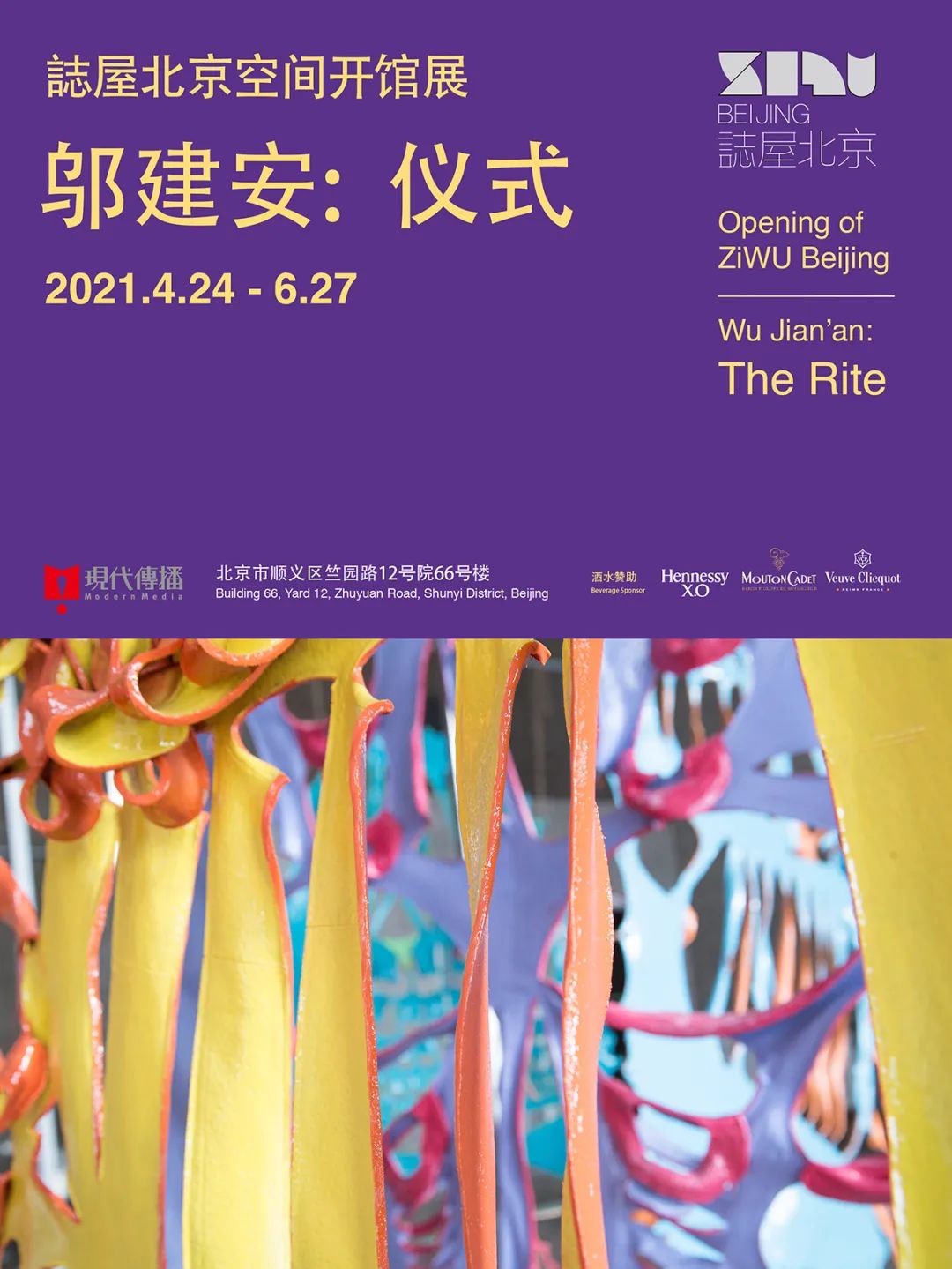
Wu Jian’an: The Rite
2021.04.24-2021.06.27
ZiWU Beijing, Beijing, China