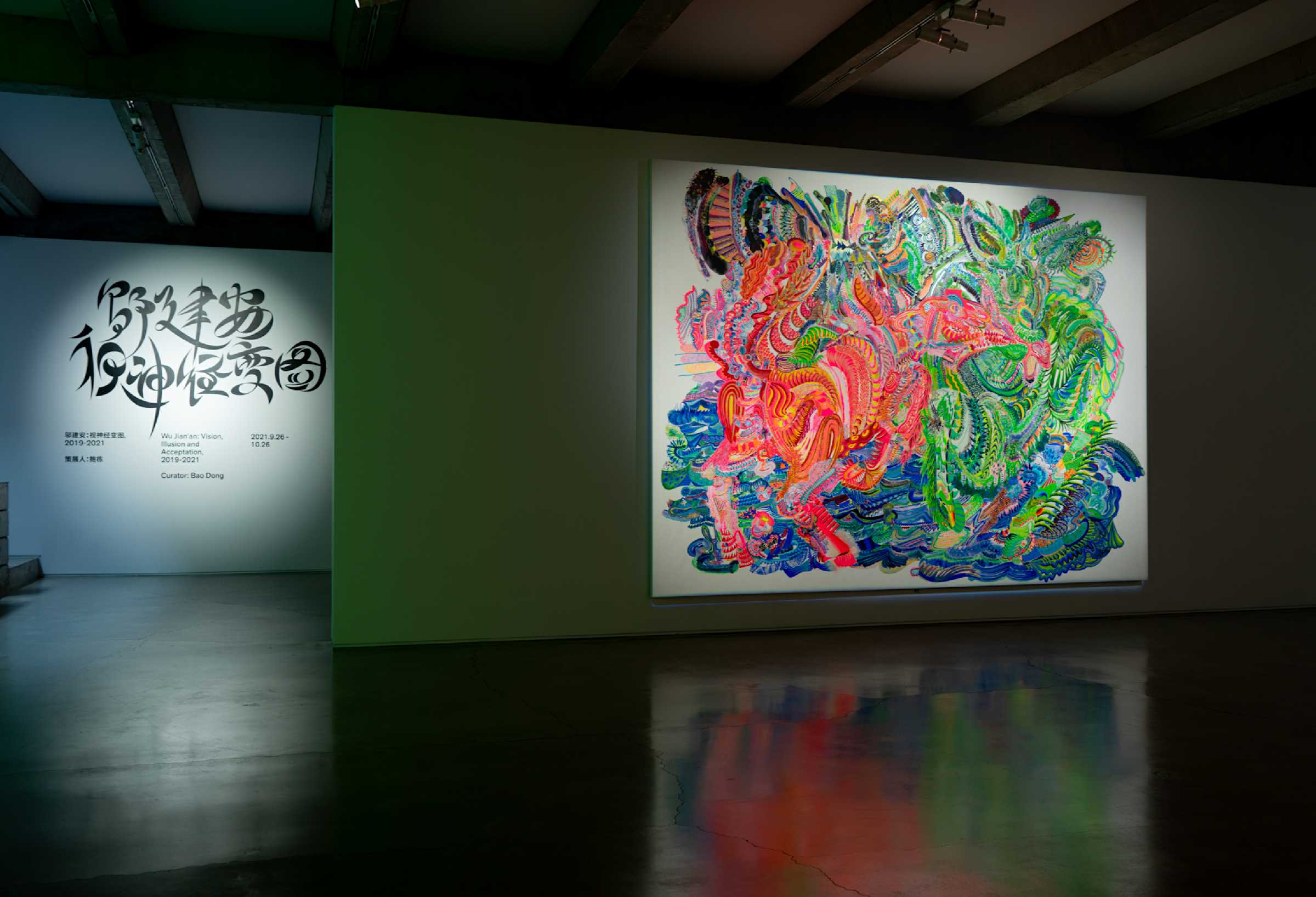
Wu Jian’an: Vision, Illusion and Acception, 2019-2021, exhibition view ©PIFO Gallery
Wu Jian’an: Vision, Illusion and Acception, 2019-2021
When the exhibition opened, the lights in the gallery suddenly dimmed. For a brief moment, the space fell into darkness—then an unexpected wave of exclamations and applause erupted from the audience. This was the opening scene of Wu Jian’an: Vision, Illusion and Acception, 2019–2021. In the unlit gallery, the works on the walls suddenly radiated an indescribable visual tension: brilliant colors, striking imagery, and an extraordinarily dense rhythm of painting stimulated the senses of everyone present. Viewers found themselves drawn into a state of visual intoxication—captivated, bewildered, and unable to suppress their astonishment.
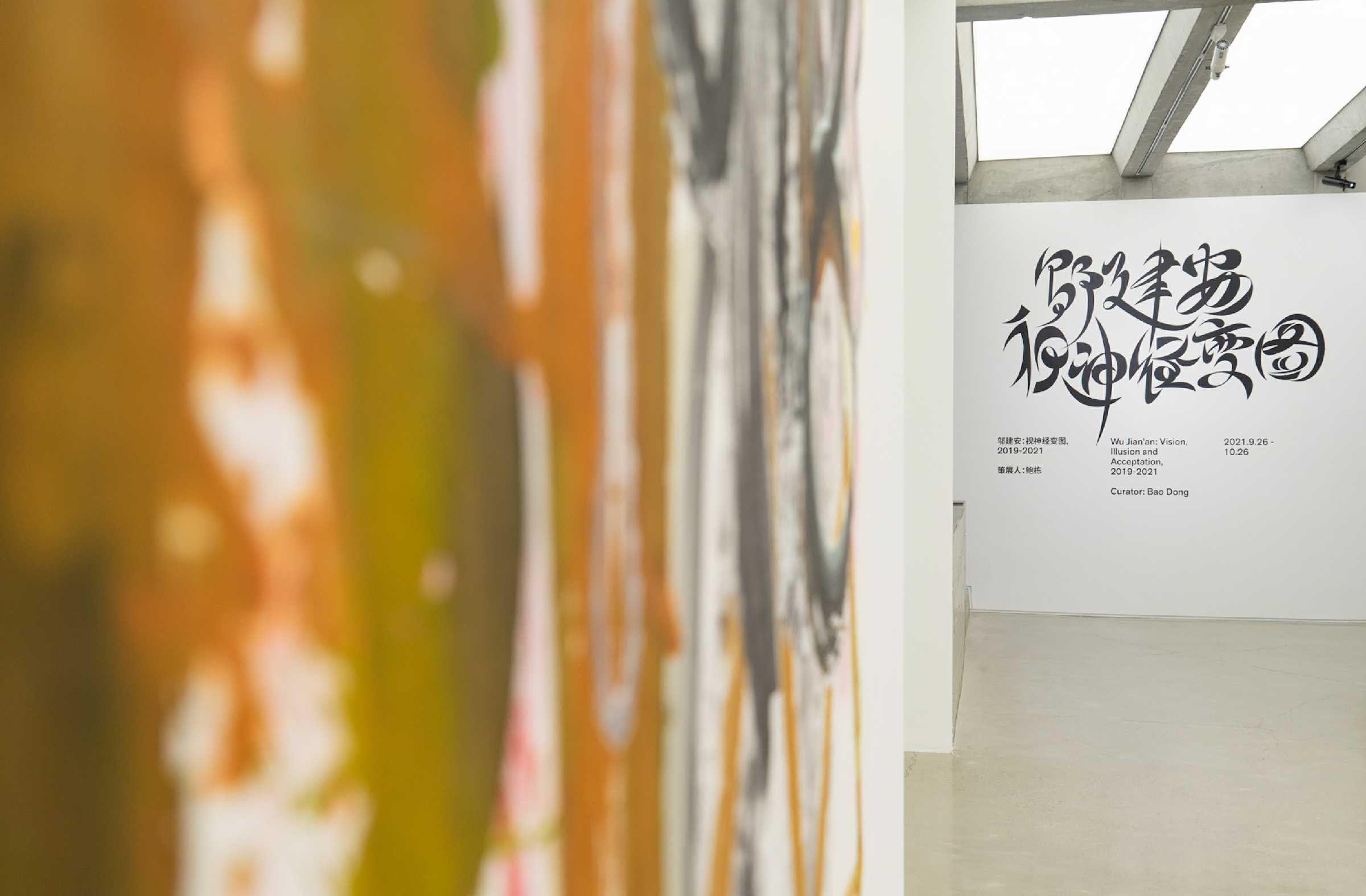
Wu Jian’an: Vision, Illusion and Acception, 2019-2021, exhibition view ©PIFO Gallery
On September 26, 2021, Wu Jian’an’s first solo exhibition at PIFO Gallery opened to the public. The exhibition presented two major series created since 2019—Infinite Painting and 500 Brushstrokes—which together mark a significant turning point in the artist’s practice. In recent years, Wu has undertaken a deeper reflection on the nature of painting itself. Throughout his career, Wu Jian’an has been known for a cross-media artistic practice that draws from both Eastern and Western mythologies, constructing multilayered narratives that resemble contemporary allegories. In this exhibition, however, his focus shifts toward the level of the visual nervous system. The works presented here—each concerned with the relationship between detail and totality in painting—no longer rely on cross-media spectacle to construct a grand mythological narrative.
Instead, as curator Bao Dong suggests, Wu Jian’an’s recent Infinite Paintings and 500 Brushstrokes series can be understood as a form of theoretical writing conducted through visual means: a way of discussing vision through vision itself. These works examine the relationships between detail and totality, and between the individual and the collective—relationships that are both interconnected and antagonistic.
In Buddhist painting, the tradition of Jingbianhua uses images to explain the philosophical ideas contained in a particular sutra. The term carries two intertwined meanings. The first is Sutra Illustration, the visual narration of doctrines. The second is Miracle —the dazzling colorful manifestation of supernatural powers. These two aspects function as inner and outer layers of the same structure.
The title of this exhibition, Vision, Illusion and Acception, draws from this dual meaning. It also helps explain why viewers often experience a sense of enchantment and astonishment when encountering Wu Jian’an’s works. In a certain sense, the artist’s practice seems to enter a new realm reminiscent of Cai Yuanpei’s famous proposition of “replacing religion with aesthetic education.” Standing before these works, viewers may feel as if they are gazing upon religious paintings—experiencing a sense of awe and wonder that transcends ordinary perception.
The Individual and the Collective in the 500 Brushstrokes Series
Wu Jian’an is an artist who generates aesthetics through method. This approach is most clearly embodied in his 500 Brushstrokes series, where he examines the tangled and often contradictory relationship between the individual and the collective within a single work.
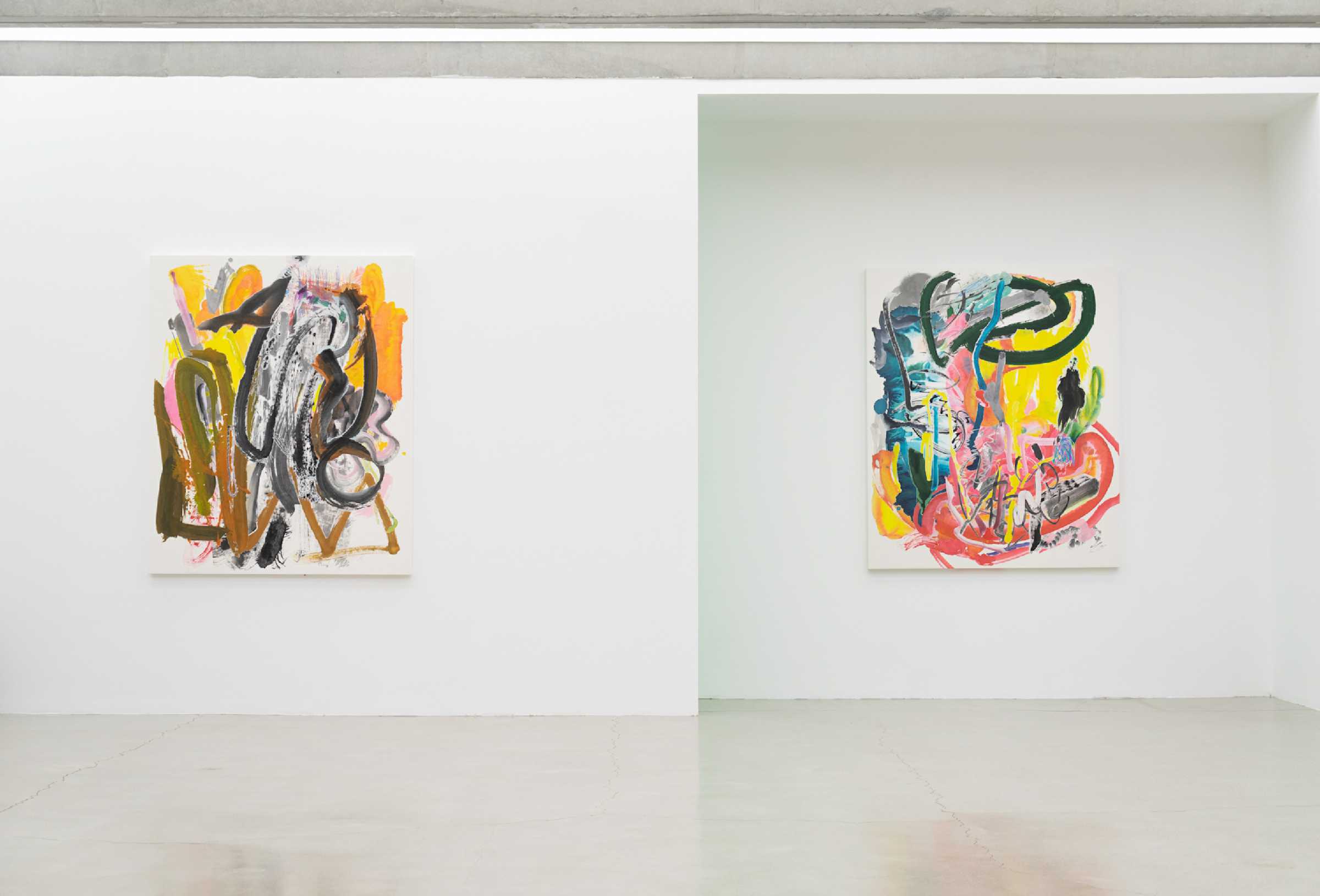
Wu Jian’an: Vision, Illusion and Acception, 2019-2021, exhibition view ©PIFO Gallery
Wu has previously realized the 500 Brushstrokes project in a number of contexts. In 2018, for example, he created House of 500 Brushstrokes in Echigo-Tsumari, Japan, inviting 500 participants to contribute their marks so that hundreds of individual presences gathered within the exhibition space. In 2020, the project appeared at Ziwu Shanghai, where hundreds of influential figures from different fields were invited to take part. The 500 Brushstrokes works presented at PIFO Gallery are the newest iteration of this ongoing series. Today, 500 Brushstrokes has become one of the most representative projects in Wu Jian’an’s practice. The idea originated in 2016 during two interactive workshops the artist conducted at the Metropolitan Museum of Art and the Museum of Fine Arts, Boston.
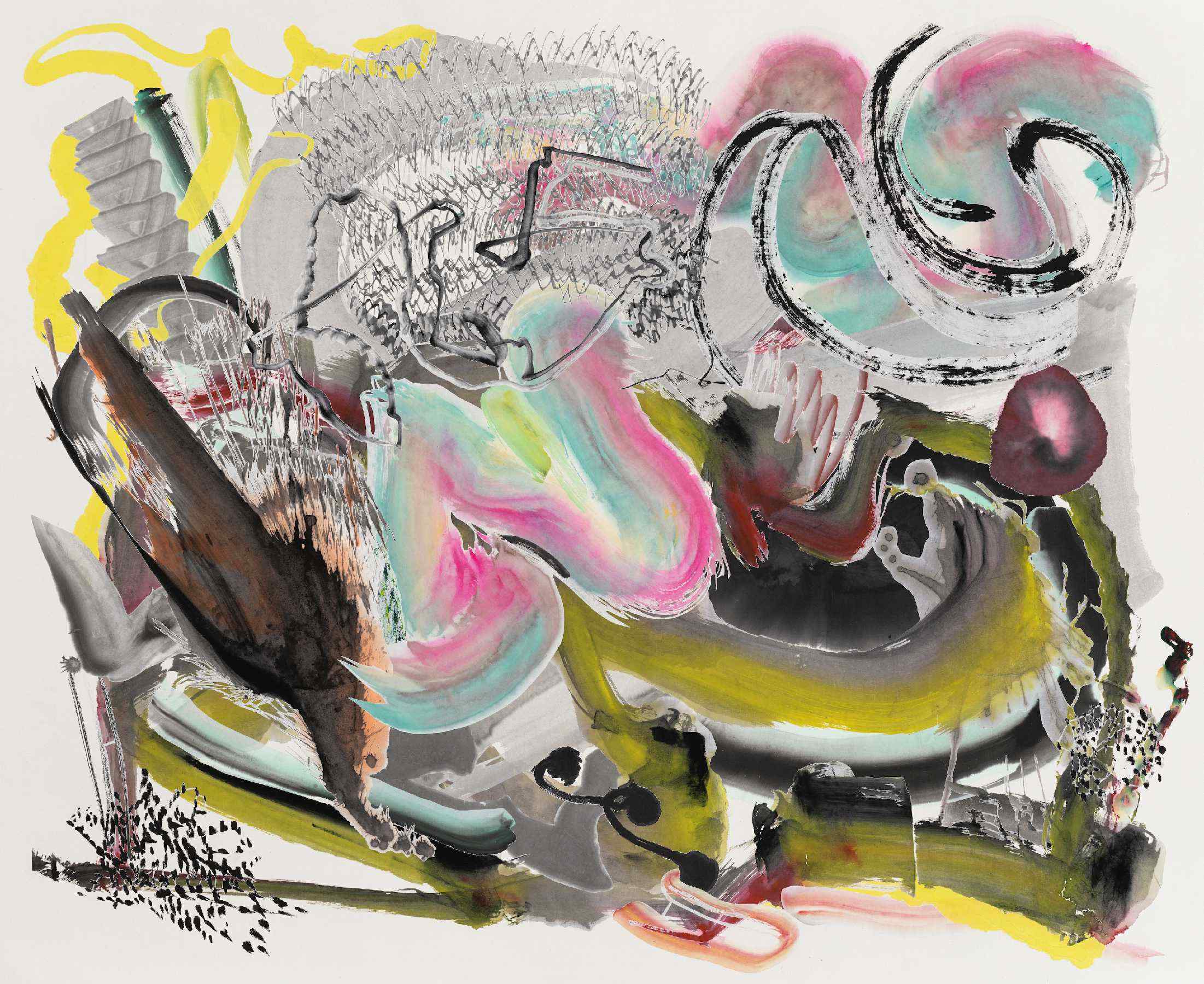
500 Brushstrokes#79, Ink, watercolor, paper and collage on Xuan paper, 152 x 182 cm,2021©Wu Jian’an
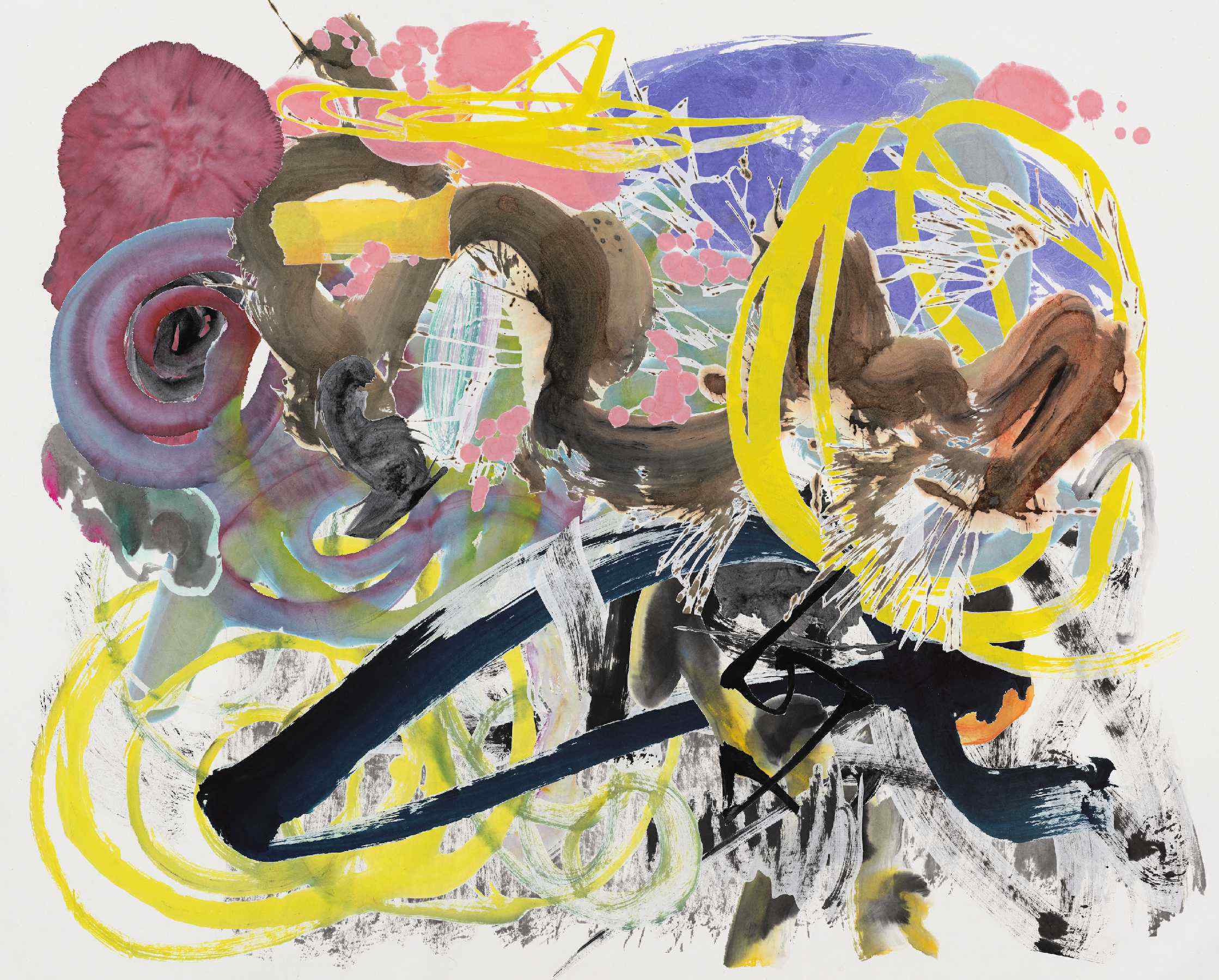
500 Brushstrokes#80, Ink, watercolor, paper and collage on Xuan paper, 122 x 155 cm,2021©Wu Jian’an
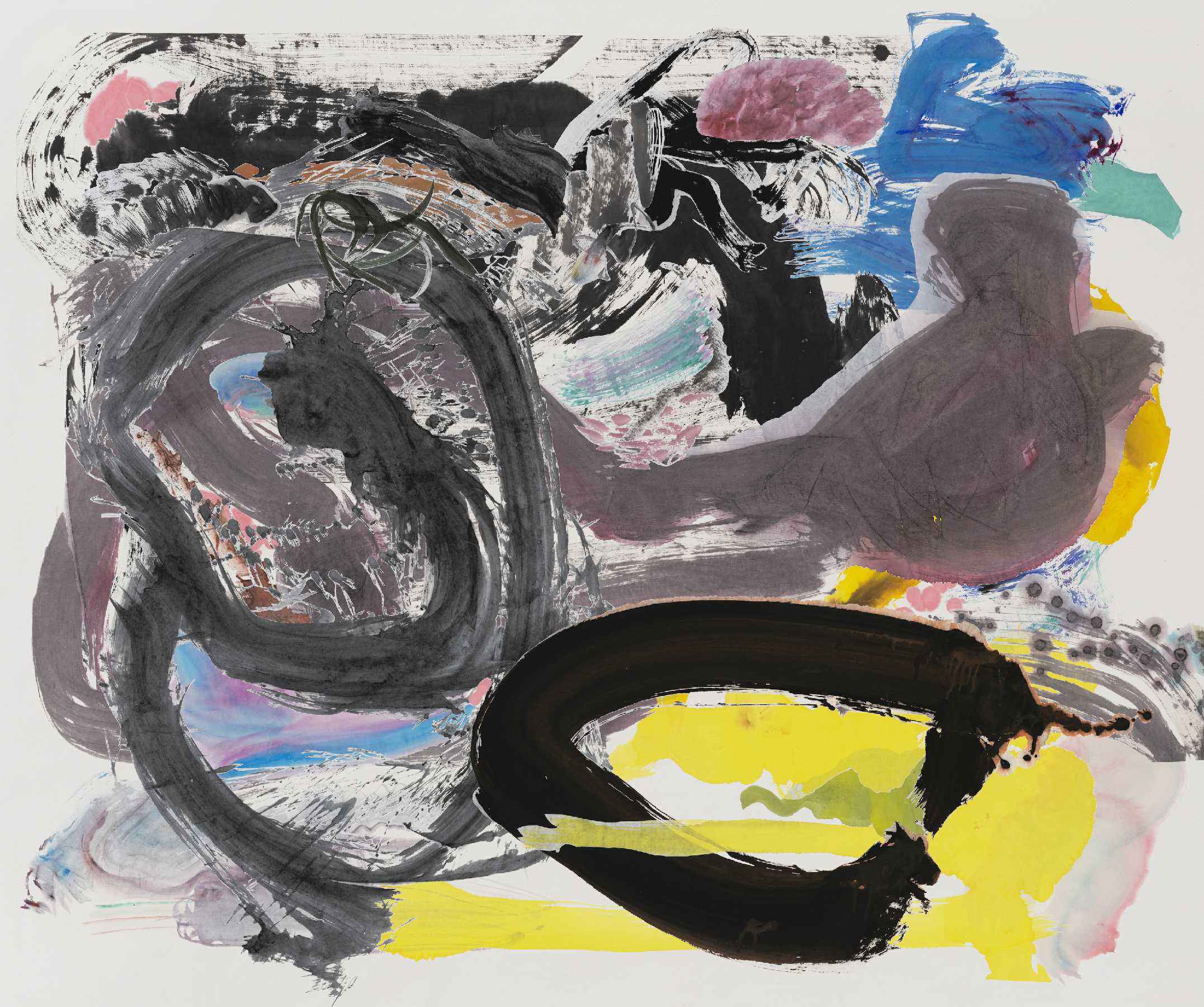
500 Brushstrokes#82, Ink, watercolor, paper and collage on Xuan paper, 152 x 182 cm,2021©Wu Jian’an
According to Wu Jian’an, the project begins with a simple assumption: that the traces people leave on xuan paper—however casual or spontaneous they may appear—can reveal something uniquely personal about the individual who made them. What seems like an accidental brushstroke can be understood as a projection of one’s inner world, or as a fragment of personality, character, and spirit. Traditional materials such as brush, ink, and xuan paper magnify these subtle differences to an extraordinary degree.
The title 500 Brushstrokes is also inspired by the halls of Five Hundred Arhats found in Buddhist temples. As Wu explains: “Each of the Five Hundred Arhats is different. When people visit such a hall, they often find one figure they feel particularly connected to. They speak to it, confide in it, or make a wish before it. In 500 Brushstrokes, each stroke represents the state of a different person—or the state of a person at a particular moment. And within the painting, viewers will inevitably find a stroke that feels close to them, or one that they recognize most easily.”
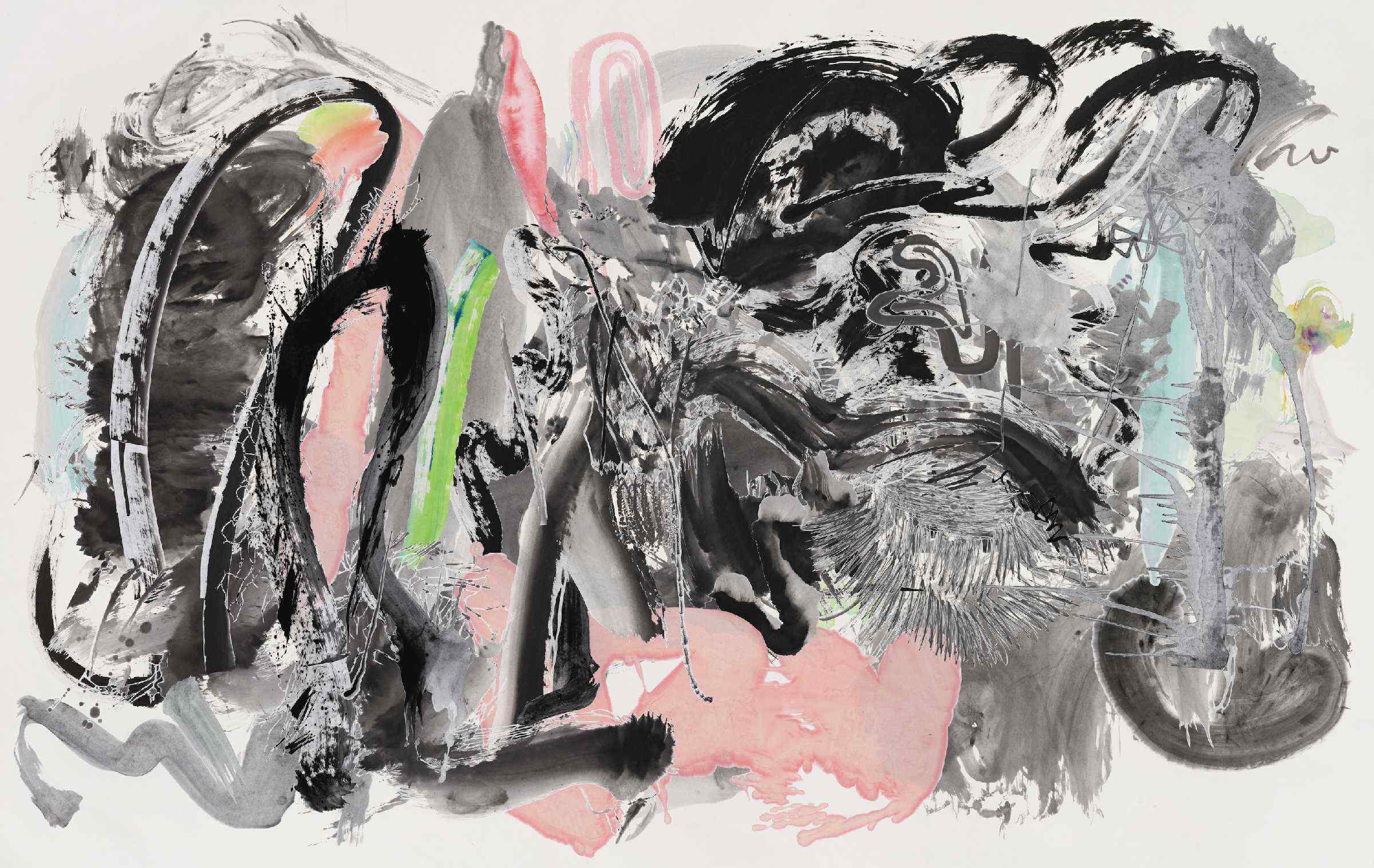
500 Brushstrokes#83, Ink, watercolor, paper and collage on Xuan paper, 185.5 x 296 cm,2021©Wu Jian’an
By gathering completely spontaneous marks into an abstract whole, the series simulates a kind of utopian condition—one in which individuals remain free while the collective remains fundamentally open and unpredictable. In producing these works, Wu Jian’an assumes a role similar to that of a theatrical director. He invites friends and strangers alike to participate in a kind of “game of brushstrokes” in his studio. Participants are free to choose the size and type of brush, as well as the dryness or intensity of ink and color. They are asked not to paint images or write words, but simply to leave a single trace on a sheet of xuan paper according to their own impulses. Wu then cuts out each of these collected marks and recomposes them on new sheets of blank paper, assembling them into the final 500 Brushstrokes compositions.
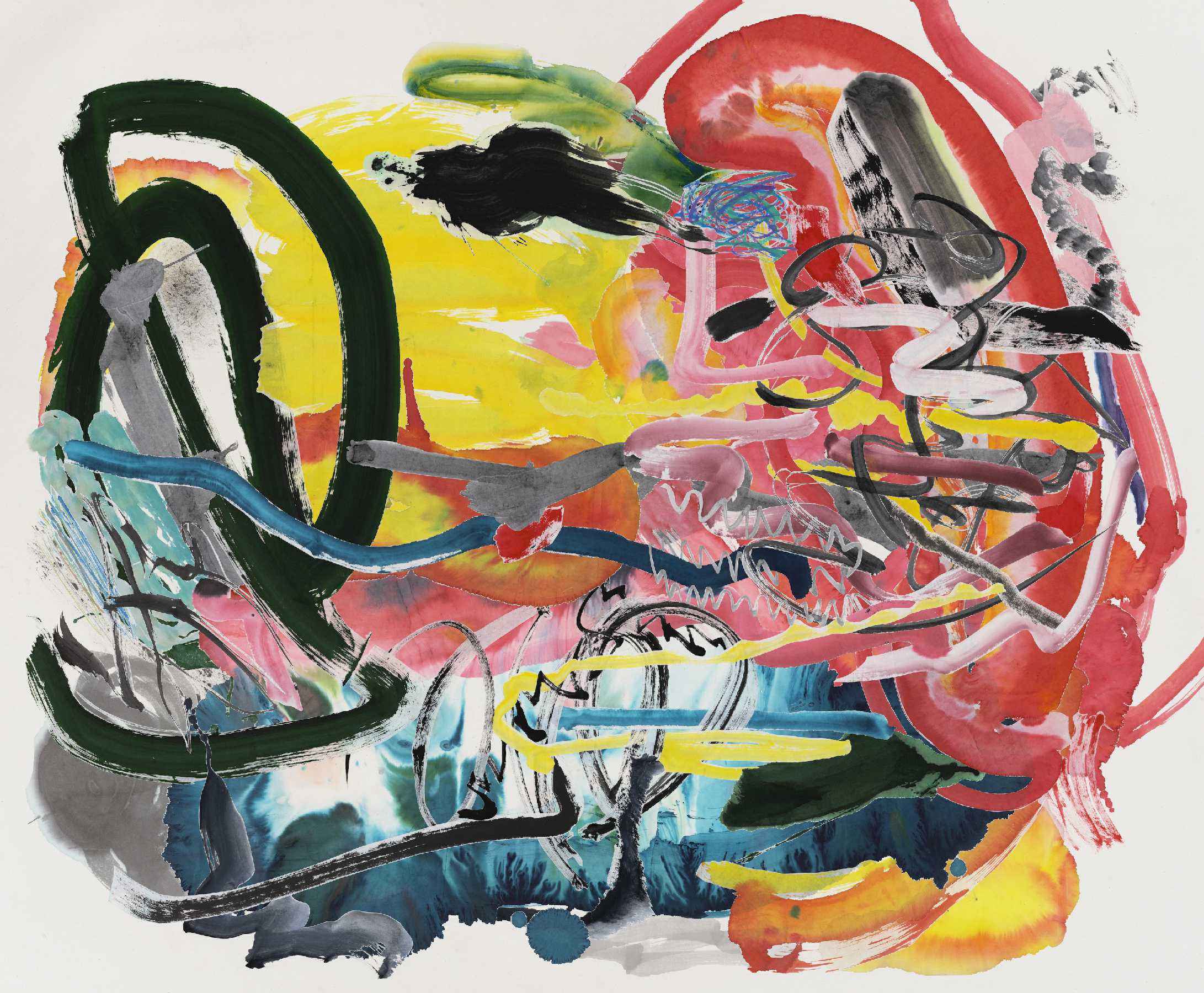
500 Brushstrokes#84, Ink, watercolor, paper and collage on Xuan paper, 159 x 190 cm,2021©Wu Jian’an
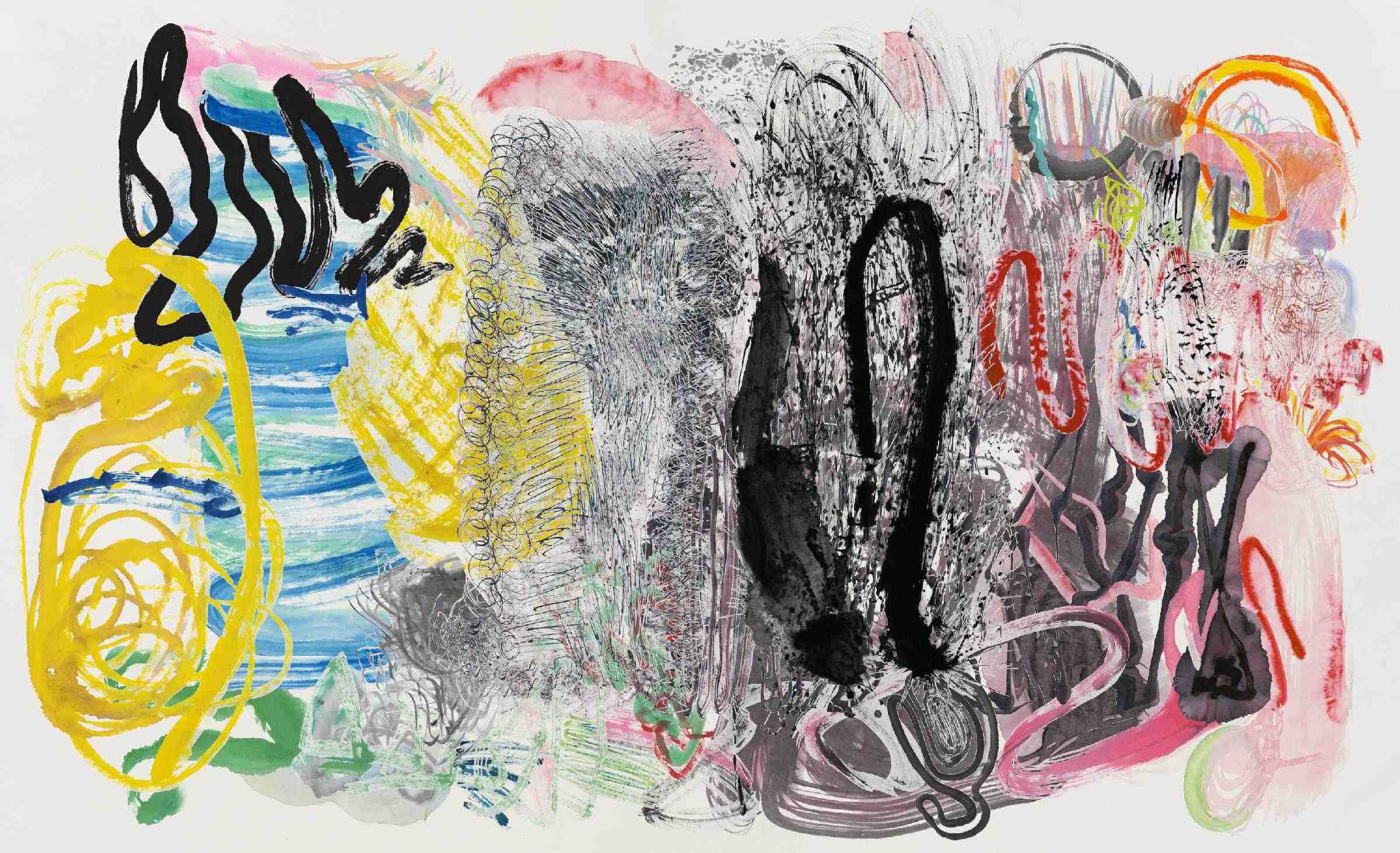
500 Brushstrokes#87, Ink, watercolor, paper and collage on Xuan paper, 183 x 296 cm,2021©Wu Jian’an
For Wu Jian’an, every brushstroke contains the distinctive habits of an individual’s mind and body. In this sense, each mark resembles a portrait. Within the world of 500 Brushstrokes, individuals gather in the form of brushstrokes, forming a dynamic field of relations. The works can be seen both as reflections of the real world and as sites where unexpected connections emerge, producing images that are at once improbable and astonishing.
Detail and Totality in the Infinite Painting Series
Infinite Painting is a new body of work presented in Wu Jian’an’s solo exhibition at PIFO Gallery. Building upon the conceptual foundation of 500 Brushstrokes, the series extends the artist’s investigation of the relationship between detail and totality within a single pictorial field.
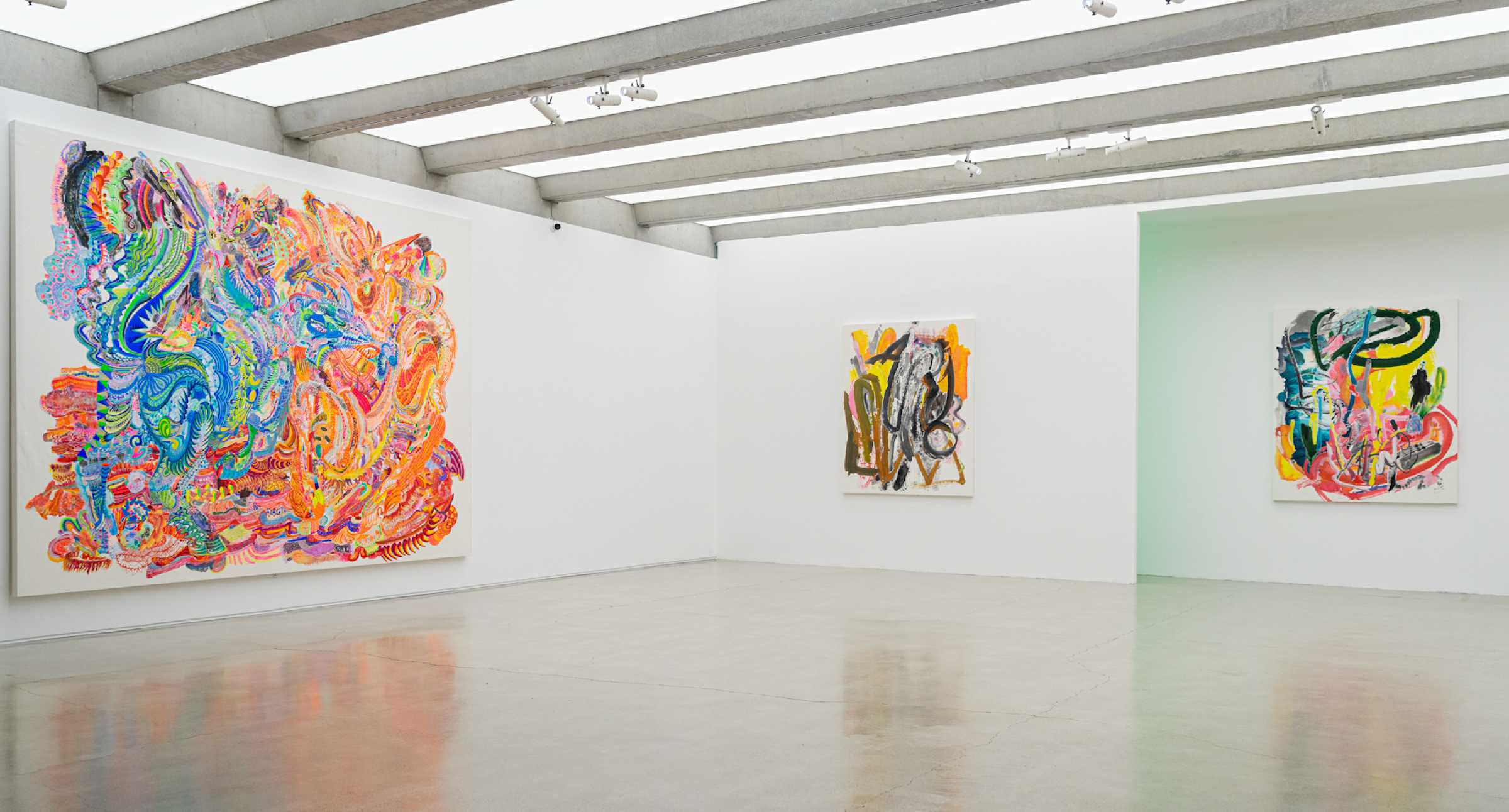
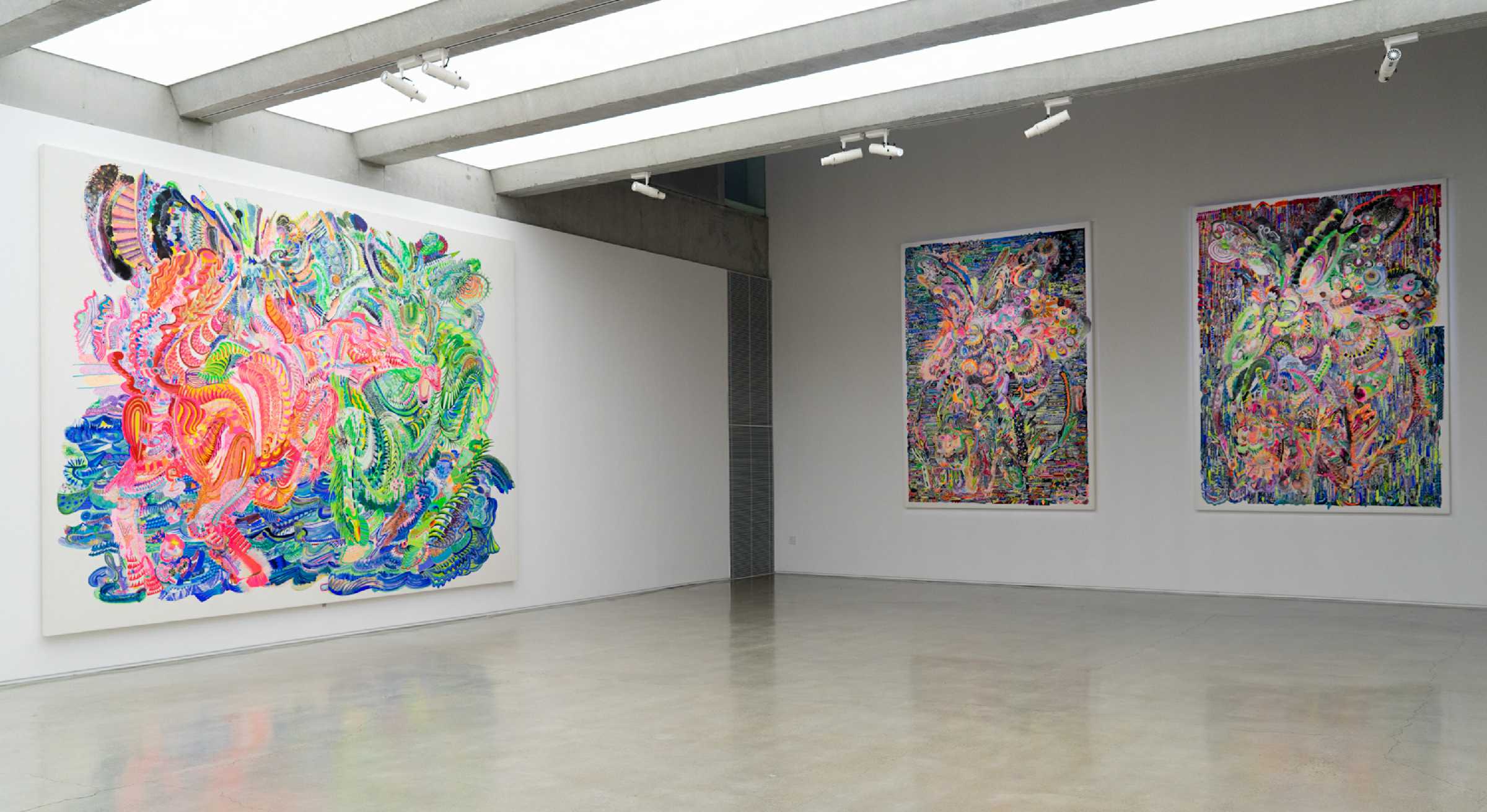
Wu Jian’an: Vision, Illusion and Acception, 2019-2021, exhibition view ©PIFO Gallery
Unlike 500 Brushstrokes, which is composed of marks made by different participants, Infinite Painting originates from specific images. In creating these works, Wu does not simply cut and collage brushstrokes into harmonious abstract compositions as he does in 500 Brushstrokes. Instead, the process behind Infinite Painting is far more complex and labor-intensive.
The artist begins by fragmenting a concrete image, breaking it down into the smallest units of painting: individual brushstrokes. Once separated, these dispersed strokes undergo an entirely new visual reorganization, gradually reassembling into a new pictorial whole. In this process, a different image emerges. Elements of the original figurative image appear and disappear intermittently, interrupting the viewer’s process of recognition while simultaneously generating a sense of visual pleasure. Through this method, the image undergoes a transformation—from form, to formlessness, and finally to a state in which form reappears within the formless.
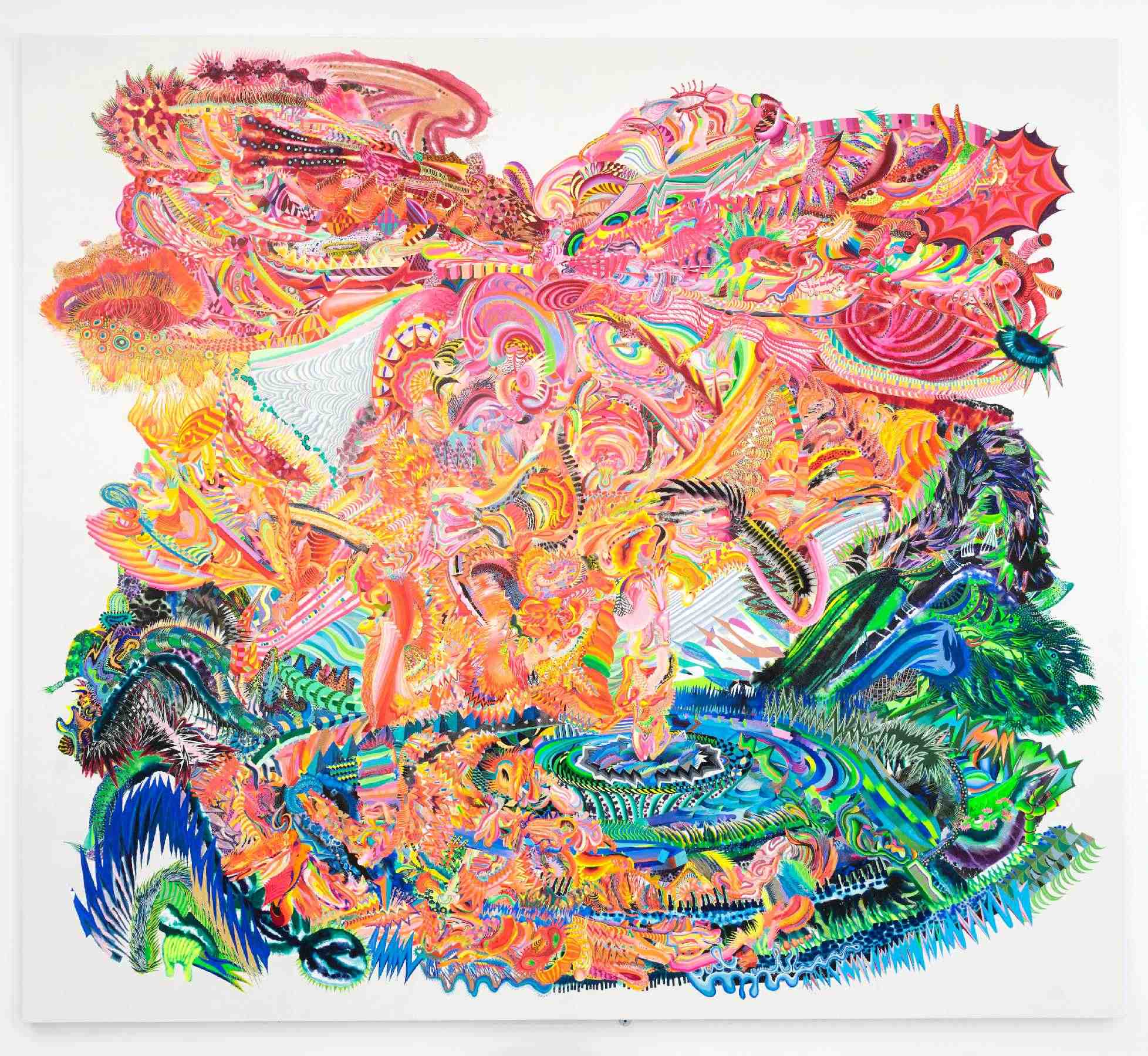
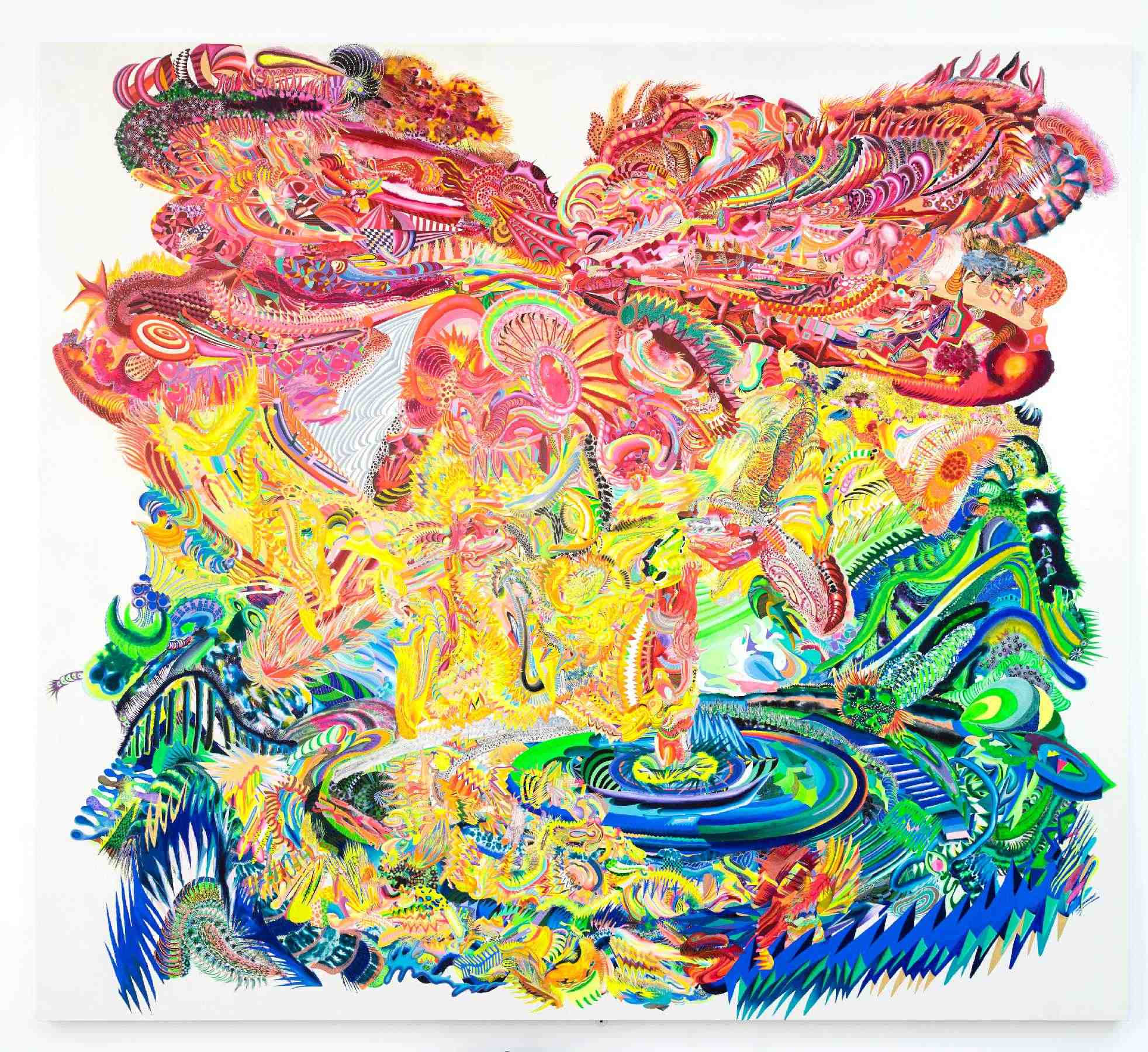
Above the Water Surface No.1 &2
Ink, watercolor, acrylic, paper-cut and collage on Xuan paper, 300 x 336 cm,2020-2021©Wu Jian’an
Within this series, the brushstrokes that have been detached from their original context appear fragmented, inorganic, and structurally indeterminate. Without a clear beginning or end, they evoke a condition of endless extension—hence the title Infinite Painting. In order to further explore the possibilities of the series, Wu has also produced pairs of works derived from the same source image, creating compositions that are similar yet distinct from one another. This approach further expands the range of potential relationships contained within the works.
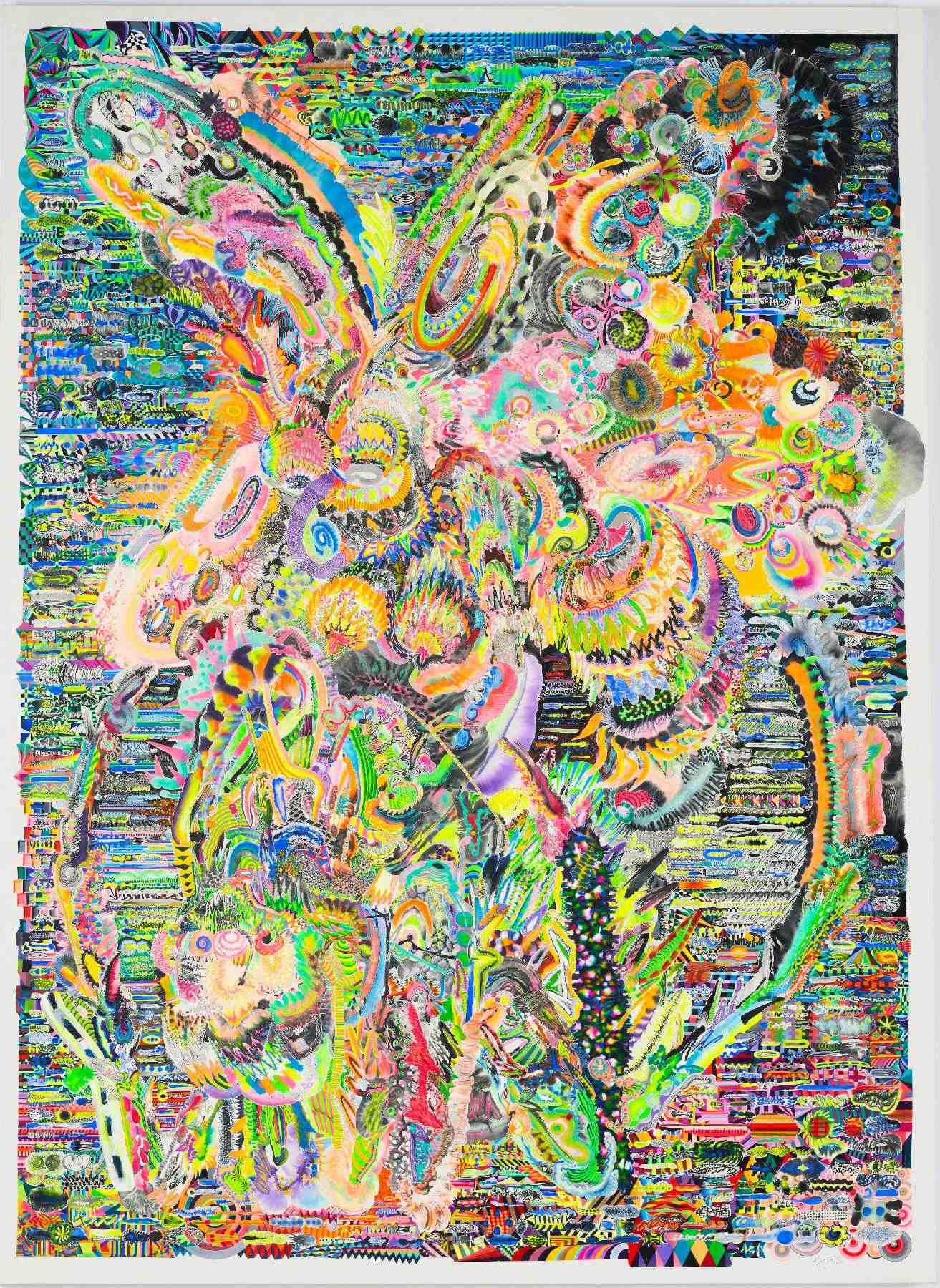
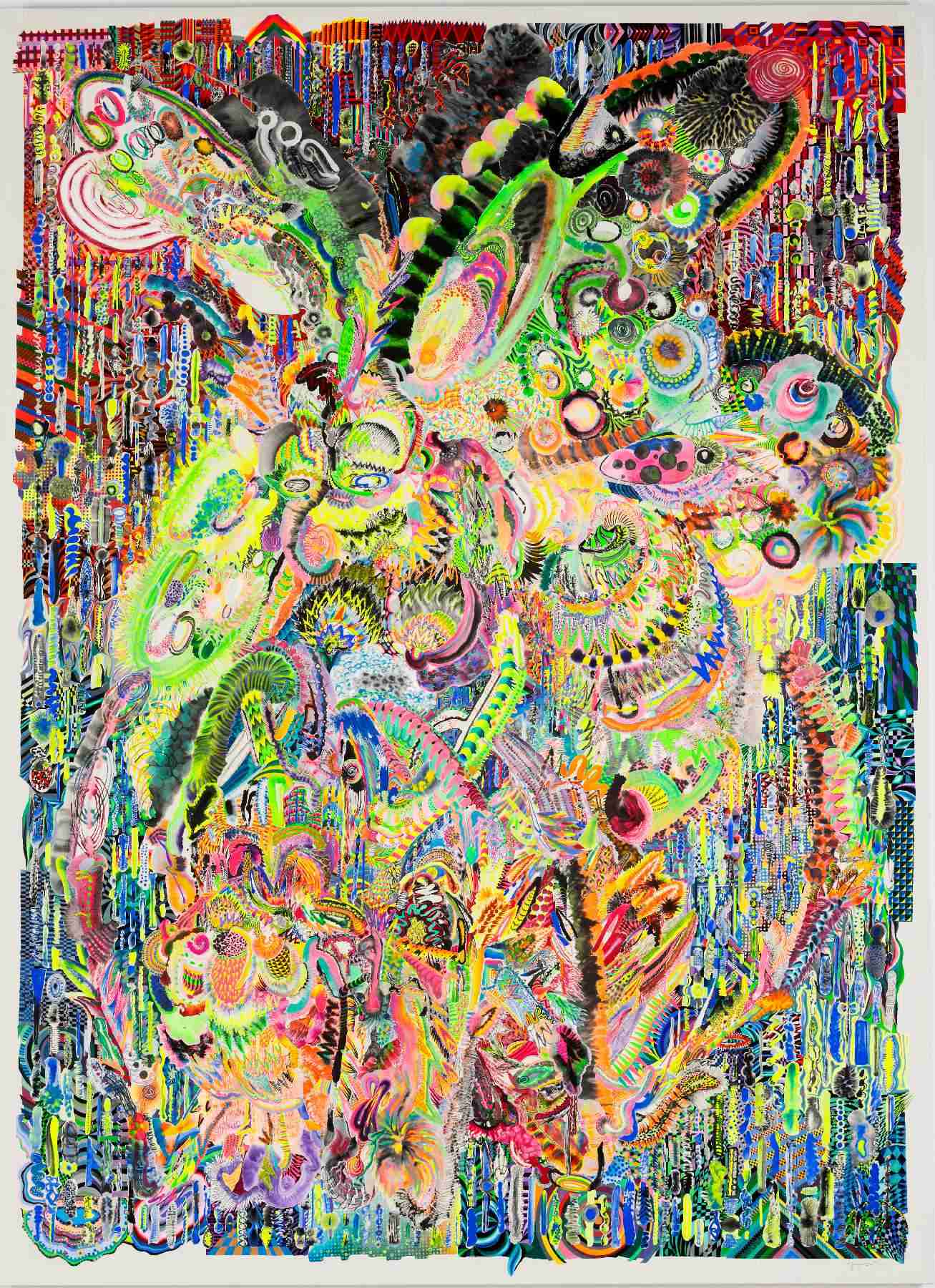
A Butterfly on the Spider’s Face No.1 &2
Ink, watercolor, acrylic, paper-cut and collage on Xuan paper, 280 x 200 cm,2020-2021©Wu Jian’an
One of the earliest experiments in this series is A Butterfly on the Spider’s Face, presented in this exhibition. According to the artist, the two variations derived from the same source image required nearly a full year to complete. When viewers focus closely on the surface of the paintings, they may become absorbed by the constantly shifting brushstrokes and the mesmerizing interplay of colors. Yet when stepping back and examining the works from a distance, the same underlying image gradually becomes recognizable in both paintings. Differences in color, brushwork, and background, however, complicate this process of recognition and challenge the viewer’s visual perception.
Through the Infinite Painting series, Wu Jian’an engages viewers in a subtle visual game. Once the image within the painting is perceived, the viewer struggles to maintain a balance between detail and totality, continually shifting between the physiological processes of visual perception and the cognitive mechanisms of visual interpretation. In this oscillation, sensation and thought rub against each other, producing a field of visual debate in which viewers experience endless pleasure through the constant transformation between what can be seen and what is actually seen.
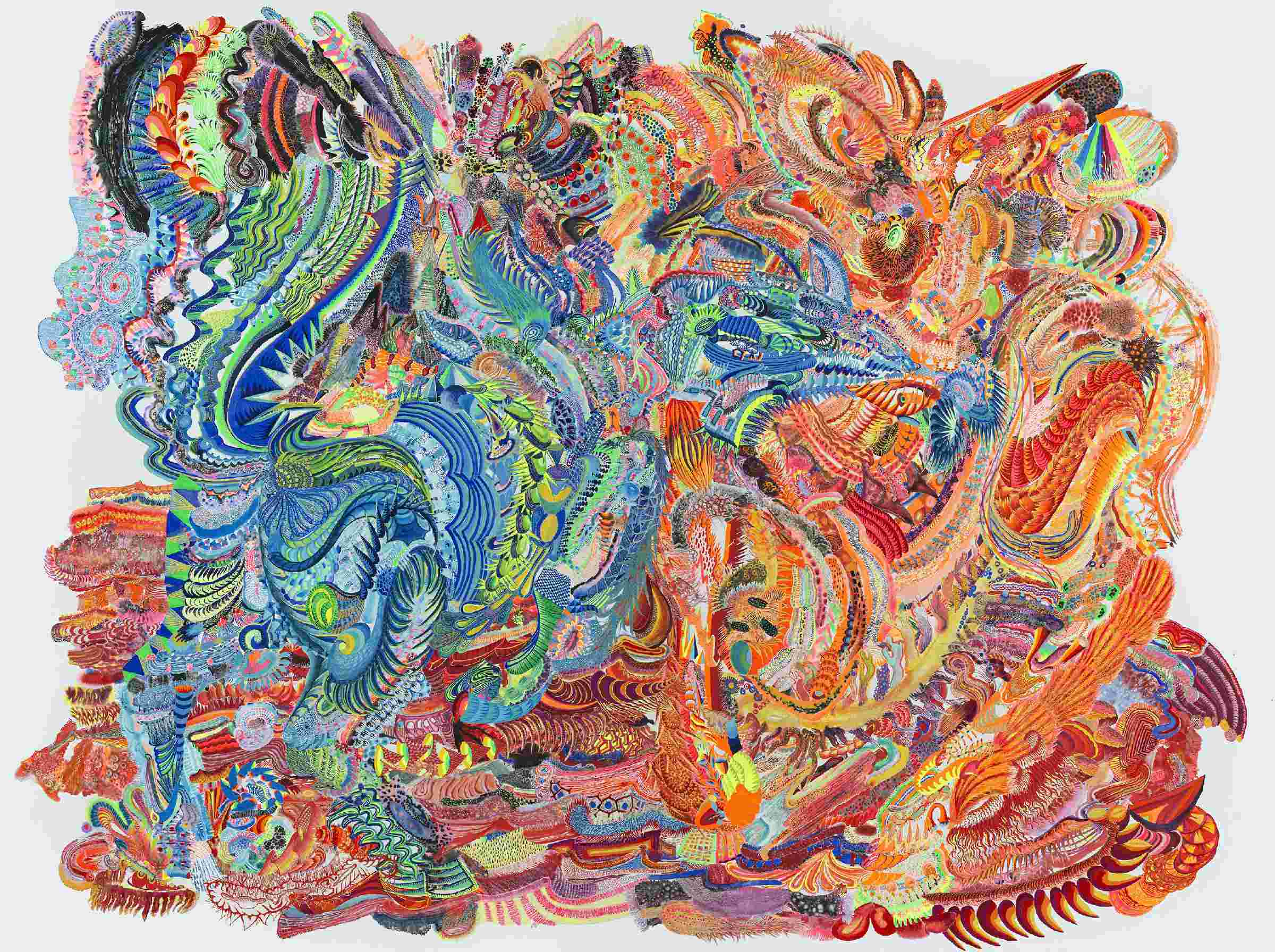
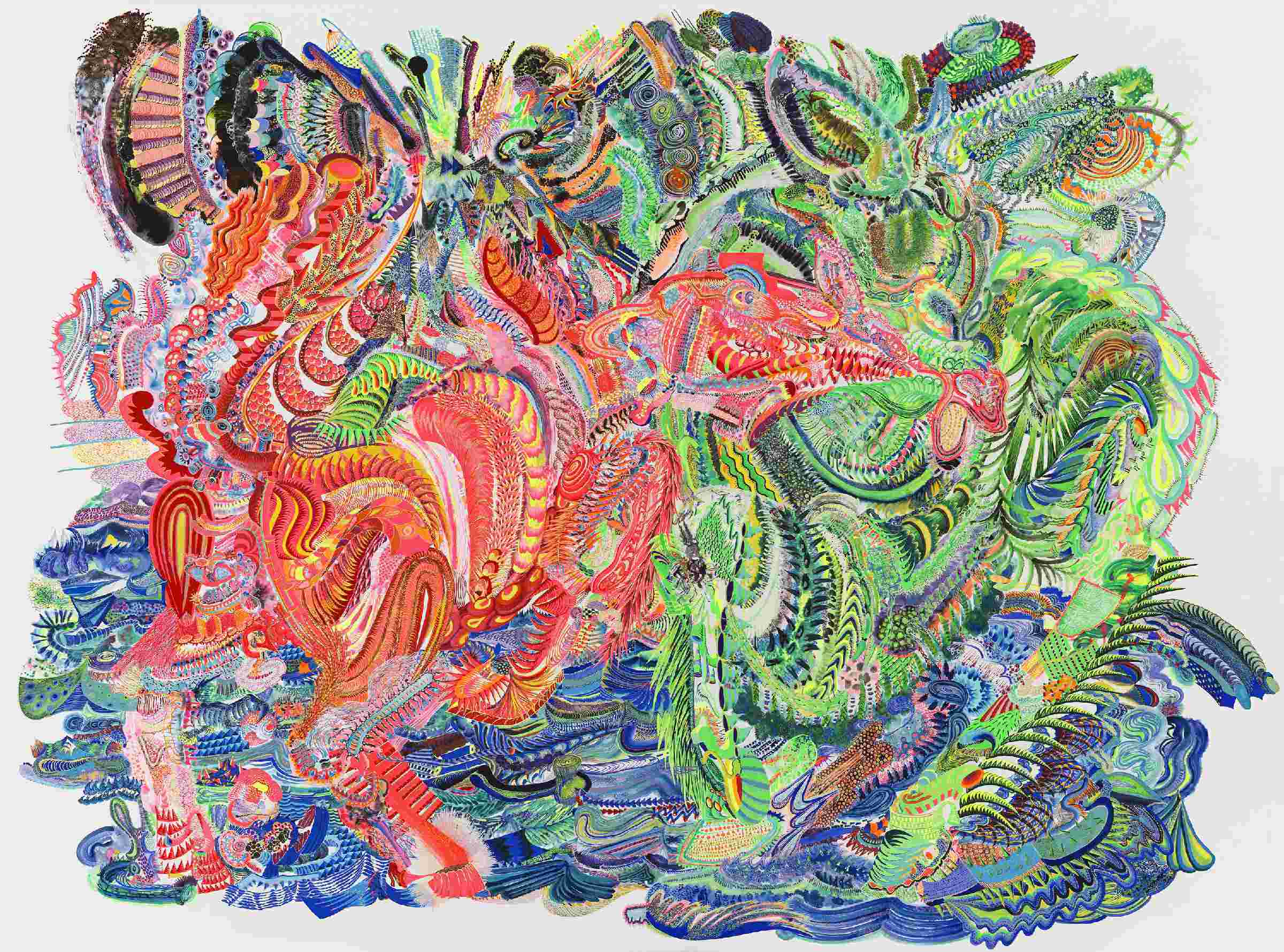
Rising of the Unicorn No.1 &2
Ink, watercolor, acrylic, paper-cut and collage on Xuan paper, 305 x 410 cm,2020-2021©Wu Jian’an
In many of these recent works, identifiable imagery still appears to exist, and Wu even assigns them specific titles—such as Rising of the Unicorn and the series Above the Water’s Surface. Yet the narrative content of these images, as well as the immense labor involved in their making, are not the artist’s primary concern. Instead, these works emerge from an exploration of multiple layers of visual possibility—physiological, technical, cultural, historical, and even political—expressed through the language of sensuous painting. What viewers ultimately encounter within these works is a direct and intuitive experience of the ever-changing multiplicity of the world.
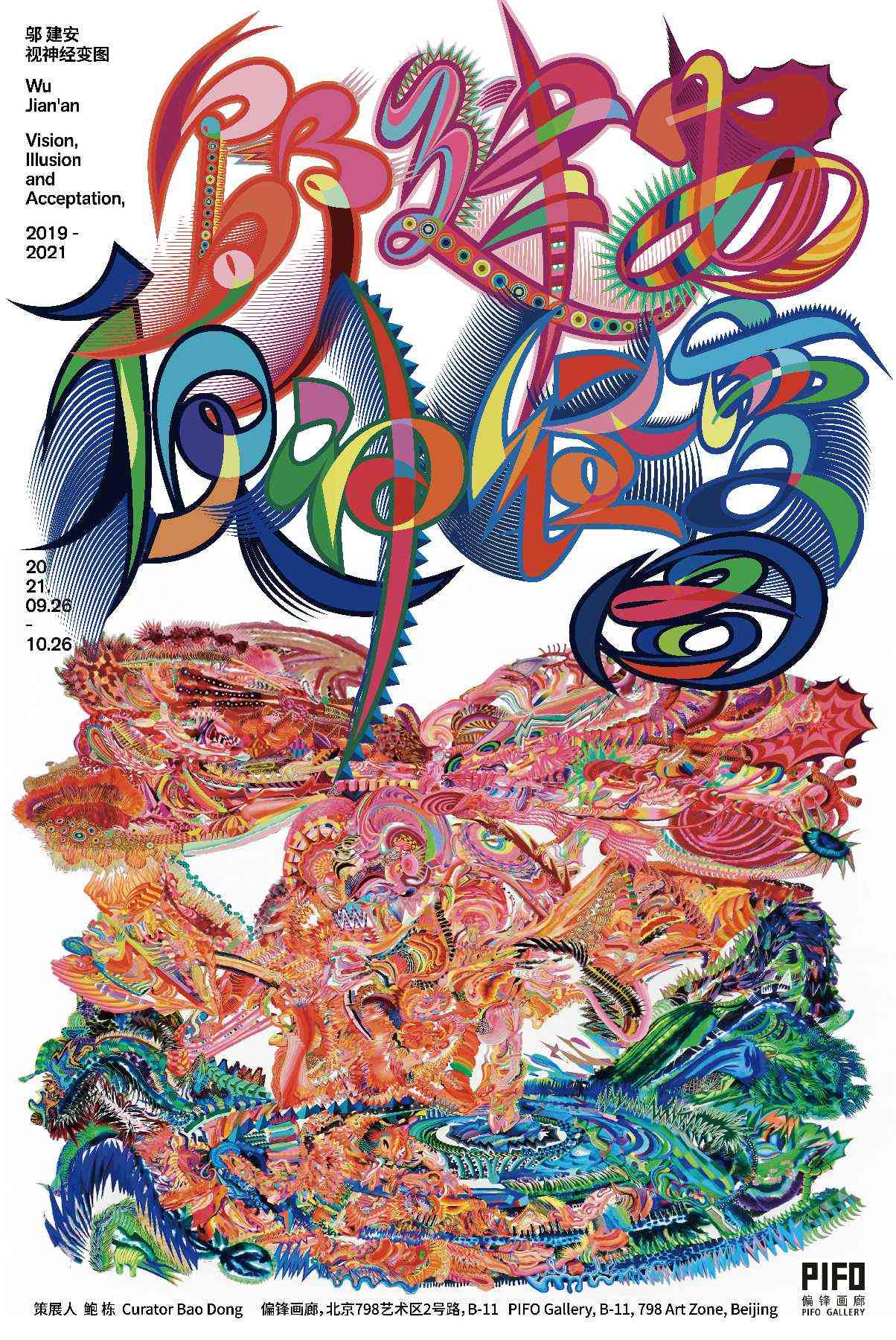
Wu Jian’an: Vision, Illusion and Acception, 2019-2021
2021.09.26-2021.10.26
PIFO Gallery, Beijing, China