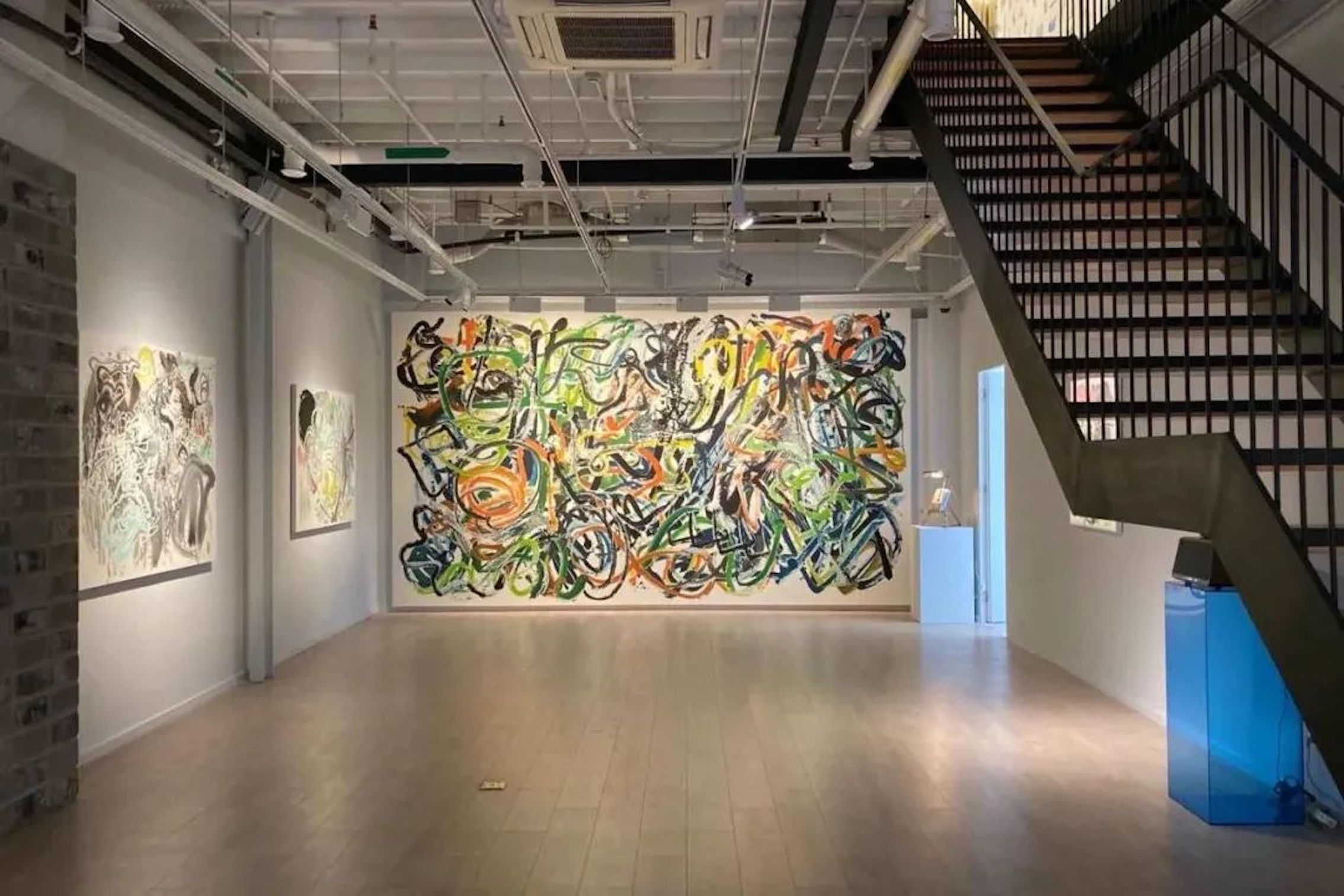
Wu Jian’an: Divine Inspiration, exhibition view ©Wu Jian’an Studio
Wu Jian’an: Divine Inspiration
The exhibition Wu Jian’an: Divine Inspiration presents a contemporary allegory constructed through the artist’s distinctive narrative method, which draws upon both Eastern and Western mythological traditions. Through layered visual storytelling, Wu Jian’an builds a complex imaginative universe in which ancient myth becomes a lens for reflecting on contemporary experience. The exhibition unfolds across three thematic chapters: Human World, Flood Control, and Oracle.
The chapter Human World centers on works from Wu Jian’an’s 500 Brushstrokes series. This series represents another stage in the artist’s ongoing exploration of the relationship between the individual and the collective, and has become one of the most representative projects in his recent practice. The origins of the project can be traced back to two interactive workshops that Wu conducted in 2016 at the Metropolitan Museum of Art and the Museum of Fine Arts, Boston.
In creating 500 Brushstrokes, Wu Jian’an assumes a role similar to that of a theatrical director, orchestrating what might be described as a “game of brushstrokes.” Each mark in the works is made by a different participant—some long-time acquaintances of the artist, others complete strangers encountered by chance. There are no restrictions on the size of the brush, the format of the xuan paper, or the use of ink and color. Participants are simply asked to relax and allow their most natural physical state and emotional impulse to flow into a single brushstroke. The resilience of xuan paper can accommodate both the most exuberant gestures and the most subtle tremors of emotion. Wu collects these brushstrokes, carefully cutting each one out and recomposing them on fresh sheets of blank paper, forming each 500 Brushstrokes composition.
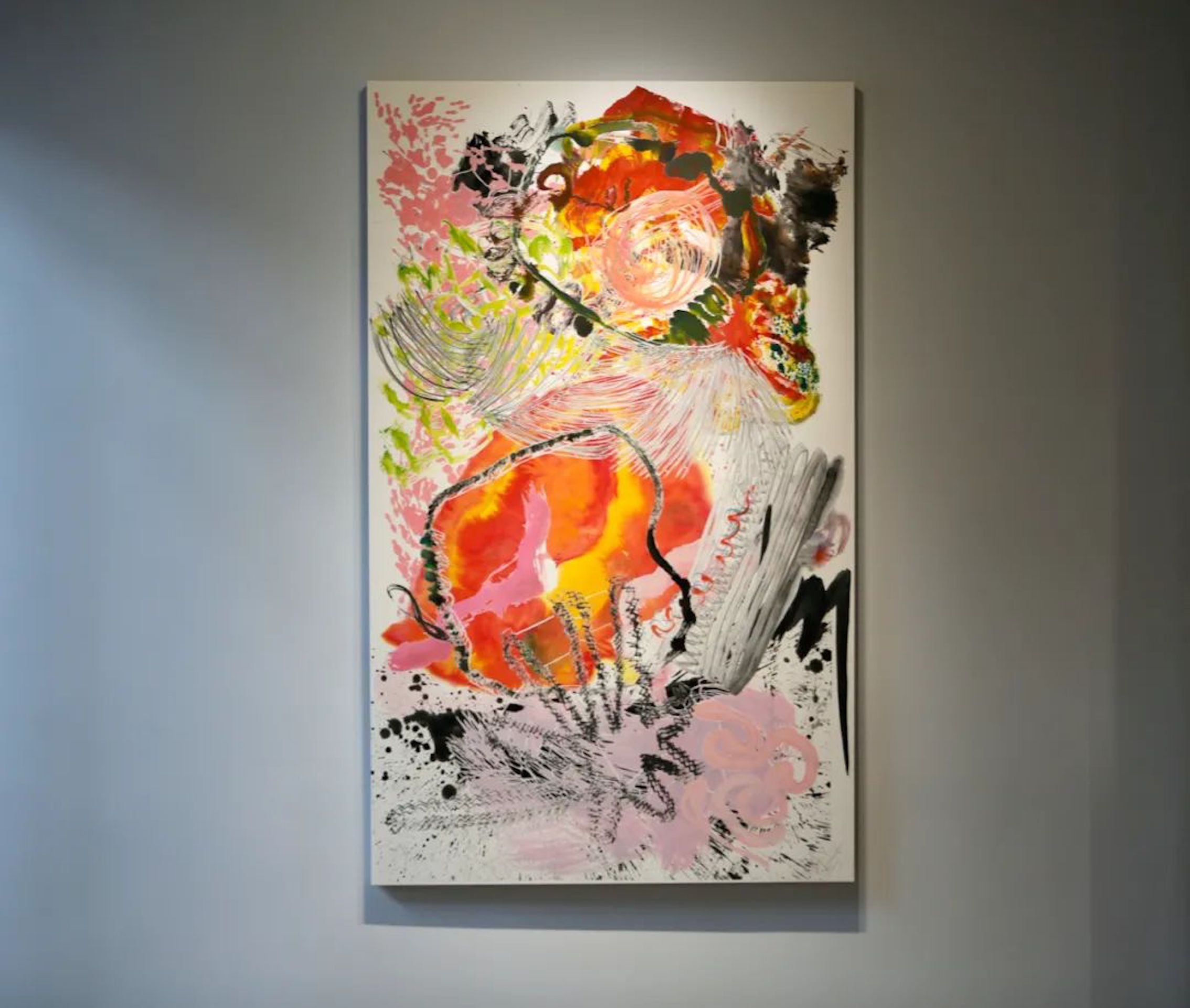
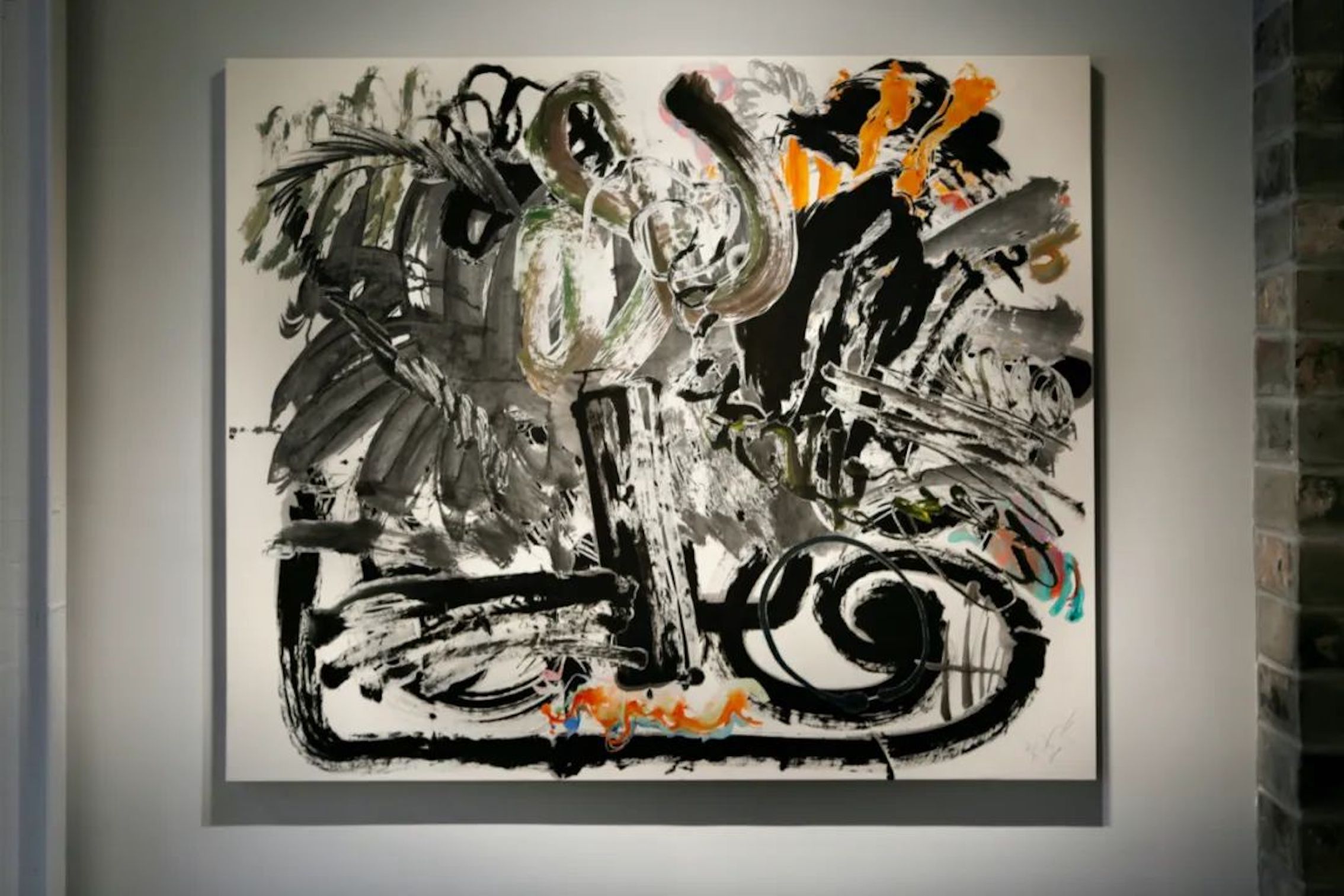
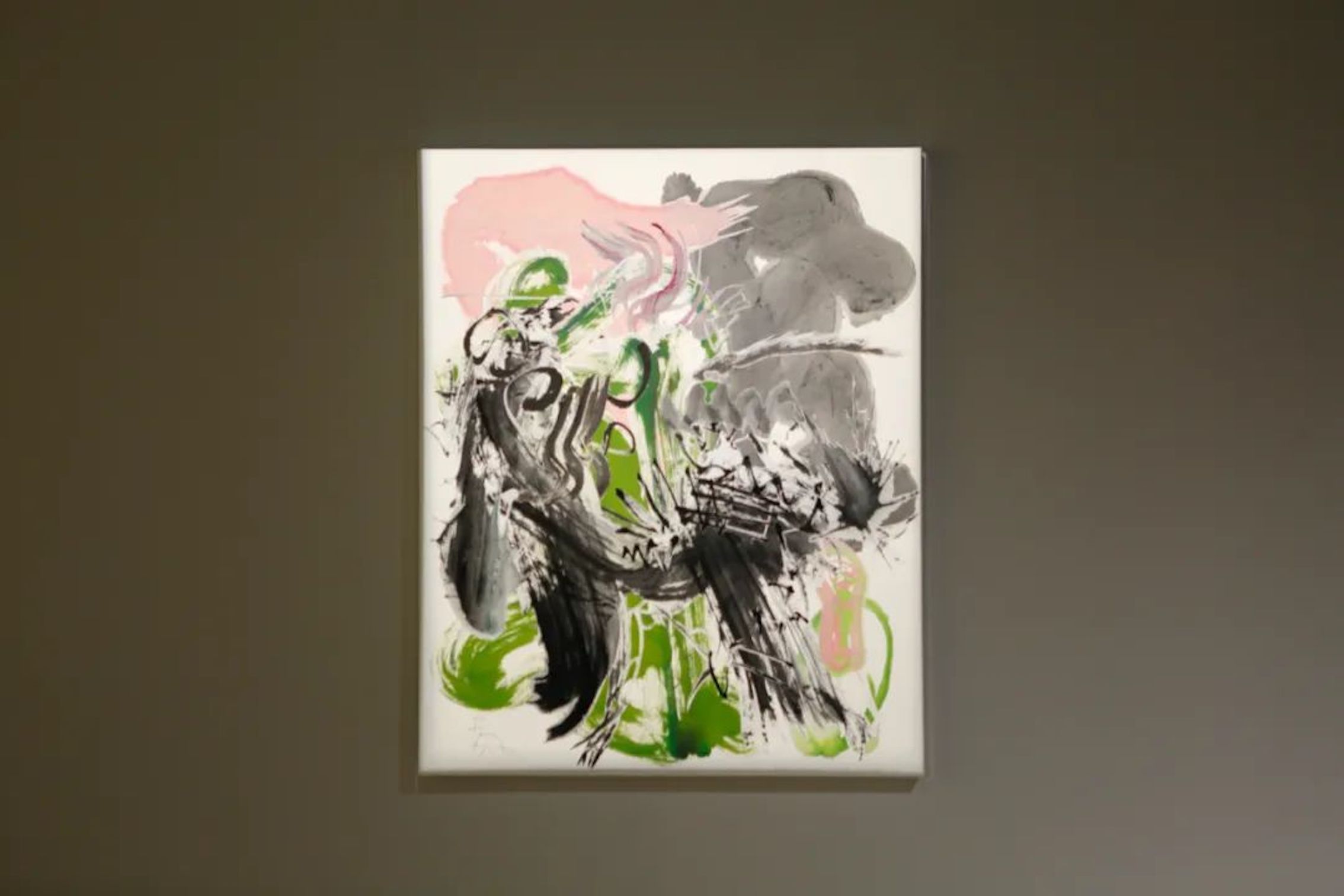
Wu Jian’an: Divine Inspiration, exhibition view ©Wu Jian’an Studio
When we dip a brush into pigment and bring it to the paper, do we truly guide the movement of the brush through conscious control—or does the brush, in that moment, begin to guide our minds? Within the logic that connects handwriting and the individual, spontaneous brushstrokes resemble the release of the subconscious, or even fragments of the soul. Each mark differs according to the person who made it, carrying traces—sometimes subtle, sometimes overt—of the artist’s life experience. Every stroke becomes a kind of portrait.
Once these marks are cut from their original sheets and assembled on new surfaces, they are stripped of their original context. Layered, overlapping, and interwoven within the limited space of the picture plane, they evoke a microcosm of individuals entering a collective community. In contemporary society, where technological progress and intellectual liberation grant individuals the “privilege” of moving beyond fixed identities, similar processes of collision, entanglement, and transformation shape the formation of ever-changing social collectives. No brushstroke is dull or insignificant. 500 Brushstrokes reveals the traces of countless individual lives—much like a primordial world in which chaos has only just begun to give way to order and all beings remain fundamentally equal.
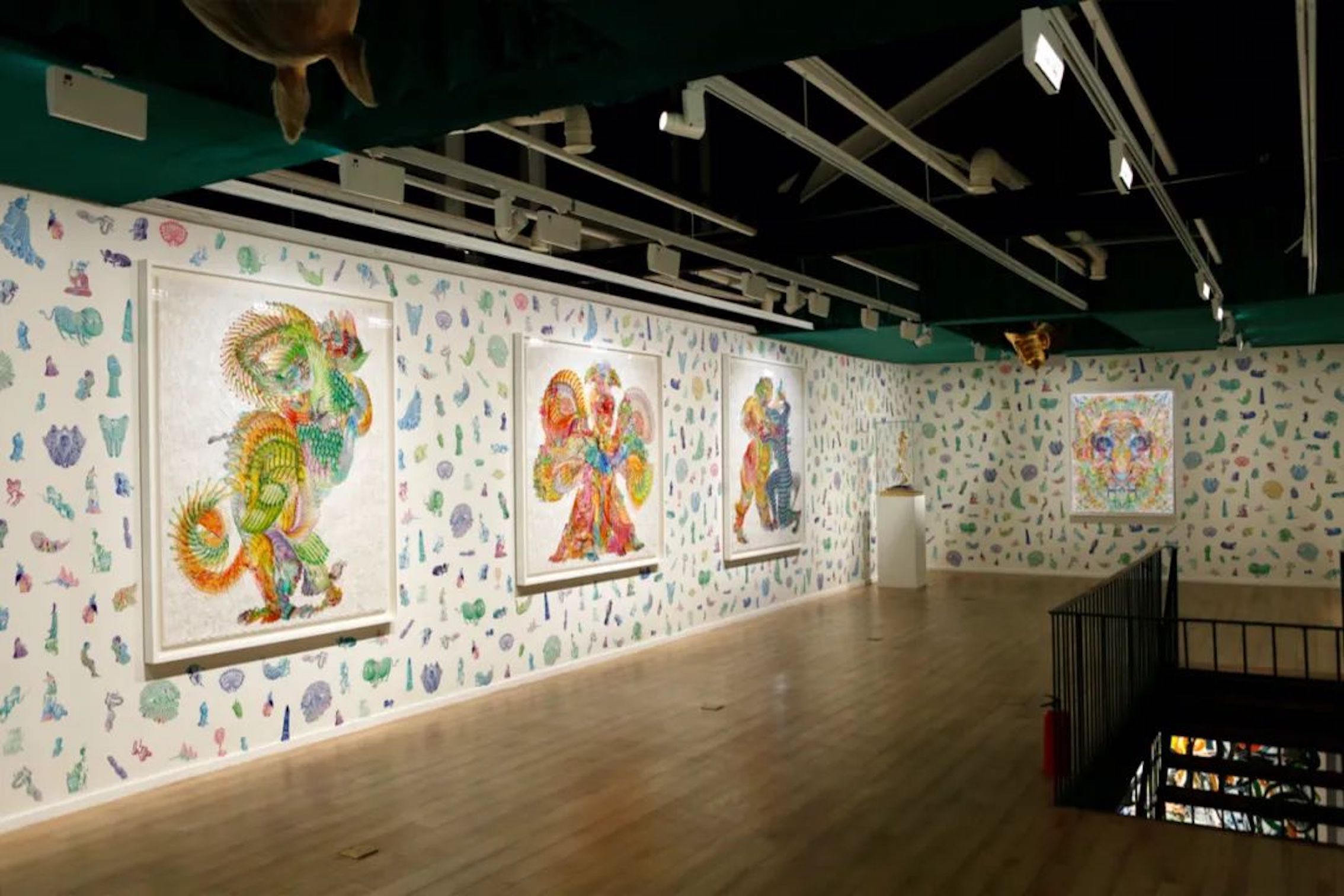
Wu Jian’an: Divine Inspiration, exhibition view ©Wu Jian’an Studio
The story of Yu the Great controlling the floods has shaped Chinese society and political imagination for thousands of years. What this myth reveals is not merely how humans think within myth, but how myth itself thinks through humans. The second chapter of the exhibition, Flood Control, presented on the second floor, features a group of new works inspired by this legendary narrative. At the center stands Yu Controlling the Floods, surrounded by figures drawn from other mythological traditions: scenes reminiscent of Greek heroic myths such as Hero Conquering the Lion and Hero Conquering the Minotaur as well as Tiger : Noon and Midnight, and the cosmic order of time.
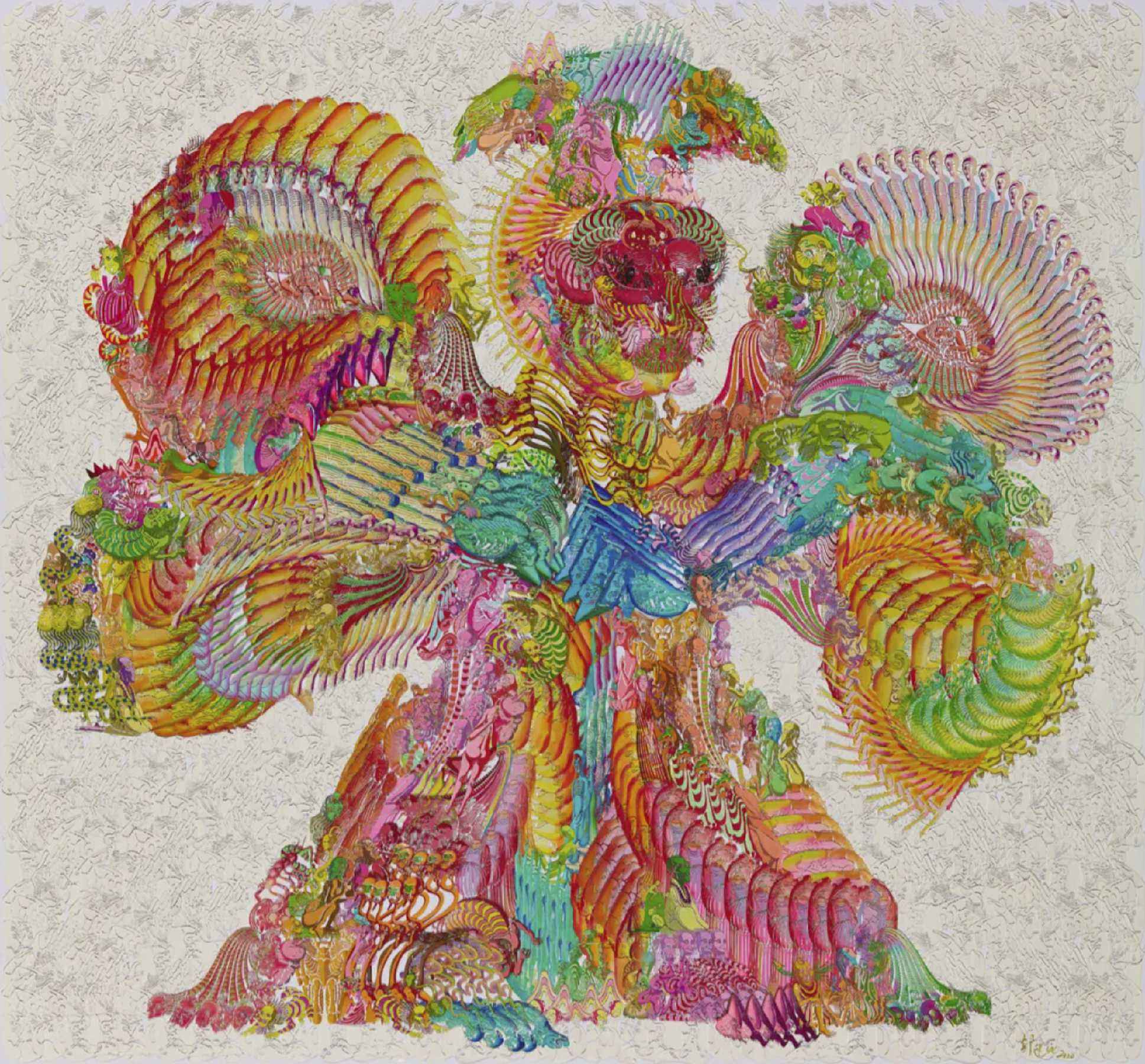
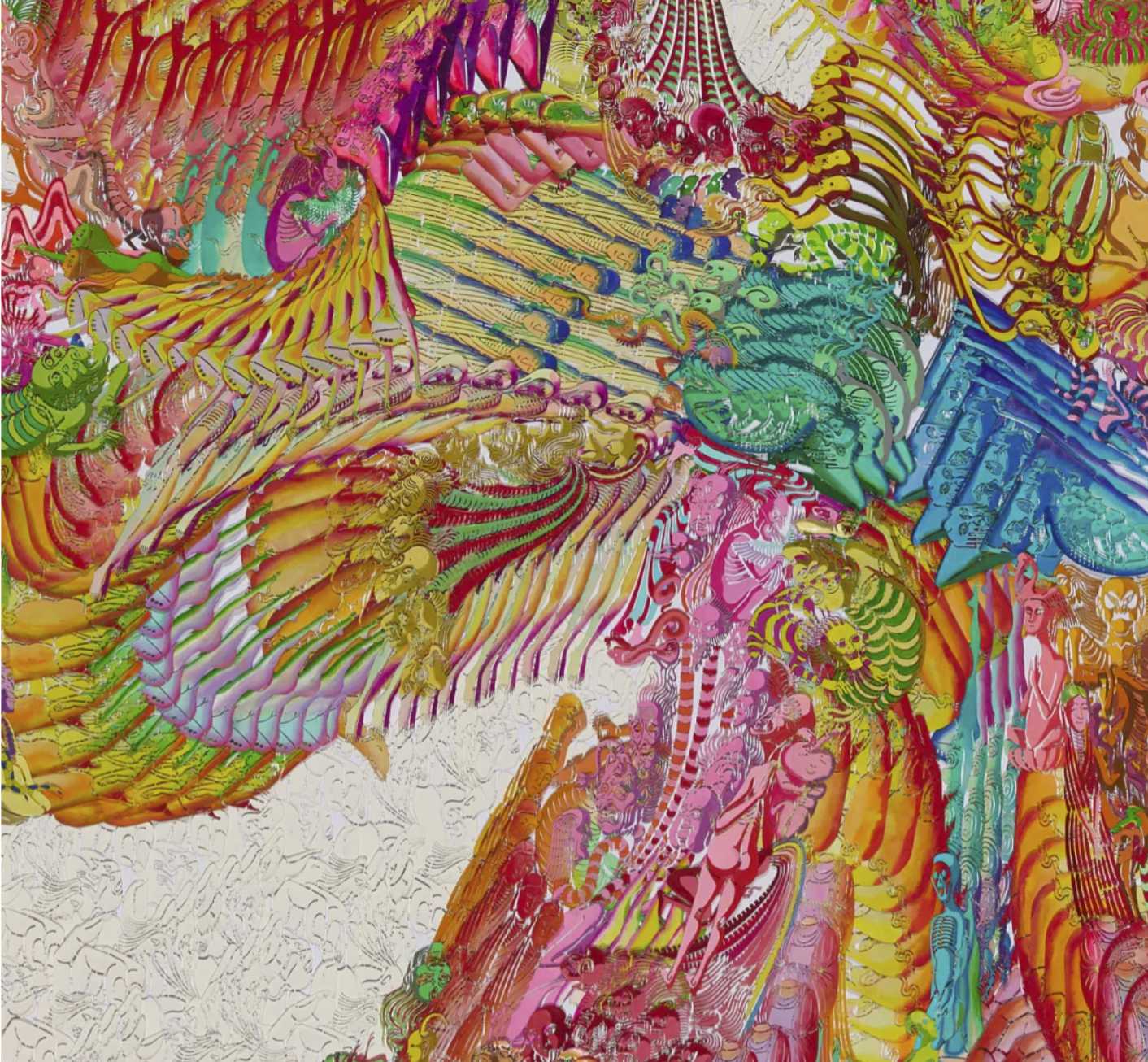
Hero Conquering the Lion, Engraved on watercolor paper, watercolor, acrylic, soaked in beeswax, cotton thread stitched and mounted on silk, 167x175cm, 2020 ©Wu Jian’an
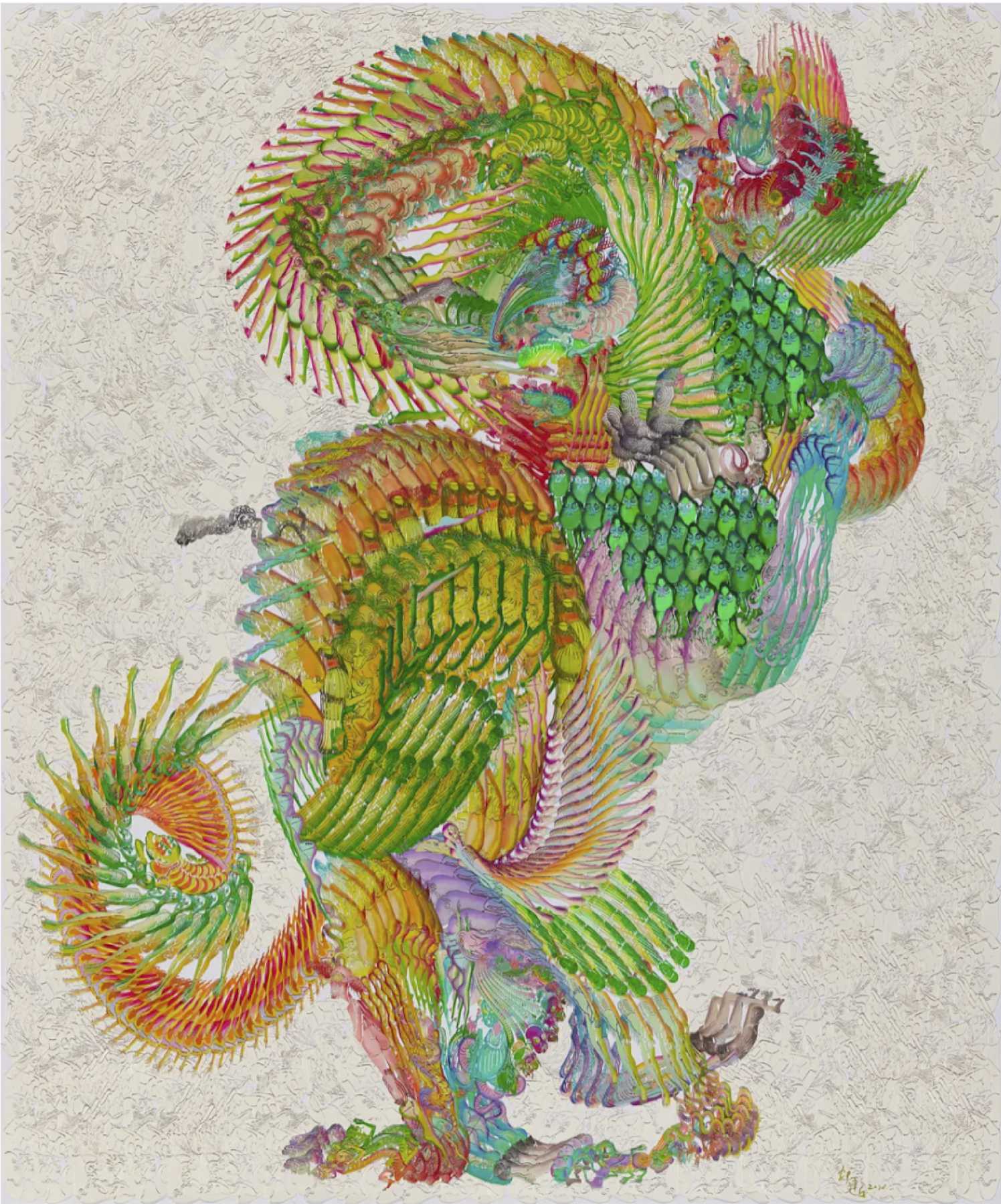
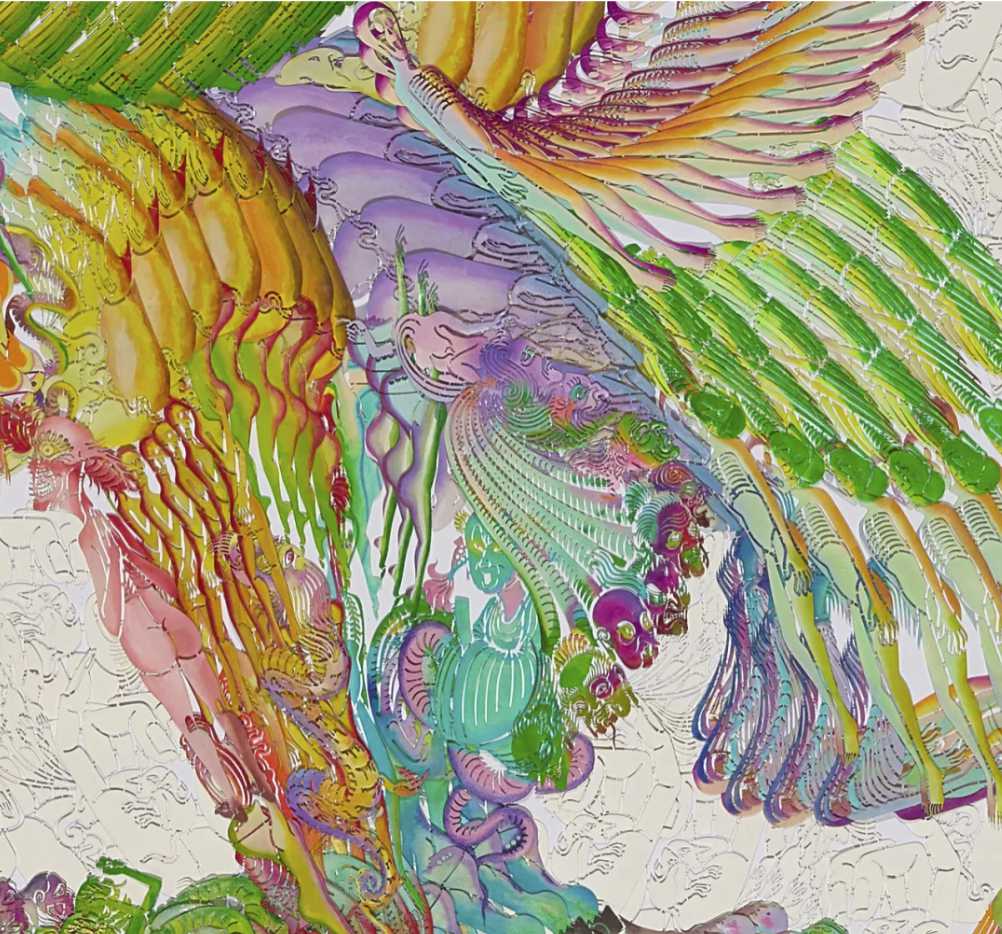
Yu Controlling the Floods, Engraved on watercolor paper, watercolor, acrylic, soaked in beeswax, cotton thread stitched and mounted on silk, 185x150cm, 2020 ©Wu Jian’an
The works in this section primarily belong to Wu Jian’an’s signature Incarnation series. Like many of the artist’s projects, these works employ collage as a central method. However, each compositional element here carries a specific image, name, and narrative origin. These figures derive from the large-scale installation Seven-Layered Shell (2011), in which Wu created 186 distinct characters. Some of them originate from the mysterious early Chinese geographical text The Classic of Mountains and Seas. Wu reimagined these strange and wandering creatures through drawing, combining them with satirical cartoons, visual interpretations of slang expressions, motifs from Christianity, Buddhism, and Indian mythology, as well as imagery drawn from graffiti, T-shirts, and popular cartoons.
Using the elements from Seven-Layered Shell as an “alphabet,” Wu Jian’an developed the Incarnation series. Within these works, hundreds or even thousands of small figures overlap and interweave, forming the dense and dazzling visual textures that have become characteristic of the artist’s style.
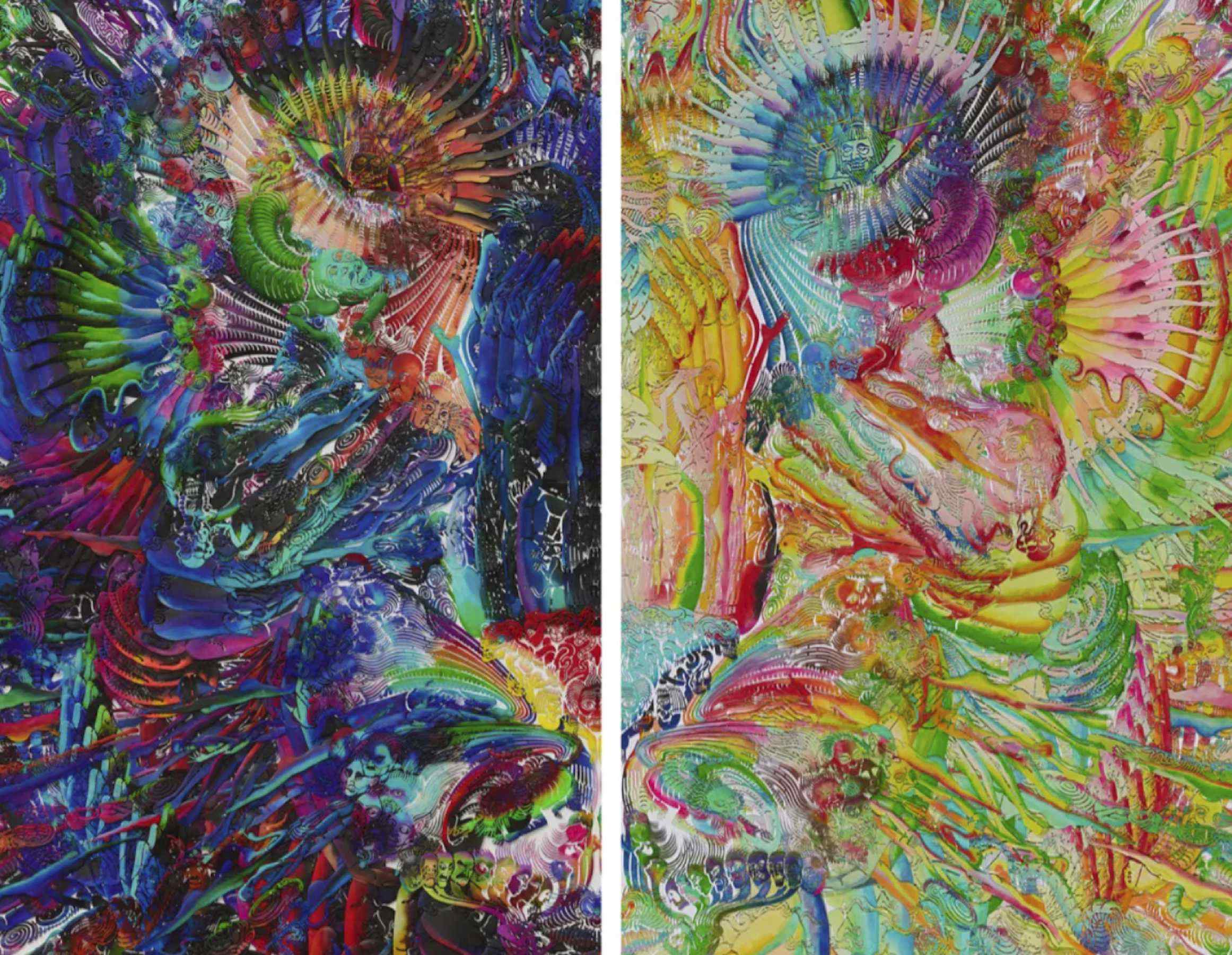
Tiger : Noon(right) and Midnight(left), Engraved on watercolor paper, watercolor, acrylic, soaked in beeswax, cotton thread stitched and mounted on silk, each 160x120cm, 2020 ©Wu Jian’an
As Haun Saussy, Professor of Comparative Literature, East Asian Languages and Civilizations, and Social Thought at the University of Chicago, has observed: “You find that something very simple suddenly becomes an extraordinarily complex creation. These bodies of different scales gaze at us with countless eyes—or ignore our presence altogether… Within the bodies of these images opens an unimaginable cultural outside… His art therefore cannot be understood as some so-called ‘regression to Chinese tradition,’ but rather as a form of transcendence.”
While Seven-Layered Shell metaphorically suggests a social system in which individuals must occupy a fixed and correct position in order to form a perfect whole, the Incarnation series attempts to break this rigid model. Here, individuals exist within dense and chaotic relationships, gradually coalescing into a collective form that appears both ambiguous and vividly alive. The vitality of the whole seems less predetermined than organically generated through the interactions of its parts.
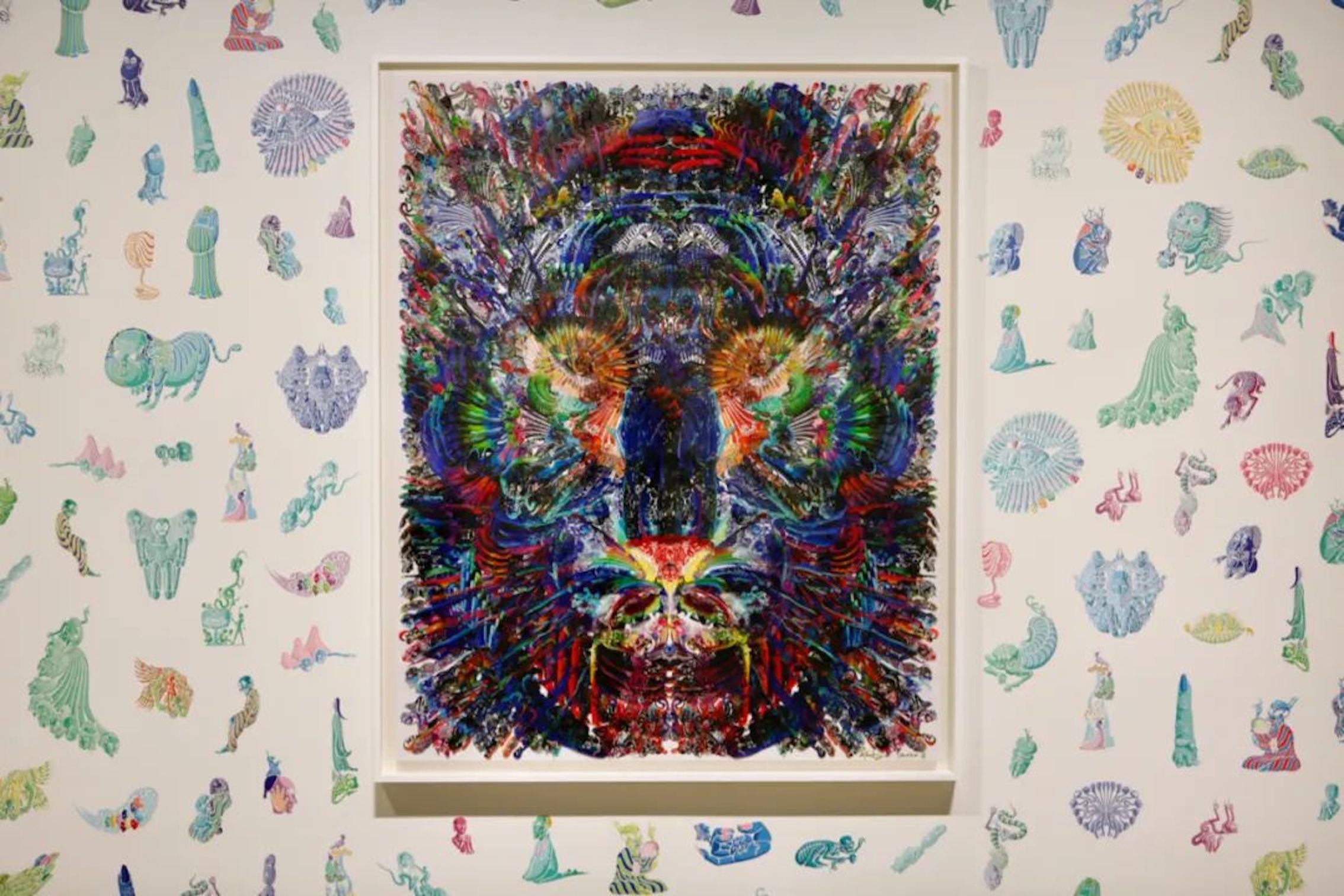
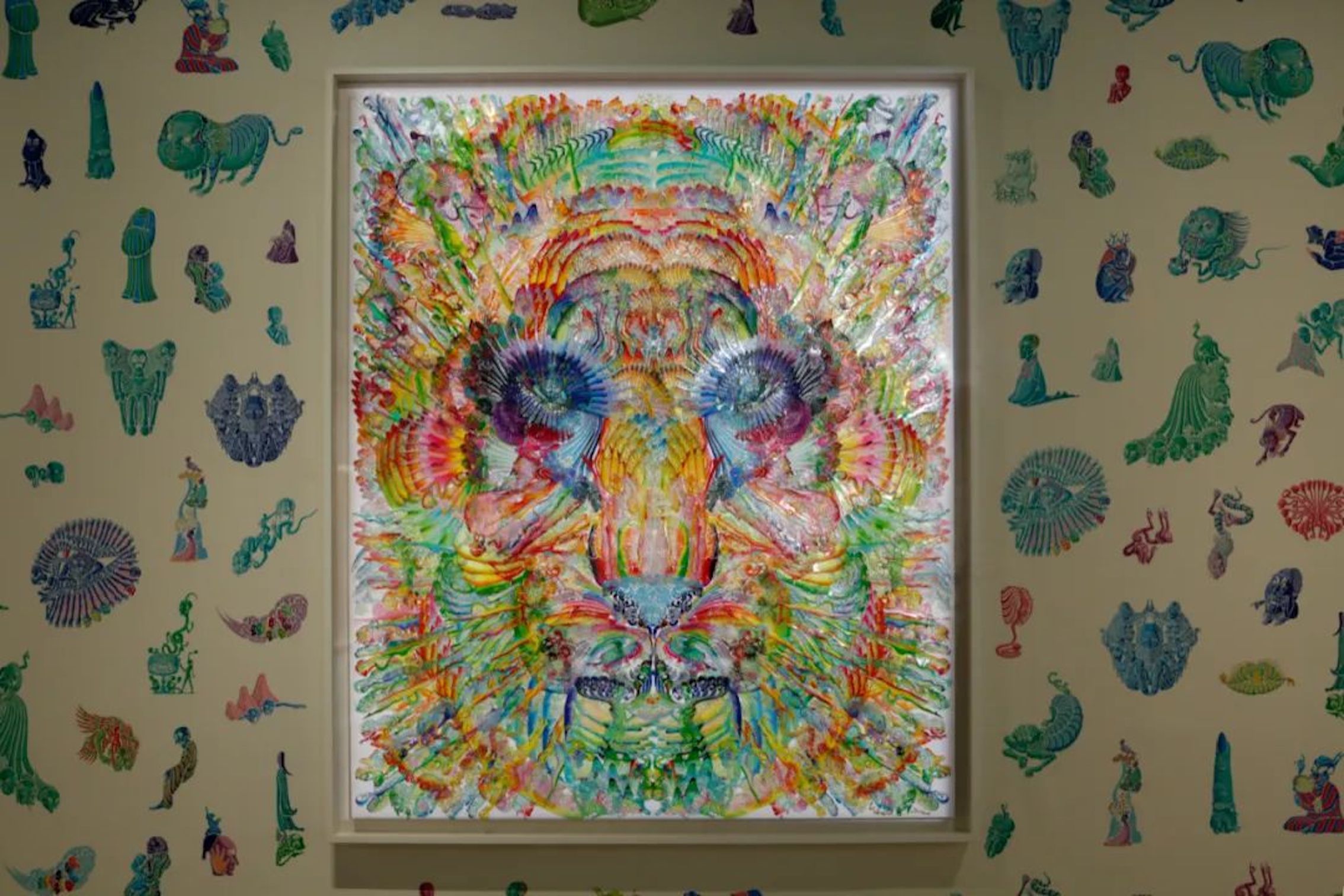
Wu Jian’an: Divine Inspiration, exhibition view ©Wu Jian’an Studio
“Yufeng(God of Wind)—on the Plain of Dalu, at the central axis of the earth. There is a deity named Yufeng, with loose hair and bare feet, wearing long sleeves and robes. Beneath his feet lies a fish with a broad human face and eyes, possessing two hands and a single leg. Yufeng governs the circulation of primordial qi across the heavens and never dares to rest. When the cold becomes severe, his body turns crimson and swells like a drum; the human-faced fish spits blue and yellow liquid from its mouth, its voice resembling the roar of an ox.”
The walls of the second-floor are filled with the work 42, including figures such as Yufeng, Horse King, the Great-Footed Dwarf Woman, Heart, Closed Mouth, Dandelion, Tong Tian Di, Yi Tiger, Drum, and Left Eye.etc. From the 186 figures created in Seven-Layered Shell, Wu selected forty-two characters and, inspired by the literary style of The Classic of Mountains and Seas, composed forty-two short mythic narratives for them, using the human body as a symbolic map.
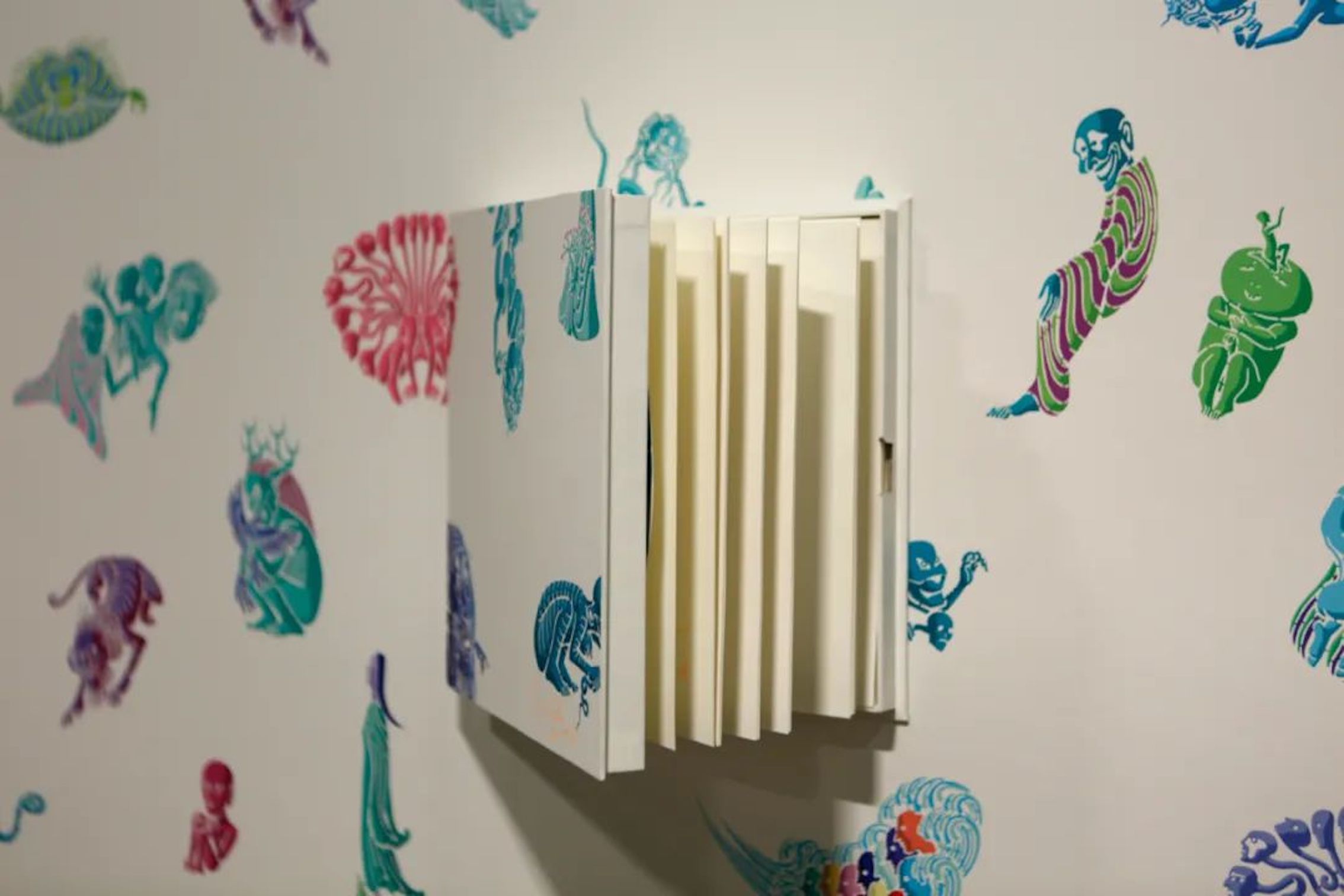
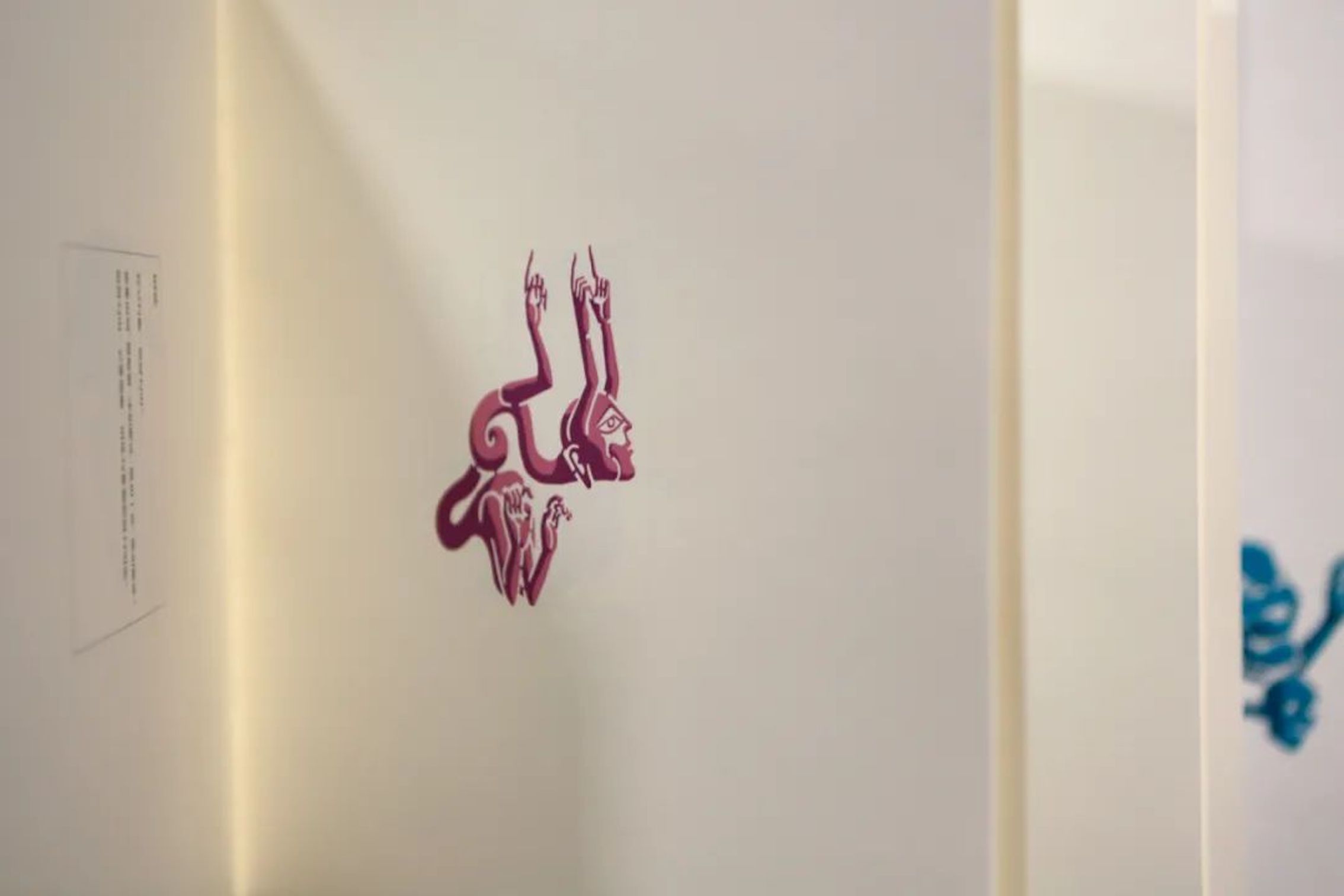
Wu Jian’an: Divine Inspiration, exhibition view ©Wu Jian’an Studio
Distributed across the walls, these figures are rendered primarily in shades of blue and green, evoking the boundless presence of water. They exist in a suspended, unactivated state—while the artworks themselves represent moments of aggregation. Each different configuration produces a new visual outcome, sometimes figurative, sometimes abstract. In this way, Wu Jian’an continually rewrites ancient stories from different civilizations into contemporary visual myths, or narrates surreal allegories about humanity’s past and future.
The number 42 is also a tribute by the science-fiction enthusiast Wu Jian’an to The Hitchhiker’s Guide to the Galaxy, the novel by Douglas Adams. In the story, a supercomputer named Deep Thought spends 7.5 million years calculating “the ultimate answer to life, the universe, and everything.” The answer, famously, is 42. When confronted with questions of overwhelming complexity, the answer may be surprisingly simple—or even absurd. Perhaps the questions we face are not yet worthy of answers, or perhaps they are merely waiting for the truly essential question to emerge.
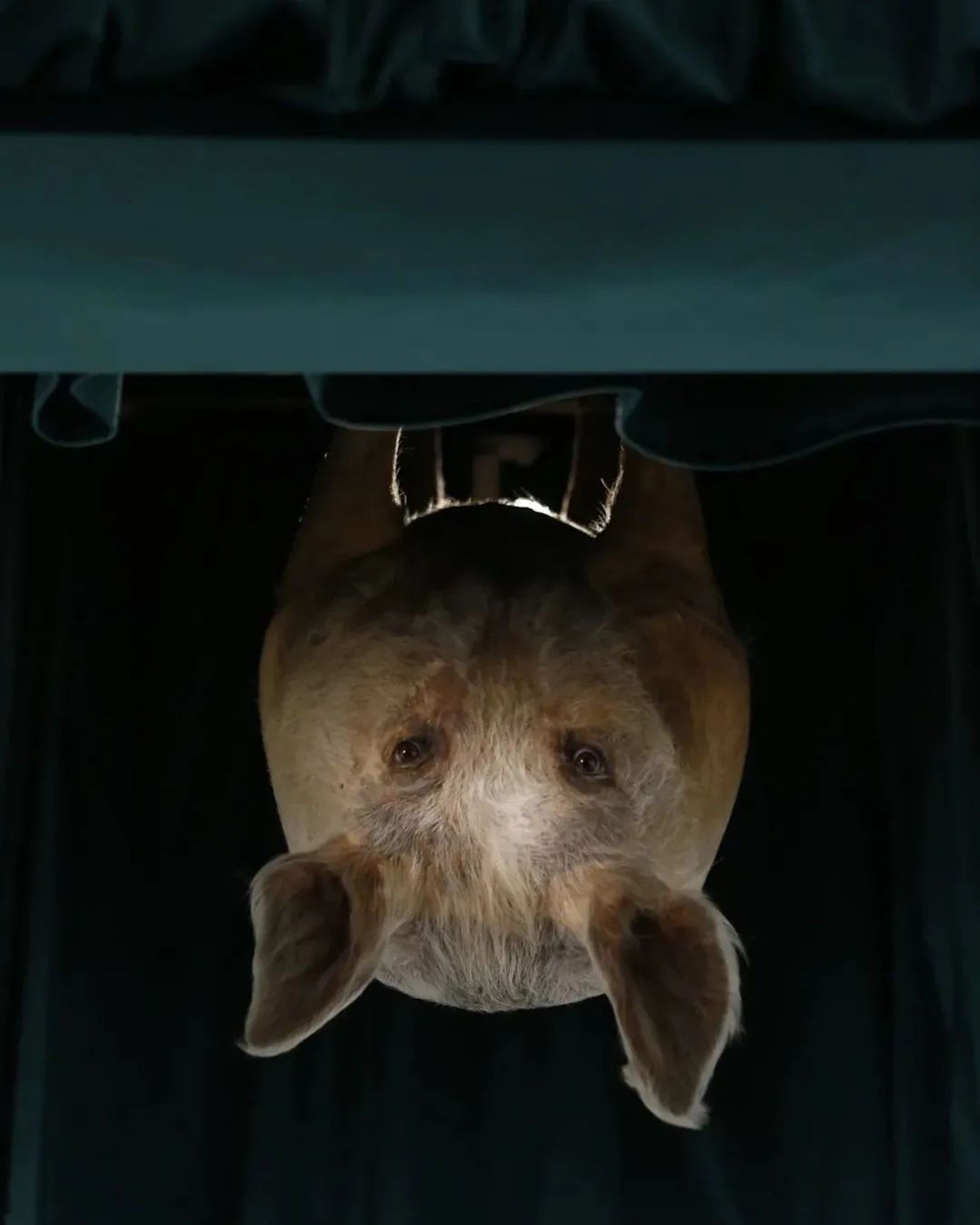
Omens-Reversed Pig, Simulated animal specimens, 80x175x50cm, 2020 ©Wu Jian’an
Above the second floor, in the ceiling space of the gallery, lies the final chapter of the exhibition: Oracle. Suspended in midair are Omens—Tiger, wearing a six-eyed golden mask, accompanied by simulated specimens such as a pig whose head and tail appear reversed. These creatures evoke signs, prophecies, and messages from the heavens. Nearby, the series Curiosity and Omens, placed within the same spatial axis as the Controlling the Waters section, seem to symbolize revelations that have already been deciphered and sanctified.
Wu Jian’an has loved animals since childhood, and animal imagery runs throughout every stage of his artistic practice. He is also deeply interested in using organic materials from the natural world, particularly leather and paper. At times, he even incorporates “animals” themselves as a form of material language, integrating them into a broader system of organic materials through which he reflects on the relationship between human society and nature.
In the Curiosity and Omens series, animals appear either as participants in a supernatural drama staged by human imitation and simulation, or as mysterious signs described in historical texts that communicate between heaven and humanity and foretell the future. Across many civilizations, people have long attributed meaning to unusual natural phenomena, interpreting them as omens of impending events—natural disasters, dynastic changes, or even the end of humanity and the earth itself. The logic of omens transcends cultural and geographic boundaries, hidden within ancient systems of scientific reasoning and political philosophy.
As the distinguished art historian, critic, and curator Wu Hung has observed, “Omens share a profound relationship with art—particularly contemporary art—because art is always concerned with imagination, and true contemporary art is created in order to reach toward the unknown and the future.”
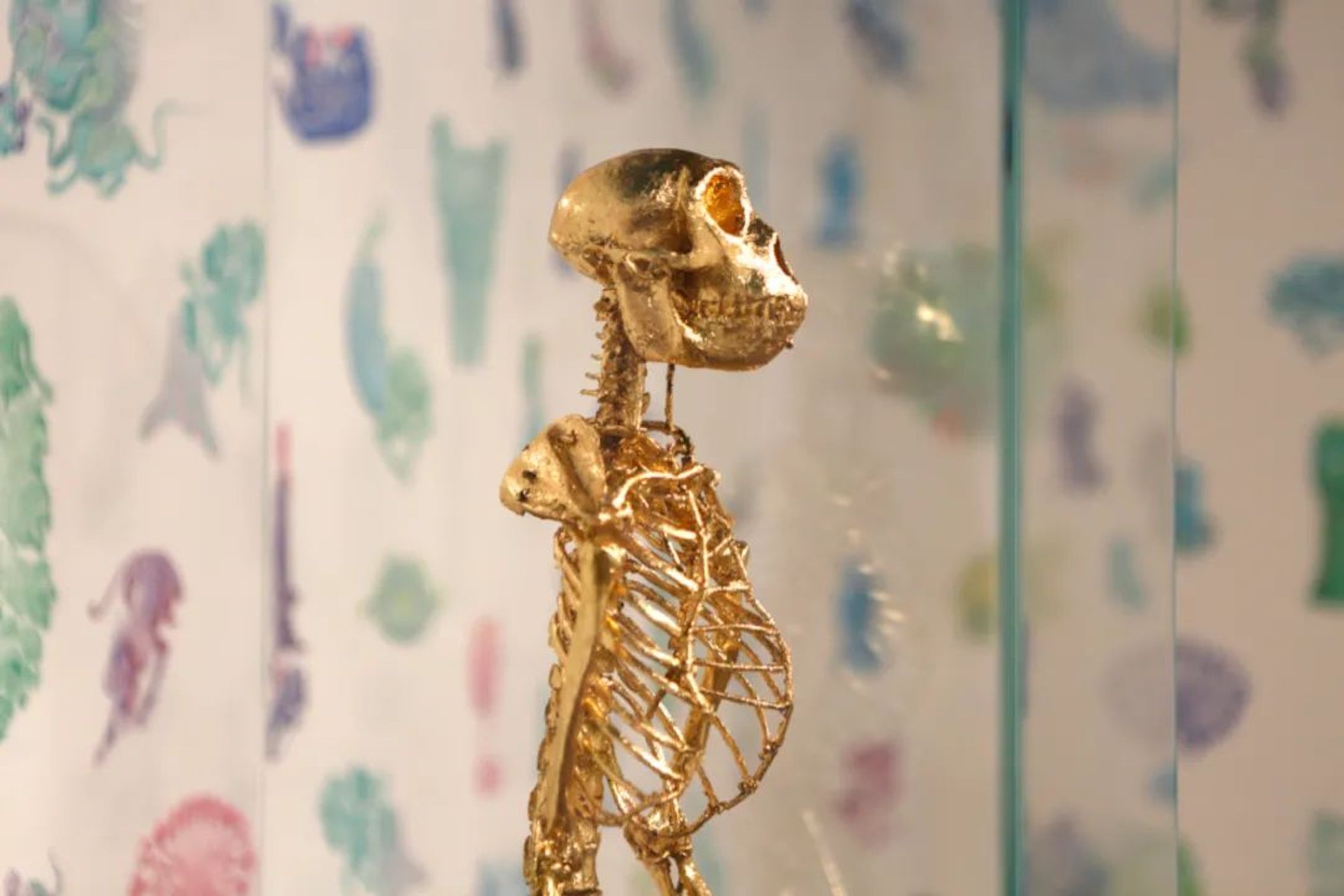
Curiosity - Macaque, Mixed media, 80x43x34.8cm, 2020 ©Wu Jian’an
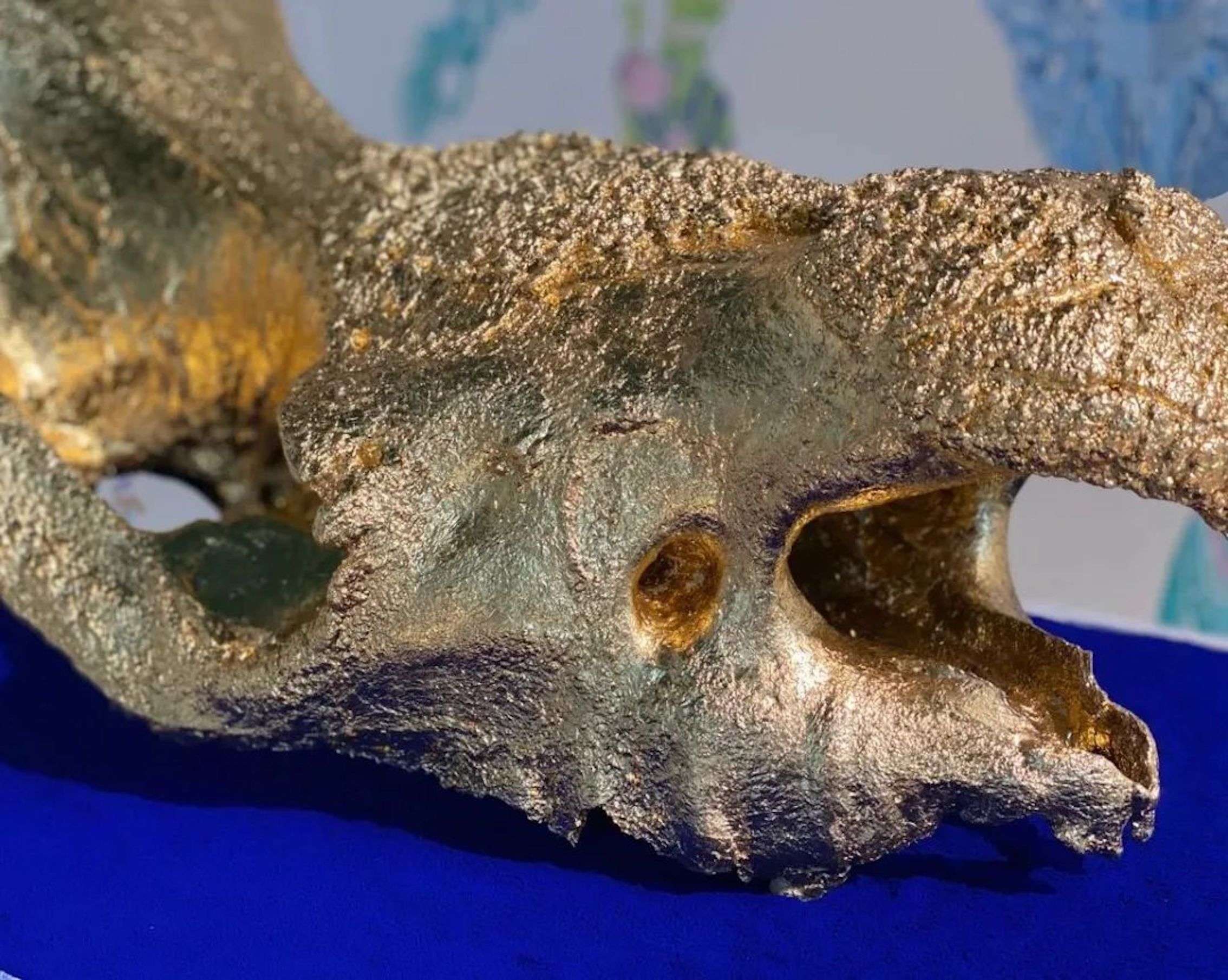
Curiosity - Black rhinoceros, Mixed media, 29.8x59x35.8cm, 2020 ©Wu Jian’an
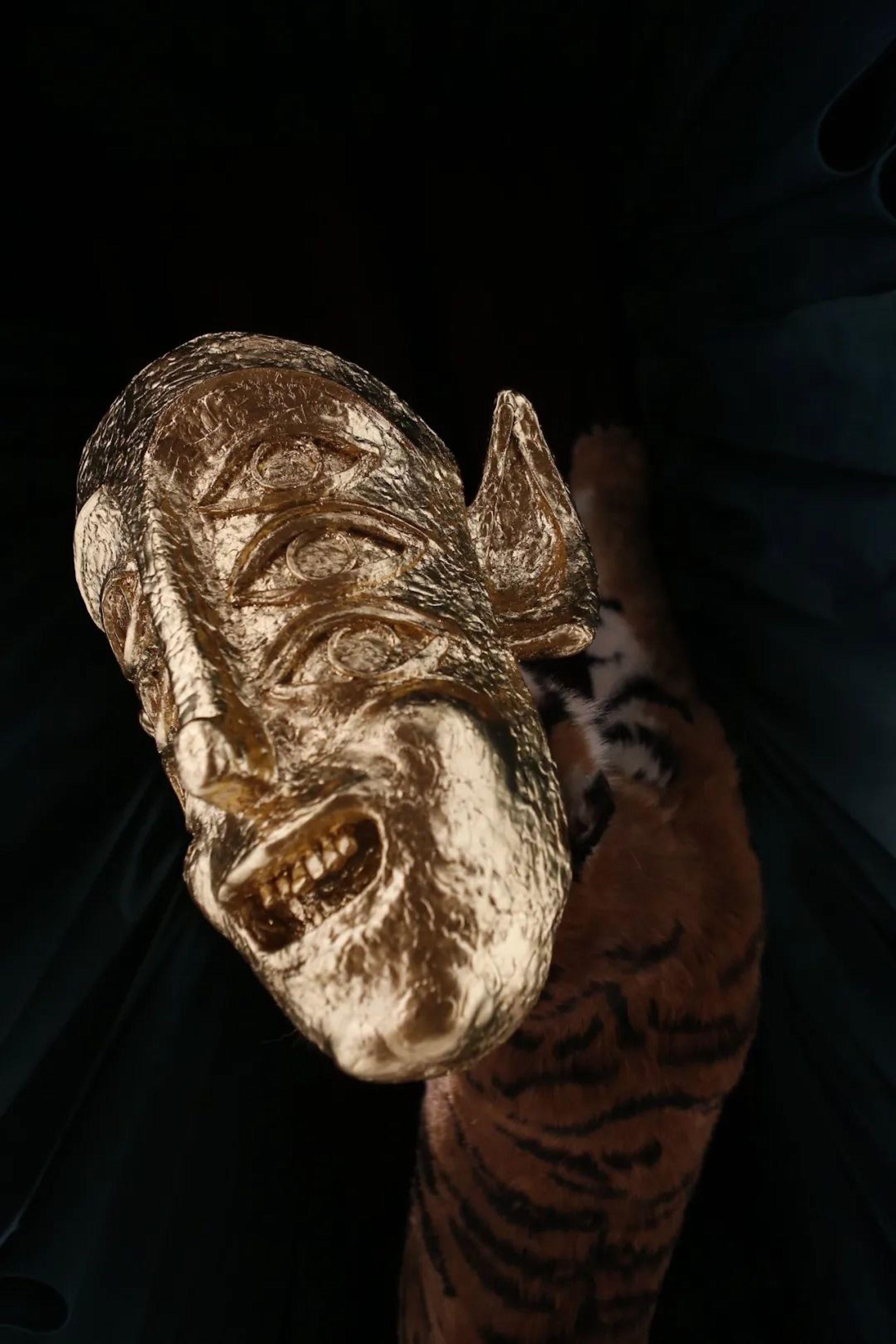
Omens-Tiger, Mixed media, 100x192x67cm, 2020 ©Wu Jian’an
In the view of curator Cao Dan, Wu Jian’an regards myth as another system of knowledge for understanding the world. “His narratives are filled with a sensuous logic and an imagination that transcends time and space. They remind me of the anthropologist and structuralist thinker Claude Lévi-Strauss’s description of the contemporary significance of myth: myth teaches us about the order of the world, the nature of reality, human origins, and human destiny. It reveals the societies from which myths arise, showing the internal forces that shape their beliefs, customs, and institutions. Most importantly, myth allows us to perceive certain modes of operation within the human mind—patterns that remain constant across time while circulating widely across space.”
For this reason, Wu Jian’an has long been fascinated by Lu Xun’s Old Tales Retold. Rather than rewriting ancient myths through artistic language, he seeks instead to explore—through images—the spiritual origins of mythic narratives, as well as the emotional and mental structures shared by humanity across cultures and eras.
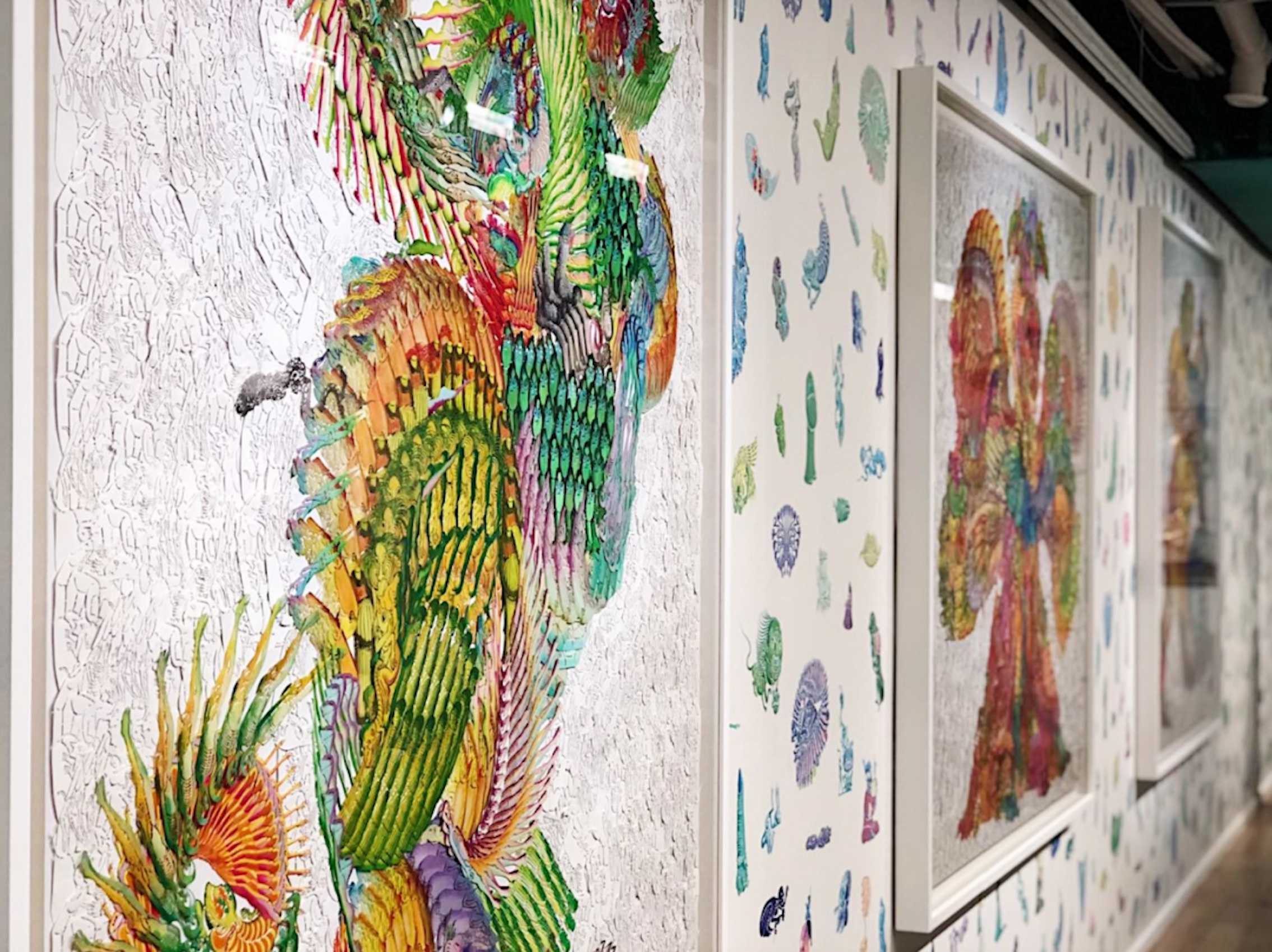
Wu Jian’an: Divine Inspiration, exhibition view ©Wu Jian’an Studio
Within a shifting space-time shaped by thought and imagination, myth becomes the constellation we can still look up to today—and the vast landscapes of mountains and seas are nothing other than the present moment itself.
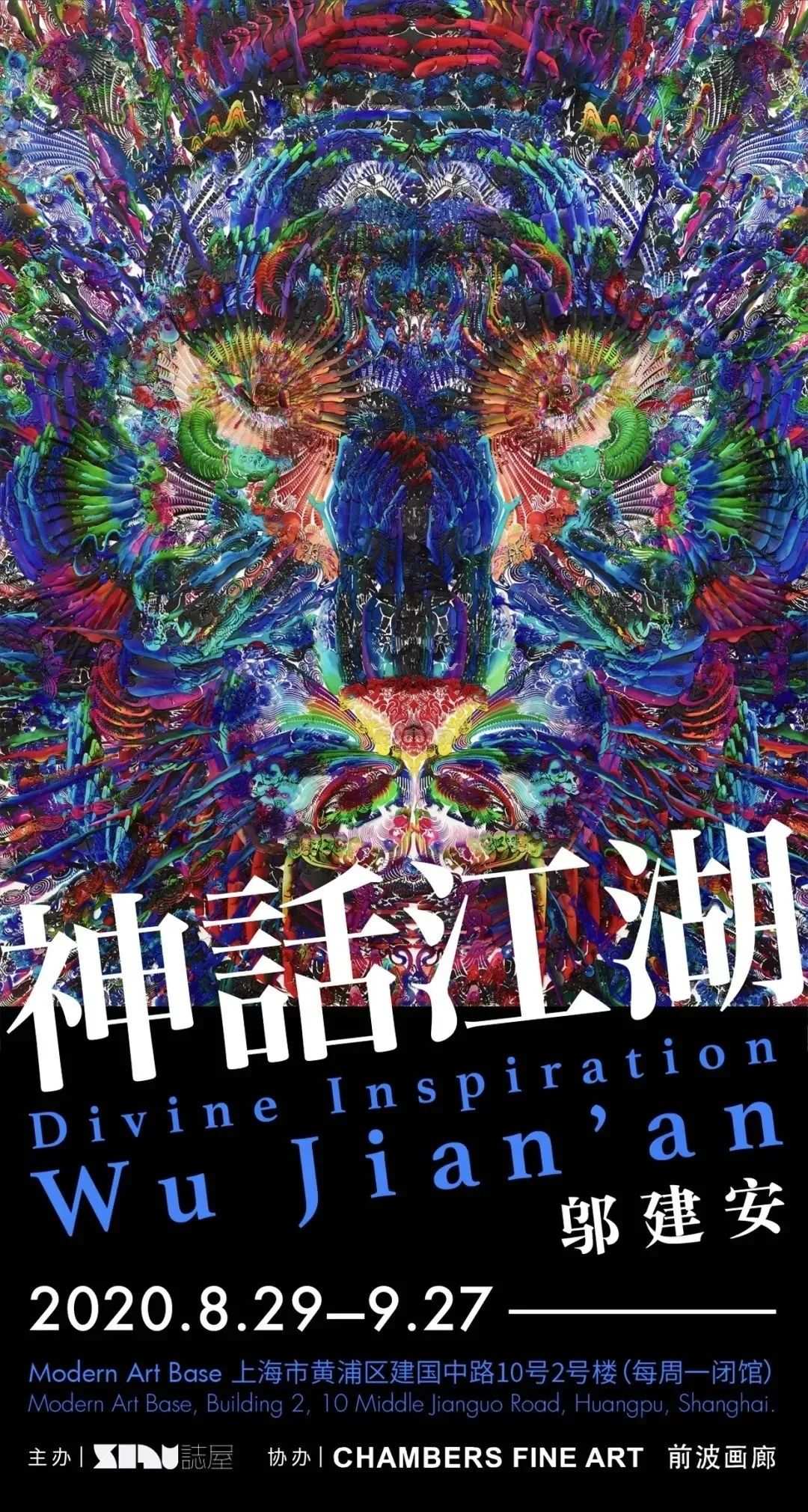
Wu Jian’an: Divine Inspiration
2020.8.29-2020.9.27
ZiWU Shanghai,Shanghai,China